


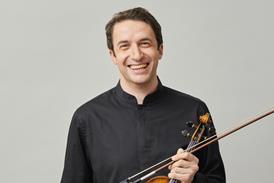

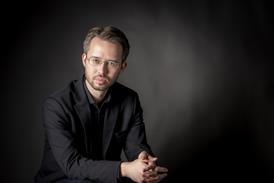





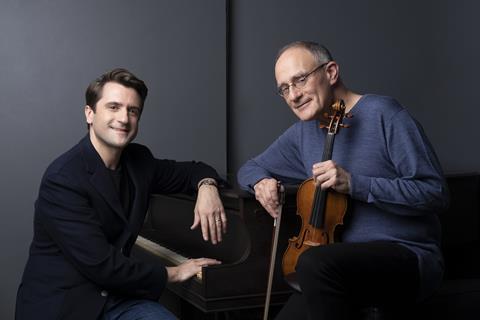
Violinist Mark Kaplan and pianist David Kaplan reflect on how a lifetime of shared listening – as father and son, and as equal musical partners – shapes their approach to Brahms’s sonatas, where trust, intuition and discovery take precedence over hierarchy
Read more Featured Stories like this in The Strad Playing Hub
On 19 June 2026, father-and-son duo violinist Mark Kaplan and pianist David Kaplan release their first album together, a recording of the Brahms Violin Sonatas (no.1-3) on Orchid Classics. The album highlights both musicians’ years of shared connection as musicians, and as father and son, through their joint exploration of three violin sonatas by Brahms.
The Kaplans represent a familiar story of musical lineage, with three generations of professional and amateur musicians charting their own paths. Chamber music, more than most other family pastimes and bonding experiences, was interwoven into the Kaplan family’s everyday life – particularly for Mark and David, who have performed together in various settings over the years.
The duo speaks with The Strad about the new album.
How did your long-standing relationship as father and son shape the musical dialogue in Brahms’s sonatas, particularly given their emphasis on equality between violin and piano?
David: Each of these Brahms sonatas builds a whole world from very simple musical seeds – much as family members can be so different from one another, but still derived from the same DNA. So there’s something especially fitting about exploring these rich, diverse musical worlds as a family. As different as Dad and I are as people and musicians, there’s undeniably a shared core in how we approach the music.
Mark: There are mysterious things that happen when musicians come together to bring a piece of chamber music to life. As seen from the outside, music lovers often tend to have questions along the lines of, ’How do you decide who gets their way?’, and that question can indeed be a significant focus in student collaborations.
But after the amount of experience and time we’ve both had, that question becomes much less important. The urge to realise one’s own internal hearing of a piece can be very compelling when one is seventeen and first discovering the piece, and this requires convincing others in a group to go along with you. However, after loving the music over time, playing it with many people and teaching it to students, there is an equally compelling urge to find new things in it.
You’ve performed together informally over the years – how did that shared history influence your approach in the recording studio for this first full-length album together?
David: I’d say we’re both deeply concerned with discovering and illuminating something essential in the music, and then allowing that discovery to shape the performance in the moment rather than predetermining too much. I’ve always been inspired by Dad’s uncanny listening in chamber music. Playing with him can be a bit alarming in the best way – he so intuitively absorbs and reflects what you do. It’s like passing a mirror in the street: sometimes you don’t quite expect what you see looking back.
Mark: Familial closeness is wonderful in this process because so much of the work of defining the personal relationship has already happened and created a mutual trust, so that the effort to get to the heart of the music can be a truly joint one. Nowhere is this more apparent than in the recording sessions. For example, often in chamber music recordings I have found that when one person’s concentration is at its peak another person’s is waning.
Did your familial closeness make collaboration easier, or did it introduce new challenges when balancing your individual artistic identities within these works?
David: Even when we played together during my childhood, I always felt that Dad treated me as a colleague. That sense of equality and openness has been central to this project. Exploring these sonatas together as adults has been illuminating, rewarding, and a lot of fun.
We also live in different cities and both have busy lives, so the time spent preparing and performing this music has been incredibly meaningful. The time away from the instruments – just being together – has been just as special. Breaking bread is just as good as breaking into Brahms.
Mark: In making this recording with David, I felt that we were pretty effortlessly responding to each other’s energy and concentration levels. The other thing that is a wonderful result of the family connection is that for me, having been there for David’s earliest adventures with the piano, it’s exciting to see how this same person (just bigger!) has blossomed into making music so beautifully, and to think – after a particularly memorable phrase – ’Where did that come from?’
Brahms: The Violin Sonatas is released on 19 June 2026 on Orchid Classics. Watch Mark and David Kaplan perform I. Vivace ma non troppo, from Violin Sonata no 1, op. 78, in G major:













No comments yet