















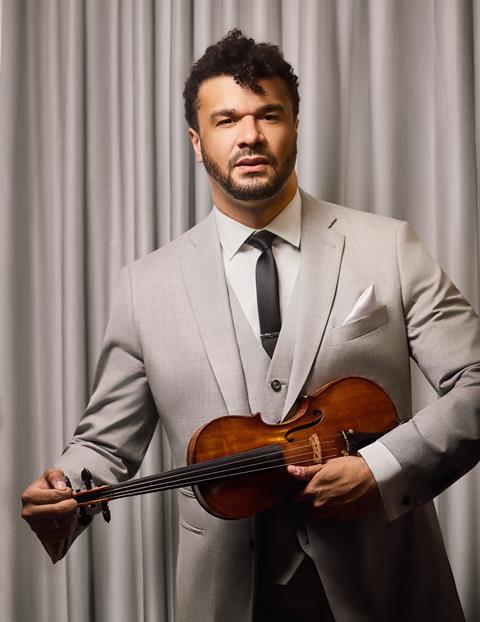
Curtis Stewart reflects on the violin caprice as a vehicle for American identity and musical memory, and on how popular, jazz and vernacular sources can become fully notated works for violin.
Read more Featured Stories like this in The Strad Playing Hub
Across two discs, violinist-composer Curtis Stewart’s 24 American Caprices takes the virtuoso caprice tradition in a strikingly wide-ranging direction, with new compositions reimagining familiar music associated with artists including David Bowie, Dolly Parton, John Coltrane, Bob Dylan, Earth, Wind & Fire, Kendrick Lamar, Sister Rosetta Tharpe, Nina Simone, James Weldon Johnson and Aretha Franklin.
The title evokes Paganini, Wieniawski and other violinist–composers who expanded the technical and expressive possibilities of the instrument. But Stewart’s caprices are rooted in a broader American musical landscape, treating iconic songs and recordings as starting points for new, fully notated caprices for violin.
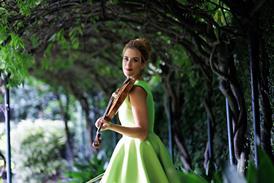
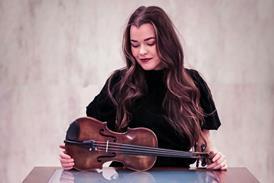
Stewart performs twelve of the caprices himself. Others are played by guest violinists including Tai Murray, Deborah Buck, Melissa White, Njioma Grevious and Rubén Rengel, as well as younger players who Stewart has taught or mentored through institutions including the Juilliard School, the Special Music School in New York and the Perlman Music Program.
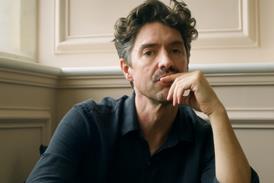
Just ahead of the release, Stewart spoke to The Strad’s US correspondent Thomas May about the 2022 Grammy Awards performance that helped set the project in motion, the challenge of turning familiar recordings into violinistic material, and how the caprices use the violin to reflect on American identity and musical inheritance.
This project traces back in part to your 2022 Grammy Awards performance of a caprice on Stevie Wonder’s ‘Isn’t She Lovely’. What did that moment reveal to you about the violin’s ability to reimagine American popular music as a form of virtuoso classical expression?
Curtis Stewart: It started even a little before that. On my album Of Power (2021), there are two pieces that are like initial improvised versions of caprices: ‘Lift Every Voice and Sing’ with electronics, and ‘Isn’t She Lovely’, which also has some recorded material on it. I ended up playing ‘Isn’t She Lovely’ at the Grammys in 2022, when Of Power was nominated for a Grammy. The next day, I was receiving calls and emails from organisations and people I never would have imagined being in touch with before that. At that moment, there was a little bit of blood in the water. I thought: maybe I’m onto something.
I had also written Oscar Peterson’s ‘Hymn to Freedom’ for the Royal Conservatory of Music in Canada. The version on this album [Caprice IX] is an expanded, more technical version. Then Kaufman Music Center in New York City commissioned me to write eight caprices – and, suddenly, I was at ten. So I started thinking: what is the right number? And 24 rings bells for people. So I thought, maybe I’ll just go for 24 and see what happens.
The album’s title immediately evokes the virtuoso tradition associated with Paganini and Wieniawski, but your inspirations range from Dolly Parton and Kendrick Lamar to Coltrane, Nina Simone and James Weldon Johnson. What does ‘caprice’ mean to you in an American context?
Curtis Stewart: I love the word caprice because it suggests something light and brilliant – something that moves with quickness and lightness. But just because something is light-hearted does not mean there is not rich emotional depth underneath.
I love the idea of American culture being capricious, because there is so much tied up in our identity. There is beauty, and there is also darkness. Conversations around identity in America can become very heavy, dense and argumentative. So why not find a place of gathering around lightness, and around celebrating all these different sides of what being American is?
With many of these songs, I don’t remember a time when I didn’t know them. Some of the recordings came out before I was born, but they have always somehow been part of my world. I love the idea of using the violin, and the excellence of all the players on the album, to talk lightly about American identity and to ruminate on all the musics that make us who we are.
You’ve described 24 American Caprices as ‘a joyful and playful assertion … a stylised American soliloquy on the nature of classical violin’. What are you asserting here?
Curtis Stewart: In terms of playfulness, I was thinking about Liszt, Rachmaninoff, Paganini and people like Ernst – composers who used technical invention on the instrument to explore new compositional territory. If the instrument is doing something new, you get to try different configurations; you can be totally combinatorial. There is a lot of soul and spirit and feeling in each of these caprices, but my brain is also very interested in combinations and putting things together. I loved Lego as a kid. So this is a playful assertion that all these musics can fit on the violin.
I teach a class called ‘The Performance Practice of the Blues’, and someone at Juilliard once said to me, ‘It’s really hard to teach the blues, isn’t it?’ I said, ‘Yes – it’s almost just as hard as teaching Mozart.’
All the pieces here are fully notated. You don’t have to be a certain ethnicity, or a certain type of player; you don’t have to be a jazz player to truly play American-influenced music. You have to be just as special as someone who plays Paganini, Wieniawski or Sarasate. That’s the playful assertion. And the soliloquy is simply that these are solo pieces. I’m not trying to say, exhaustively, ‘This is what American music is’. These are 24 pieces I thought fit well on the violin, and they are all deeply part of me.
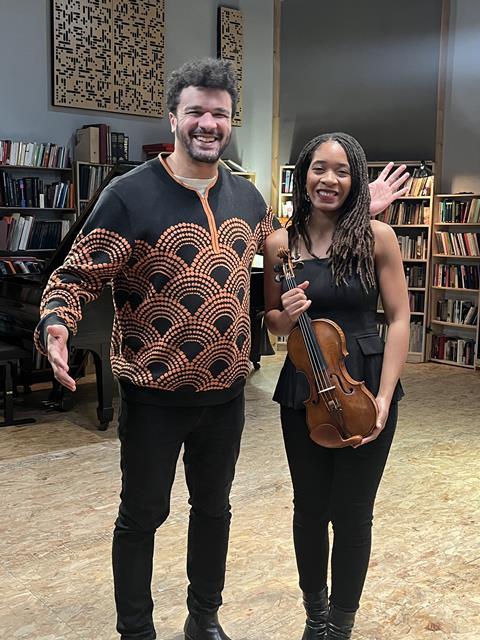
Did the final list of inspirations end up feeling more like autobiography?
Curtis Stewart: Most of my music is somehow autobiographical. My albums Of Love (2023) and Of Power were literally autobiographical, because I was speaking about things that had happened in my life. 24 American Caprices charts those connections more implicitly. ‘September’ [Caprice V, performed by Deborah Buck in the video above] is there partly because my wife’s birthday is 21 September. She is also a Swiftie, so that is one of the reasons Taylor Swift is there [Caprice VIII].
With John Coltrane’s ‘Giant Steps’ [Caprice III], I remember the moment I first listened to it. I was a college student and had just come home to New York from Eastman. I thought: maybe I should actually listen to some of the music my parents listened to. I was looking through my dad’s CD collection, found ‘Giant Steps’, and I remember my whole brain exploding. Or Kendrick Lamar’s ‘Complexion’ [Caprice XI]: when To Pimp a Butterfly came out, I felt so related to the lyrical content of that song as a mixed-race person in America. Am I this? Am I that? What does it mean to be of a certain complexion or another? The songs themselves tap into moments of my life. The violin playing is a meditation on those songs.
The track titles make the relationship to the source material explicit: inspired by Bob Dylan, ‘Blowin’ in the Wind’; inspired by Kendrick Lamar, ‘Complexion’; and so on. How did you decide which songs had enough musical DNA to become caprices – and how do you balance recognisable reference with fantasy?
Curtis Stewart: There are some songs that didn’t make it. There were songs I really wanted to do, and I started messing with the material – maybe a melodic motive, a rhythmic fragment, a reharmonised context or a totally changed textural landscape – but I couldn’t find enough distinction in the material. Sometimes it sounded too much like another caprice. Sometimes I couldn’t find the voicing, or I would put it in a different key and it didn’t really fit in the hand. So there are several that might be on the next round.
‘Modern Love’ [Caprice I] is a good example. Most people probably would have no idea it was based on David Bowie if they heard that caprice without the title. The only thing it is based on is the drum pattern in the first seven seconds. I was thinking: how can you use the lows of the instrument to emulate the bass drum and the highs to emulate the snare, then add inner-weaving 16th-note hi-hat figures to fill out the harmonies? From there, I treated it almost like a Bach prelude. As the harmonies move, the inner 16ths change, the top notes change and the bass notes move. It is like a prelude mixed with a drum setting.
People hear that something is inspired by John Coltrane and think there must be jazz improvisation happening, but the piece is hyper-notated – you see the markings, the dots, the accents, the dashes. Almost every note has some type of articulation.
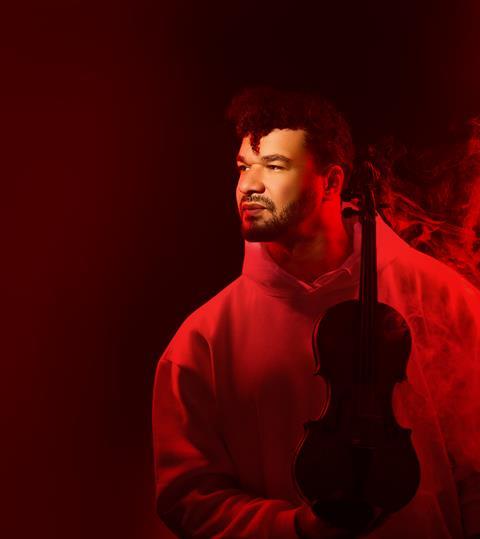
The album includes your own performances, guest violinists and students you have taught or mentored. Did you compose these caprices with specific violinists’ hands, sounds or personalities in mind?
Curtis Stewart: At first, there was really only one caprice I composed with a specific violinist in mind: ‘Mood Indigo’ for Ryan Chung [Caprice XXII]. I was finishing the caprices just as the violinists were being confirmed, and I happened to be teaching at the Perlman Music Program while he was performing Prokofiev’s Second Violin Concerto. I heard all these runs going up and down the instrument, and I thought: I understand your violin vibe.
The idea of including other violinists was scary, because these were basically written with myself in mind. I didn’t know if violinists would pick up the stylistic mantle. I didn’t know if they would be too hard, or if people would really want to put the time into them. Two events reassured me. One was the Kaufman Music Center commission. I worked with some students in early 2025, and a month later they performed the pieces at Merkin Hall. It was like a rock concert. The hall was full, the students were playing for their peers, and everyone was so excited. They really embraced the little slides, the nuances and the rhythmic quality. The second was when Derek Bermel programmed four or five of them at Bowdoin [International Music Festival]. I hadn’t coached the graduate students who played them at all, but they were really leaning into the spirit of the pieces.
There is so much uncertainty for young players – or any player – to lean into new music. For someone to play my music and feel like they are really owning it is an honour. I think there is something different about violinists writing for violinists.
The Caprices can also be extracted. I wouldn’t play more than five or six of them in a single performance, and I usually separate them. Sometimes I’ll put two or three in a row as a set, paired with short, five-second cuts of the original music that inspired me, then break that up with another piece. But they are great as encores. It’s nice to see them populating.
24 American Caprices is released on the Bright Shiny Things label on 19 June. Find out more here.





![Ayanna Witter-Johnson [Jordan Woods] 7](https://dnan0fzjxntrj.cloudfront.net/Pictures/100x67/4/9/4/44494_ayannawitterjohnsonjordanwoods7_224583.jpg)






No comments yet