





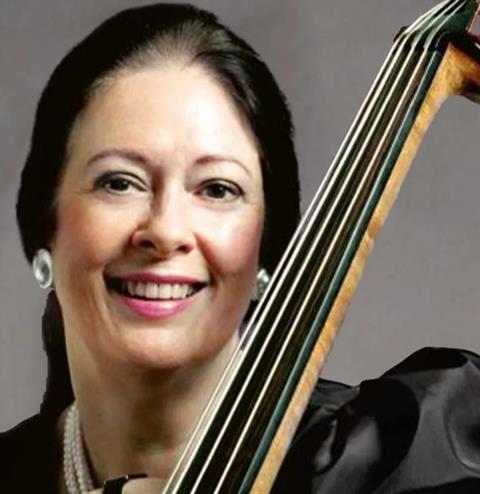
Playing the score for Stravinsky’s ballet Orpheus was a formative experience for the American double bassist in the years before she joined the New York Philharmonic
Discover more Featured Stories like this in The Strad Playing Hub.
Read more premium content for subscribers here
Before I joined the New York Philharmonic in 1966, I played for ten years in the orchestra of the New York City Ballet (NYCB). The standard of playing there was phenomenally high: in 1954 Toscanini retired from the NBC Symphony and the National Broadcasting Company network disbanded the orchestra, which meant a lot of top musicians ended up in the NYCB. For me, it was my musical home for a full decade and it was a wonderful influence on me, which I never forgot.
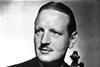
At the time, Igor Stravinsky had a very close association with the ballet. He was a brilliant orchestrator and would frequently sit next to the conductor in rehearsals. I never got to speak with him, being a rank-and-file bassist, but our principal bass Ted Flowerman often asked him questions about the orchestration: he wrote very carefully and sparingly for the bass, and was very aware of how each part worked with the orchestra. And he spoke just the same way: very measured and carefully, to mean just what he intended.
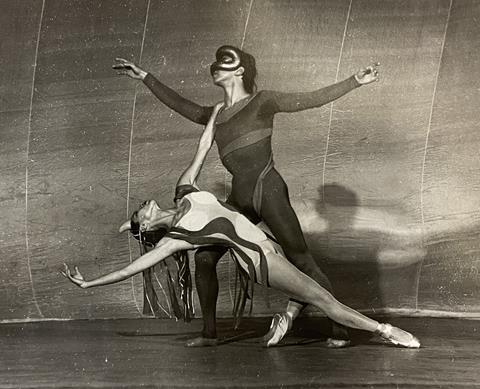
His best-known ballet for NYCB is still The Firebird, for which artistic director George Balanchine’s third wife Maria Tallchief performed the title role. He wrote Orpheus in 1948, in which she danced Eurydice. So it seemed like a very personal kind of project for all of them. She was still performing the part when I joined six years later, and the first time I heard the Orpheus score was in the pit when I was playing. I couldn’t get over the beauty of that music: there’s a particular section during the pas de deux for Eurydice and Orpheus, an almost Baroque-style section for two oboes and harp accompaniment, which felt reminiscent of a Bach sonata. The oboes intertwined with each other in such a gorgeous way that when I heard it in rehearsal, I would burst out crying. From then on, Ted Flowerman would say he’d remembered his handkerchief to pass me at that very point each evening!
The bass part for Orpheus isn’t too demanding, but it has complicated rhythm patterns that you need to study, and it takes concentration. In Stravinsky, the rests are just as important as the notes, and they create a certain feeling – so if you ever came in during a rest you’d just die of shame. So of course we never did! We were never allowed to take the parts home to practise, so we needed to be very good sightreaders.
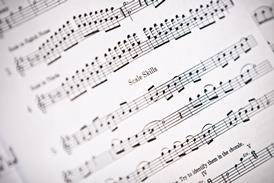
But of course the score contains some difficult sections, and this was before the days of photocopiers, so I’d have to write them down in a little book of manuscript paper, to practise later. Mostly I’d have to scribble them quickly in pencil, as I wanted the others to think I was still sightreading it all! It also meant that when I was hired by the Met to play in Erich Leinsdorf’s Ring cycle, I could give my sub my notebook to practise with.
It’s a shame the Orpheus score isn’t performed more often, as it’s such a great work of art. After leaving the NYCB, I only ever played it one more time. It was in the summer of 2010, during a three-week Stravinsky festival with Valery Gergiev conducting. It was great to have a chance to perform so many less well-known scores, such as the Symphony of Psalms, but it was clear to us that Gergiev didn’t know the scores very well and was learning them himself while conducting.
A good musician should be able to sightread the score: there’s nothing out of register or way up at the end of the fingerboard. Some of the rhythms are tricky, especially near the end where the Furies tear Orpheus to pieces, so it’s important to practise with a metronome and understand the rhythmic complexity. Often in Stravinsky, you can hear references to certain other composers and genres such as Baroque music, but it’s as if they’re there to fool you; all his scores are multilayered, and I’d say he symbolises 20th-century music, in the same way that Aaron Copland symbolises America.
INTERVIEW BY CHRISTIAN LLOYD








No comments yet