
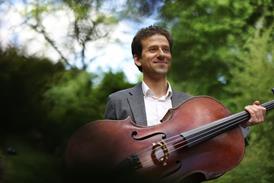


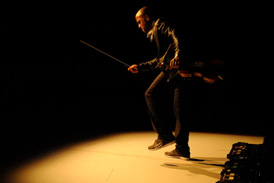



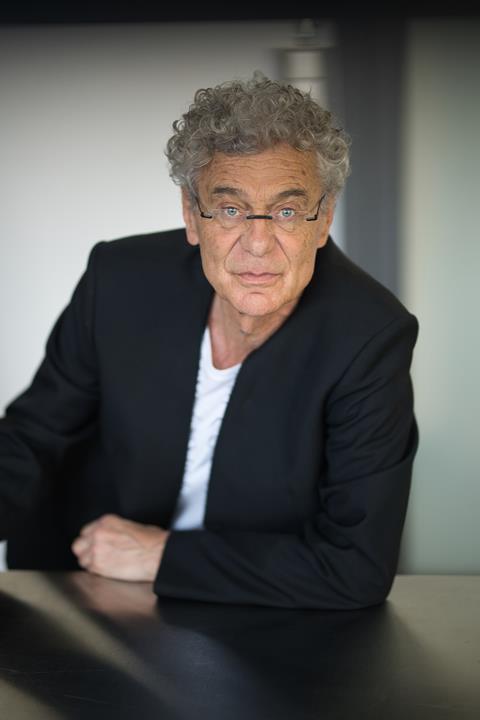
For the Swiss cellist, studying the original score of Haydn’s Cello Concerto no.2 in D major was the key to understanding the composer’s intentions
Discover more Featured Stories like this in The Strad Playing Hub.
Read more premium content for subscribers here
I’ve been playing the Haydn D major Cello Concerto for more than 50 years. I first started learning it when I was 16 and studying at the Bern Conservatory. Each tutor was able to put one student forward for a concerto performance with the Bern Symphony Orchestra, and my teacher Walter Grimmer chose me. So I had almost a year to practise for this, one of my first ever concerto performances.
Grimmer had been a student of Maurice Gendron, who had championed the original version of the concerto. Up until then, most soloists had worked from the 19th-century edition by the Belgian musicologist François-Auguste Gevaert. He’d changed the instrumentation, made cuts to the solo part and generally messed up the concerto completely. And yet this was the version that had been recorded by soloists such as Pablo Casals, which I knew well. Gendron recorded the original version in 1961 with Casals conducting, and I’ve always thought it was a shame that Casals, who had done so much to popularise the Bach Suites, had never paid much attention to Haydn’s original score.
So Grimmer gave me the score to study, which was fantastic for me. It’s written very clearly but very quickly, as if Haydn had composed it in half an hour! The writing is fine and beautiful, with almost no bowings or articulations, and has an organic quality to it. It’s the same feeling I get when I look at Anna Magdalena Bach’s manuscript of the Bach Suites. Grimmer also helped me learn the piece: his teaching style was drawn from Gendron, who would play a passage sitting next to you, after which you’d have to copy it as exactly as possible.
The score might be cleanly written, but the concerto is certainly one of the hardest in the repertoire. It was once thought to have been written by the cello virtuoso Antonín Kraft, a close friend of Haydn and a cellist in Prince Esterházy’s orchestra. His writing style is very different but I think Kraft must have influenced the concerto, by showing Haydn the possibilities: double-stops, octaves, giant leaps from the bottom of the fingerboard to the top. It’s amazing to think it was written in 1783; it was certainly one of the hardest pieces to have been written for cello up to then. Even today it contains challenges for virtuoso cellists. Personally I find the biggest task is simply to relax and feel easy on the stage.
Nowadays, of course, the Haydn D major is one of the pieces every student will have to play for auditions. An orchestra will require at least the first movement, plus maybe a cadenza. When it comes to interpretation, we should bear in mind that the sound is completely different from, say, Schumann or Dvořák. There needs to be not too much vibrato but more articulation, especially on the repeated notes; it’s like speaking in a clipped way to make sure listeners hear every word. There are several rules like this that we need to follow, before you have the freedom to tell your own story.
Haydn does give a few indications in the score as to what he wants. For instance, when the second theme appears, he wrote a big bow marking above it, even though it’s impossible to play it in one bow. But seeing that causes you to think about how you might make it sound like that. This is why it’s important for students to study the original score: he gave such clear indications that make you play a certain way if you follow them.
It’s interesting for me when I play both the C major and D major concertos together in one evening. Haydn composed them around 20 years apart and the differences in style are obvious. The earlier concerto has much shorter themes, while in the D major, each theme has more of a singing quality to it. I always find it beautiful to play, and to experience the atmospheres that he creates.
INTERVIEW BY CHRISTIAN LLOYD
Read: ‘Only give it as much as you need’ - Thomas Demenga’s life lessons
Read: Bach and me: Thomas Demenga on the Cello Suites
Discover more Featured Stories like this in The Strad Playing Hub.
The number one source for playing and teaching books, guides, CDs, calendars and back issues of the magazine.
In The Best of Technique you’ll discover the top playing tips of the world’s leading string players and teachers. It’s packed full of exercises for students, plus examples from the standard repertoire to show you how to integrate the technique into your playing.
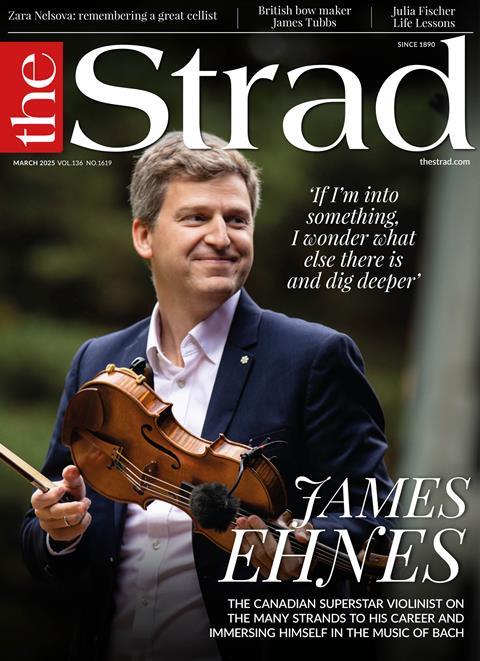
In the second volume of The Strad’s Masterclass series, soloists including James Ehnes, Jennifer Koh, Philippe Graffin, Daniel Hope and Arabella Steinbacher give their thoughts on some of the greatest works in the string repertoire. Each has annotated the sheet music with their own bowings, fingerings and comments.
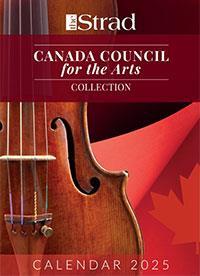
The Canada Council of the Arts’ Musical Instrument Bank is 40 years old in 2025. This year’s calendar celebrates some its treasures, including four instruments by Antonio Stradivari and priceless works by Montagnana, Gagliano, Pressenda and David Tecchler.








No comments yet