







![Ayanna Witter-Johnson [Jordan Woods] 7](https://dnan0fzjxntrj.cloudfront.net/Pictures/274x183/4/9/4/44494_ayannawitterjohnsonjordanwoods7_224583.jpg)


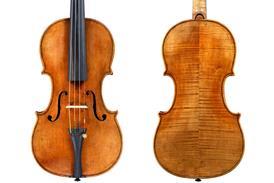

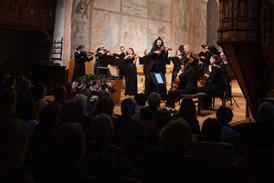





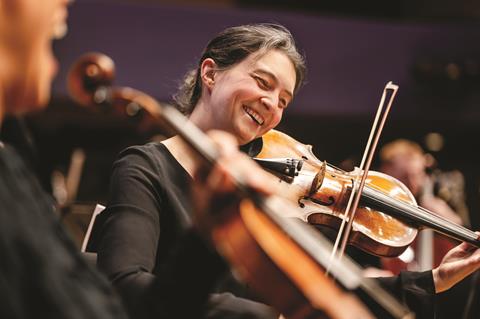
Minnesota Orchestra principal violist Rebecca Albers prepares the North American premiere of Donghoon Shin’s Celan-inspired viola concerto Threadsuns.
Read more Featured Stories like this in The Strad Playing Hub
When the Minnesota Orchestra gives the North American premiere of Threadsuns on 30–31 January, the focus will fall squarely on its principal violist, Rebecca Albers, who takes on the solo role in South Korean composer Donghoon Shin’s searching and deeply personal concerto. Conducted by Fabien Gabel, the performances mark a significant moment for a work that has already made a strong international impression since its unveiling by the Berliner Philharmoniker last year.
Threadsuns favours inwardness over overt display, unfolding through fragile emotional contrasts instead of bravura gestures. The title comes from Paul Celan’s poem Fadensonnen (Threadsuns), whose spare, enigmatic language suggested to Shin a music that is ‘sad but not crying, mournful but not howling, in despair but not without hope’. That emotional complexity lies at the heart of the two-movement concerto, which Shin says inhabits ’the borders of tonality, atonality and modality’.
Threadsuns received its world premiere on 9 January 2025 with the Berliner Philharmoniker, with the orchestra’s principal violist Amihai Grosz as soloist. Shin composed the work for Grosz, its dedicatee, and in memory of composer and conductor Peter Eötvös.
The Minnesota Orchestra has previously championed Shin’s music, performing Upon His Ghostly Solitude last season, and now returns to his sound world with Rebecca Albers as soloist. In conversation with US correspondent Thomas May, she shared her thoughts on encountering Threadsuns for the first time, its poetic undercurrents and the demands and rewards of bringing this newly minted concerto to North American audiences.
Do you remember your first reaction when you started learning Threadsuns? What jumped out at you right away about how Donghoon Shin has written it for the viola?
Rebecca Albers: My first impression of the piece was that Mr Shin understands the viola’s unique voice, and this piece would highlight the inherent lyricism of the viola while also challenging conventional thought on what is possible on the instrument. As I started sort of stumbling my way through it, I was struck by the massive undertaking that preparing it would be. I have enjoyed the technical and musical challenge though and am grateful for the soaring beauty of the lyrical writing, as well as the fire of the more thorny, gritty, technical passages.
Paul Celan’s poetry was a starting point for Shin’s inspiration. As a performer, how do you relate to that kind of extra-musical reference when you’re preparing a piece like Threadsuns?
Rebecca Albers: Honestly, I have reacted to this extra-musical reference in different ways throughout the preparation process. The short poem Threadsuns is about the existence of hope in a desolate landscape – hope beyond mankind. Right now, speaking as a Minnesotan, finding hope despite what is happening daily on our streets, is something I am constantly reaching for.
Rereading the poem, and reading more of Celan’s poetry, has opened a different world of emotional expression for me when I am working on the Shin. This has given me an outlet in a difficult time, and I hope that I will be able to share this relief with others when we perform.
As you prepare the concerto, have you been in contact with Donghoon Shin? If so, how do you balance that input with your own instincts? Given how specifically he writes for the viola’s colour and emotional ambiguity, how does the piece feel under the fingers?
Rebecca Albers: We have not been in touch, but I am looking forward to working with him when the orchestra starts rehearsing the piece. I’m grateful that he will be here for that process. The more lyrical passages of the piece feel incredible under the fingers. Some of the more technical passages have felt like a puzzle to be worked out. Sometimes I can find the solution, and sometimes I struggle.
The concerto opens with a searching solo for the viola before the orchestral dialogue really begins. How do you find your way into that opening, and what kind of atmosphere are you trying to establish there?
Rebecca Albers: I think the idea of searching is central to the opening solo, and your question sort of answers the way that I am thinking about it. It is very much that I am trying to find my way. There is darkness and fear, there is sadness, but there is also comfort. I hope that I will have the patience to allow the sound to develop and exist, while also having the imagination and foresight to carry the audience with me. When the duet with my colleagues in the viola section begins, I know I will feel relief.
Instead of setting up a traditional soloist-versus-orchestra dynamic, Threadsuns often feels like a close conversation with the ensemble. How does that affect the way you think about your role in the piece?
Rebecca Albers: At times the solo viola is fighting the orchestra, and at other times we are joining together in song. Overall, though, I think we are very much partners in an odyssey. I am excited to play this piece with my incredible colleagues in the Minnesota Orchestra.
This performance marks the North American premiere of the concerto. When audiences hear Threadsuns for the first time, what do you hope stays with them?
Rebecca Albers: I hope that the audience comes away feeling that we have all been on a journey together and that we have collectively found our way through darkness and light. I honestly hope that they are as emotionally exhausted as I will be, and I hope that the piece both gives comfort and leaves people thinking about humanity. More selfishly, I feel like the viola is somewhat overlooked as an instrument, and through Shin’s excellent writing, I am excited for the audience to come away with a different sense of the instrument and its versatility and beauty.
The concert on Friday 30 January will be streamed live via the Orchestra’s YouTube channel at 8 p.m Central Time: www.youtube.com/live/QkLgjeHDanY



![Ayanna Witter-Johnson [Jordan Woods] 7](https://dnan0fzjxntrj.cloudfront.net/Pictures/100x67/4/9/4/44494_ayannawitterjohnsonjordanwoods7_224583.jpg)







No comments yet