



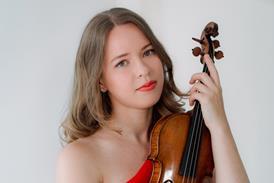


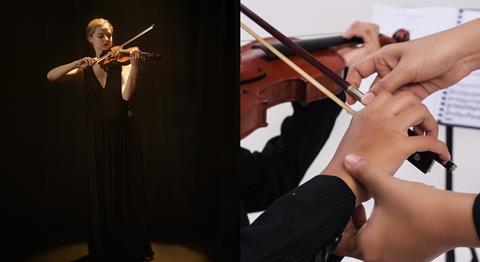
Can performers sustain their own careers while also teaching students at a high level? Violinist Irina Rostomashvili believes it is not only possible, but essential
Discover more Featured Stories like this in The Strad Playing Hub
Read more premium content for subscribers here
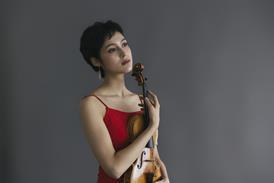
Is it really possible to balance one’s own performing career with also inspiring students? For me, the answer is yes, and more than that, I believe the two pursuits are inseparable. While some soloists feel that teaching might distract them from their performing career, either because they fear it will limit their own schedule or simply because they do not wish to divide their focus, I would encourage them to embrace it instead. Teaching deepens one’s artistic awareness, refines communication and ultimately enriches both the performer and the musician within.
This realisation began early in my life in Tbilisi, Georgia, where I grew up attending my teachers’ concerts. They were deeply committed to their students, yet they were also fully engaged as soloists, chamber musicians and orchestral players. Their example was powerful: teaching was not something they did in place of performing, nor was performance detached from pedagogy. Each role strengthened the other, and the results spoke for themselves in the remarkable generations of violinists they nurtured, many of whom went on to international careers.
In the US I found the same model among my mentors. They lived this double life with purpose, preparing students for competition juries and auditions while simultaneously working towards their own major concerts.
Teaching, I have discovered, is a constant form of learning. No two students approach a passage in the same way, and in working to find simple solutions for their technical difficulties, I often uncover new ways of thinking about repertoire I have played for years. I might approach a familiar concerto as if explaining it to a student for the first time, re-examining fingerings, bowings or phrasing with fresh eyes. That mental exercise inevitably feeds back into my own practice. I often tell my students, ‘The best teacher you will ever have is yourself, as long as you are able to criticise your playing, recognise your mistakes, and work to resolve them.’
Teaching, I have discovered, is a constant form of learning
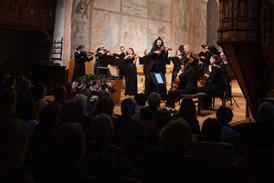
Teaching, however, is a reciprocal relationship. My students know that when I speak about stage nerves or performance pressure, it comes from real experience. They see me not only in the studio but also on stage, vulnerable to the same adrenaline, excitement and doubts they feel. Sharing those emotions openly helps them realise they are not alone. I can tell them with honesty that I still feel nervous before a concert, but that I have learnt to transform that energy into expression. This kind of transparency builds trust in the studio in a way no theory book ever could.
Maintaining the balance is never easy; it requires discipline, efficient planning and the ability to compartmentalise. Concert travel means constant reorganising of lesson schedules, and a demanding teaching week can leave little time for personal practice. There are evenings when I walk straight from the classroom to the concert hall, shifting roles in the space of a few hours. The demands can be exhausting, yet I find that the variety itself sustains me: the solitary work of preparing for a performance is balanced by the communal act of nurturing young musicians.
I do not see my career as two parallel tracks but as a single, integrated path. Teaching keeps me intellectually engaged and emotionally grounded, and performing pushes me to stay artistically honest and technically sharp. Together, they form a cycle of renewal. My students remind me why I fell in love with music, and my performances show them what is possible when that love is pursued with discipline and imagination.
Far from being a burden, the dual life of performer and teacher has become the cornerstone of my identity. The result is a richer, more authentic musical life for myself and, I hope, for the students who place their trust in me.
Read: Opinion: The importance of repetition in teaching
Read: Opinion: Embracing diversity in string teaching
Discover more Featured Stories like this in The Strad Playing Hub
Read more premium content for subscribers here












No comments yet