





![Ayanna Witter-Johnson [Jordan Woods] 7](https://dnan0fzjxntrj.cloudfront.net/Pictures/274x183/4/9/4/44494_ayannawitterjohnsonjordanwoods7_224583.jpg)


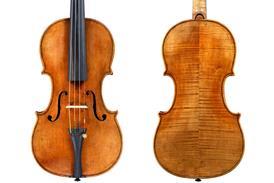




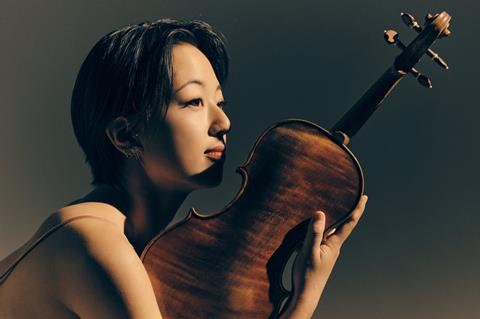
In an age of instant digital access to recorded music, violinist SongHa Choi still believes that nothing can compare to the experience of a live performance
Discover more Featured Stories like this in The Strad Playing Hub
Read more premium content for subscribers here
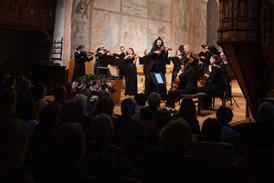
’Aura’ is the part of a performance that cannot be replayed. German philosopher Walter Benjamin used the word for something that lives only once. But I grew up discovering music in exactly the opposite way: through recordings, streams and digital archives where everything can be repeated endlessly. Yet the moments that stay with me most as a musician have always happened in the room, not on the screen.
Benjamin wrote in the 1930s, when photography and film were reshaping how art was copied and circulated. His concern was that constant reproduction might weaken the ‘here and now’ of an artwork. He could never have imagined the scale of digital access we now take for granted, yet his idea of aura feels surprisingly current. Today, almost all music can be experienced digitally, but the core of what gives a performance its meaning still depends on presence.
I was part of one of the first generations for whom online access felt ordinary. As a young listener, I moved between recordings and archives with ease, hearing halls I had never visited and artists across centuries. But as a performer, I found that the distance between those worlds became clear. Watching a streamed concert has little to do with being on stage, as an audience listens with you; the two experiences influence you in different ways and carry different expectations.
The core of what gives a performance its meaning depends on presence
Digital listening has opened up an enormous world for young musicians. It allows us to explore repertoire freely and encounter performances we might never hear live. But the ease of it also shapes how we listen. Online, we hear versions refined through editing and designed for clarity. We repeat passages, isolate details and begin to expect a level of control that doesn’t exist in a concert hall. Real acoustical balance can feel unfamiliar after long stretches of digital listening. In person, resonance moves with the space and varies continuously, rather than following the control of a microphone or editing work.
I have sometimes felt my mindset shift when microphones or cameras are present, especially in a solo concerto when the performance is recorded for broadcast. On stage, I would feel the need to exaggerate and amplify my projection to enable the sound to reach the back of the hall, and that can push articulation or colour in ways a microphone responds to differently. In live-streamed settings, the same phrase can feel like two parallel versions in a hall and in a broadcast. I have noticed that tension, but I always end up playing for the people in the room. It’s a reminder that recording and performing rely on different instincts, even when they happen at the same time.
I often feel suspended between the worlds that formed me. The digital one taught me how to imagine sound and explore widely. The live one taught me how sound behaves when it meets the room itself, and how a piece can feel different when a hall ‘leans in’ or ‘sits back’. Those ways of listening do not cancel each other out: they pull in different directions, and the tension between them shapes how I understand music.
In a time when attention is scattered and so much unfolds through screens, the shared focus of a live audience feels more necessary than ever. If Benjamin’s concept of aura survives anywhere today, it is in this shared space, where sound and silence meet unrepeatably and where meaning is created through presence.
Recordings may give us every possible rendering of a performance, but the one that matters is the one that happens live. Aura persists in the shared presence of performer and listener, in the moment when music is made and attention becomes collective. In a world of endless reproduction, that presence has become essential, not optional.
Read: Rethinking the Partitas: an experience at Amare
Read: What musicians can learn from Stanislavski’s method acting: violinist SongHa Choi
Discover more Featured Stories like this in The Strad Playing Hub
Read more premium content for subscribers here









No comments yet