





A compelling foray into the viola da gamba’s history
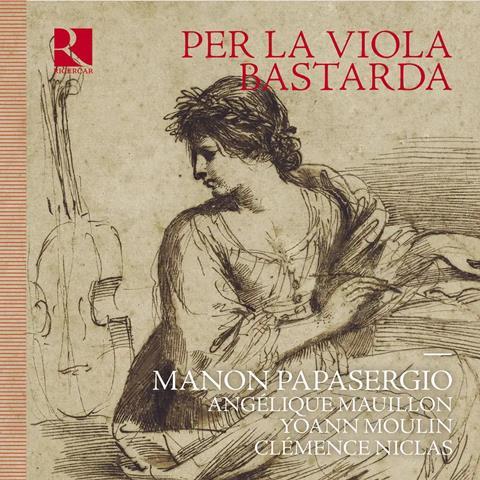
The Strad Issue: January 2026
Description: A compelling foray into the viola da gamba’s history
Musicians: Manon Papasergio (bass viol) Angélique Mauillon (harp) Yoann Moulin (harpsichord, organ) Clémence Niclas (soprano)
Works: Music by Bassani, Cabezón, Ganassi, Lassus, Luzzaschi, Ortiz, Papasergio, Rogniono, Rognoni, Virgiliano and Willaert
Catalogue number: RICERCAR RIC480
This programme offers insights into the viola da gamba’s evolution as a virtuoso solo instrument in the late Renaissance via a wide range of repertoire (mostly in manuscript and print) based on alla bastarda technique. The latter involved condensing polyphonic compositions (principally songs/madrigals) to a single line and adding improvised diminutions of ever-increasing complexity; supplementary ornamentation or new counterpoint were also occasionally applied.
Although each of the performers features as a soloist using alla bastarda, gambist Manon Papasergio is the principal protagonist. She adroitly dispatches two of Ortiz’s bravura Recercadas, creating a kaleidoscope of varied colours and articulations, and she weaves diminutions of the polyphony deftly around the vocal line in Cabezón’s Qui la dira (after Willaert).
Four examples by Bassani amply confirm her fleet left-hand fingering and easy right-hand dexterity across the instrument’s range, especially Nasce la gioia mia (da Reggio). Her technical facility serves musical ends well elsewhere in Rogniono’s Ancor che co’l partire (de Rore) and in two of her own historically modelled improvisations, one on the tenor of La Bergamasca and the other on La Monica. She also offers a completion of Virgiliano’s Nasce la pena mia (Striggio).
This is a stimulating and edifying listening experience of a transformative technique, persuasively realised in a warmly reverberant acoustic.
ROBIN STOWELL








No comments yet