
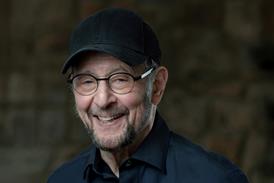

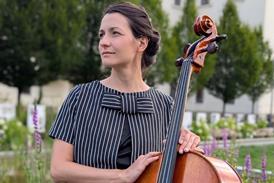


The German-French cellist on collaborating with Liza Lim and bringing her Grawemeyer Award-winning cello concerto A Sutured World to life
Read more Featured Stories like this in The Strad Playing Hub
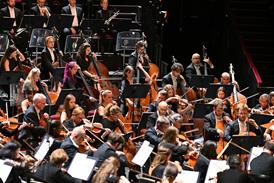
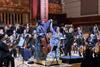
The announcement in December 2025 that A Sutured World has received the 2026 Grawemeyer Award for Music Composition places Liza Lim’s cello concerto among a select group of recent works to have made a rapid and lasting impact. Written for Nicolas Altstaedt – the German-French cellist whose work spans historically informed performance, contemporary music and the core concerto repertoire – A Sutured World was unveiled in October 2024 with the Bavarian Radio Symphony Orchestra in Munich and has since been taken up by orchestras in Europe and Australia. A live recording made from the premiere is available on BR-Klassik.
Conceived as a large-scale meditation on fracture and repair, A Sutured World takes its cue from images of mending that do not hide damage so much as reframe it. Lim has pointed to kintsugi, the Japanese practice of repairing broken pottery with gold lacquer so that the break-lines remain visible, and to the wider idea of suturing: stitching what has been torn so that a scar becomes part of the object’s new life.
Rather than offer a single narrative, the concerto sets the cello in shifting relation to the orchestra, with the soloist repeatedly negotiating contrasts of lyricism, abrasion, play and ritualised stillness.
A Sutured World emerged from an extended period of exploration and revision, during which Lim has spoken of deliberately venturing beyond familiar compositional pathways. That sense of risk and discovery is mirrored in the cello writing itself, which demands both physical engagement and acute sensitivity to colour and texture.
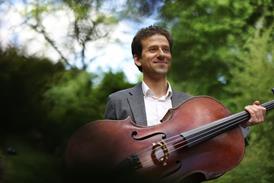
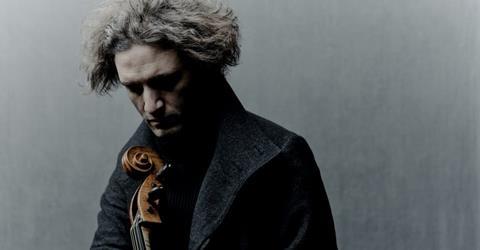
For Altstaedt, A Sutured World has quickly become a central work in his repertoire. Having premiered the concerto and subsequently performed it in a variety of acoustic and cultural settings, he has developed an unusually close relationship with the piece. In this conversation with US correspondent Thomas May, Altstaedt discusses receiving news of the Grawemeyer Award, working closely with Lim, the concerto’s distinctive timbral world and how the music continues to reveal itself in performance.
What was your reaction to the news that A Sutured World had received the Grawemeyer Award, and what does this recognition mean to you as the work’s dedicatee and first performer?
Nicolas Altstaedt: I was very happy for Liza, and that this piece has been reaching and moving people. It is a masterpiece with a personal meaning for myself and I wish to play it as much as possible. It is a recognition of Liza’s powerful voice and will hopefully help to make the piece more audible.
Liza has described the composing process as searching for a ‘hidden seam’ that eventually opened into the piece. What was it like for you to step into a sound-world shaped so specifically around your playing and your instrument’s voice?
Nicolas Altstaedt: I felt like a fish in water, free to explore all possibilities while serving the music. It is very rare to feel this amount of freedom as well as the sense of being at home with a newly written concerto. I was at the same time so happy to be actively part of Liza’s music that I had until then only admired as a listener.
How would you describe your collaboration with Liza Lim on this concerto? What is distinctive about her musical imagination or way of working that made the process meaningful for you as a cellist?
Nicolas Altstaedt: We met in the summer of 2022 in Berlin. She had been following my playing, the repertoire and the collaborations that inspire me carefully, and I introduced her at that time to my violoncello piccolo. In summer 2024, we met in Australia again while I was on tour with the ACO. By then the concerto had already been finished and I didn’t know what to expect at this point.
We briefly met the evening before the first rehearsal in Munich, where she was very specific about a few moments, but gave me all her trust in the rehearsals following. Notation is a very tricky thing. Sometimes you need to write something down very specifically to create a different effect. That can lead to making a piece horrendously difficult, while there is a possibility of finding a different and easier solution. Liza managed to be free and precise at the same time. It was a joy to learn the piece and though interpretations can vary, you always recognise her very distinctive voice.
The concerto casts the soloist as a kind of ’surgeon’, suturing fractured musical materials. Did that image shape your approach to sound, bow contact, or the physical vocabulary of the piece?
Nicolas Altstaedt: It was a rather spiritual experience. Liza had touched a nerve and something connected with my life that she couldn’t know about. A friend of mine would call it quantum physics. The first performance in Munich that is released now made me realise: this is my very own and personal concerto.
Liza’s writing in A Sutured World is deeply timbral – from the open-string rocking and ‘papery whispers of harmonics’ to the two-bow gesture at the end. Did working on the concerto lead you to particular choices about your instrument, strings, or bows? And did the piece reveal anything new to you about your cello’s voice?
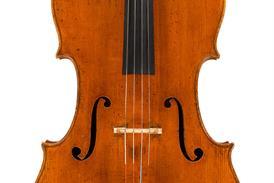
Nicolas Altstaedt: I play all repertoire with the Guadagnini cello and one of my preferred bows, which I mostly decide on spontaneously. I had suggested to her the use of the Baroque bow (when I introduced her to the piccolo cello), that I play half of the time, but not simultaneously with another one. This was a new ‘technique’ I needed to learn. The beauty about this effect and the ending is that the visual aspect is so connected with the audible one. The sound of the hurdy-gurdy asks for visuality and it somehow only makes sense when you can actually see it. It is therefore not an effect, but something archaic and deeply touching.
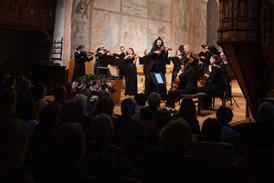
You’ve now performed A Sutured World in very different contexts – Munich, Amsterdam, Melbourne. How has the piece evolved for you, and what have these different orchestras, acoustics, and performance spaces revealed about the cello part?
Nicolas Altstaedt: I think once you become more acquainted with a piece and make it your own, the easier it is for the musicians around you to get inspired and jump on the same boat. The most challenging for me were the first two rehearsal days with orchestra, when you haven’t performed the piece yet. You need to find out by listening and endless trying what the piece is about, how far I can go, what the piece allows and what it doesn’t. I needed a performance to ‘take off’.
From that moment the piece revealed itself. It was a liberation and I thought: I will enjoy this journey.
Listen: The Strad Podcast Episode #14: Nicolas Altstaedt on the Lutosławski Cello Concerto
Read: Composer Liza Lim wins 2026 Grawemeyer Award for cello concerto
Read: Premiere of the Month: Josephine Stephenson’s new work featuring Nicolas Altstaedt
Discover more Featured Stories like this in The Strad Playing Hub






No comments yet