









Four concertos celebrate a great violinist in her extended prime
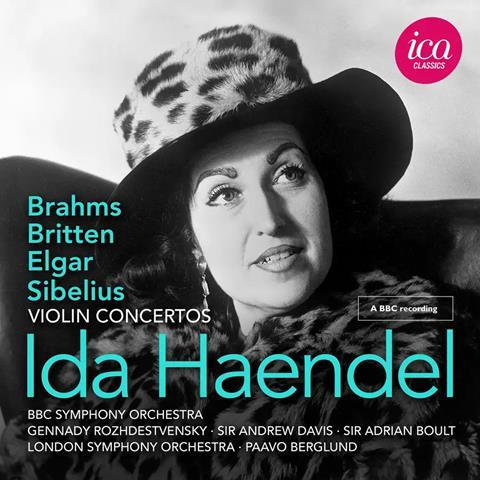
The Strad Issue: November 2025
Description: Four concertos celebrate a great violinist in her extended prime
Musicians: Ida Haendel (violin) BBC Symphony Orchestra/Gennady Rozhdestvensky, Andrew Davis, Adrian Boult; London Symphony Orchestra/ Paavo Berglund
Works: Brahms: Violin Concerto. Britten: Violin Concerto. Elgar: Violin Concerto. Sibelius: Violin Concerto
Catalogue number: ICA CLASSICS ICAC 5185 (2CDS)
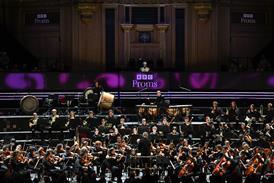
The two English concertos come off best in this valuable snapshot of Ida Haendel in her element – the concert hall. These BBC recordings were made when Haendel was between 47 and 70, three of them stemming from the Proms, where she was a favourite.
From 1971 comes the Elgar with Boult, a useful corrective to the rather broad tempos in their later studio recording. After a fine tutti, Haendel’s entry is firm and she is on good form; she plays the second subject with ideal breadth each time it comes up; her entry in the heartfelt Andante is vibrant but not too thick; then she tears triumphantly into the finale, finding inwardness in the cadenza. She has a terrific command of the work and her intonation is pretty good.
Jump to 1994 and the Britten with Andrew Davis is just as overwhelming: Haendel’s first entry is quite seraphic and in faster passages she is effective and committed. Davis is on top of his brief and if one or two quiet high passages from Haendel are a bit iffy, her intentions are clear. She is really zippy in the Prokofiev-like central Vivace, with a splendid cadenza, and the transition to the final Passacaglia offers promise that is fully redeemed.
The 1982 Brahms opens with a monumental tutti from Rozhdestvensky and, after a strong entry, Haendel takes quite a broad view. A lovely oboe solo in the slow movement brings a matching loveliness from the soloist, and the finale goes at an average tempo – I prefer a little more speed.
Berglund, on home turf in the Sibelius, brings tremendous impetus to the opening movement and Haendel revels in his support, providing a first-rate cadenza. She enters far too vibrantly in the Adagio di molto and this effect works against the music’s inwardness and simplicity. Things do improve towards the end of the movement, and the finale dances well. There is good sound throughout, with more of a concert acoustic in the Britten.
TULLY POTTER










No comments yet