
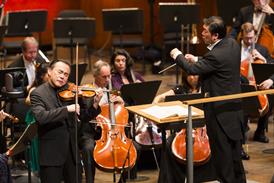
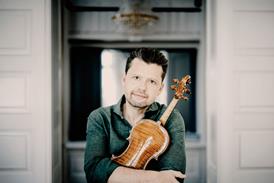
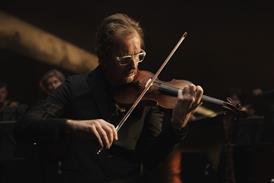




Simon Thompson reports on the string-related events at Scotland’s East Neuk Festival, which took place from 1–5 July

The picturesque villages of the East Neuk of Fife are best known for their beaches and their seafood, but for five days every summer they host the East Neuk Festival. This is a tucked-away haven of musical celebration that has chamber music as its life blood.
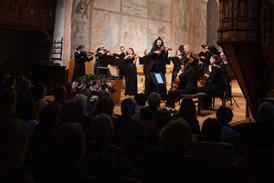
Every year it entices some of Europe’s finest soloists and chamber ensembles to perform amid the East Neuk’s quiet hamlets and historic churches, the jewel of which is the ancient church at Kilrenny, the festival’s secret chamber music weapon. When it was renovated in 1808 its interior was clad with wood, giving it an acoustic that couldn’t have been more perfect for strings if they’d tried to design it that way. Kilrenny gives the audience the magical feeling of what it might be like to sit inside a violin while it’s being played, the church seeming to vibrate around you while the music is in the air, holding lovingly onto every note before letting it go.
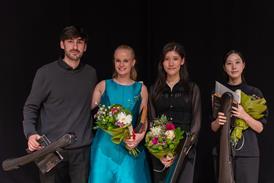
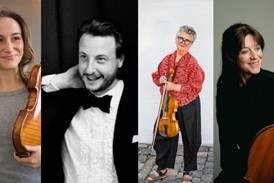
This year saw the return of Opus13, the stellar Swedish–Norwegian quartet which made its UK debut at the East Neuk Festival in 2024 (and then proceeded to win Wigmore Hall’s String Quartet Competition last year). In Kilrenny the musicians chose the quartet from which they derive their name – Mendelssohn’s Second, which was the first work they played together as teenagers. It’s clearly a piece close to their hearts: they lavished warmth on the slow music, savouring the Adagio like a fine wine, while the fast outer movements crackled with energy, sparks flying in both the lively first movement and the finale.
Read: Opus13 signs with Kirshbaum Associates
Read: Winners announced for the Wigmore Hall International String Quartet Competition
Read: 20 years of Cuarteto Quiroga: ‘Humour is essential’
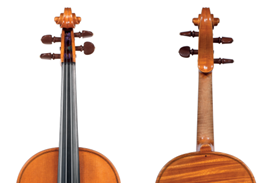
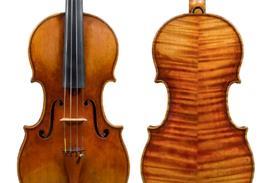
Watch: Cuarteto Quiroga performs Brahms on decorated Stradivarius instruments
There was also plenty of expressive warmth in Britta Byström’s Images from the Floating World. Inspired by Japanese woodblock printing, her score sometimes seems to atomise the quartet, prioritising individual lines over coherent blend. It’s exhilaratingly varied, with effects ranging from eerie slides and spectral harmonics through to passages where the four players slide in and out of balance.

Opus13 also featured in the festival’s showpiece weekend event – all three of Beethoven’s op.59 ‘Rasumovsky’ Quartets played by three different groups in different settings. Up the coast in Crail, Opus13 played no.3 in the village church, bringing searing intensity and live-wire freedom to its playing in a way that made it sound as though Beethoven’s melodies were flying high without the aid of a safety net. Earlier that day, back in Kilrenny, the Spanish Quiroga Quartet (making its festival debut) played no.1 with a gorgeous dose of Mediterranean warmth, matching the sunlit violin tone with a fantastically rich cello sound, and lending Beethoven’s scherzo such delicacy that it sounded as if the musicians were tiptoeing through it.

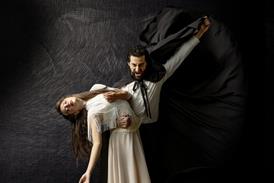
‘Rasumovsky’ no.2 went to the Calidore Quartet in Crail, and it uncorked all of the work’s dark, febrile energy, revealing this as a high-pressure drama that carries very little relaxation or release. The Calidore then plunged even further into the dark the following day when it played Schubert’s ‘Death and the Maiden’ Quartet as if it were a high-octane psychodrama; everything treated with vice-like focus, driven by a terrible energy that ran through every phrase, even the slow, warm beauty of the variations.
Read: ‘These are by no means the easiest’: the Calidore Quartet on Beethoven’s early string quartets
Read: The Calidore Quartet: scaling the summit
Read: Calidore Quartet wins $100,000 prize at Michigan competition
Who could have imagined that the warmest, most welcoming music the Calidore would play at the festival would be by Mark-Anthony Turnage? This was in the form of the UK premiere of his Arietta, an achingly lyrical homage drawn from the finale of Beethoven’s last piano sonata, 15 minutes of peace and beauty in an otherwise spirit-shaking programme.
The last word, however, goes to a festival returnee. Pianist Christian Zacharias played at the very first East Neuk Festival back in 2005 and has been one of its strongest regular supporters ever since. He came out of what he called semi-retirement to play alongside members of the Quiroga Quartet and double bassist Ander Perrino Cabello in Crail in a sparkling, beautifully vivacious performance of Schubert’s ‘Trout’ Quintet. If chamber music is a conversation between friends, then this felt like eavesdropping on a relationship of long-standing depth and intimacy, so delicious was the interplay between keys and strings. How remarkable, then, to discover that not only was this the first time Zacharias had played with them, but that this was the quartet’s first ever ‘Trout’. All I can say is that they took to it like, well, like a trout to water.
Reference







No comments yet