

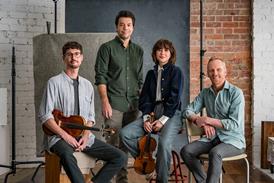
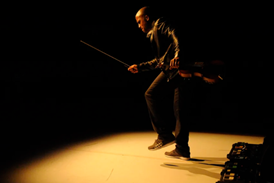
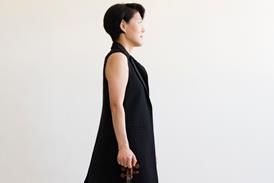
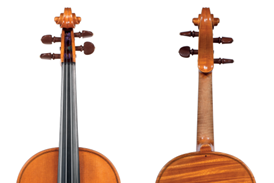
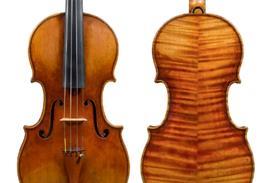


Kronos Quartet returns to Philip Glass’s Dracula score nearly three decades after their original collaboration, this time sharing the stage with dancers.
Discover more Featured Stories like this in The Strad Playing Hub
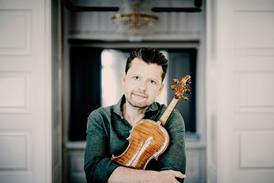
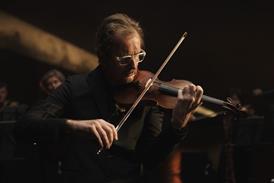
David Harrington’s insatiable hunger for discovery has been the driving force behind Kronos Quartet for more than half a century. From George Crumb’s Black Angels, which inspired him to found the ensemble in 1973, to its long-running collaborations with composers such as Terry Riley and Philip Glass, Kronos has continually expanded the possibilities of the string quartet. Its relationship with Glass has been especially fruitful, encompassing his string quartets, the soundtrack for Mishima and an unlikely encounter with Count Dracula.
In 1998, Glass composed a new score for Tod Browning’s 1931 film Dracula, starring Béla Lugosi, with Kronos performing the music. Released on Nonesuch the following year, the recording became the basis for a series of live performances accompanying screenings of the film, eventually turning into something of a Halloween tradition. Harrington is the only member of the original recording lineup still playing with Kronos, whose current members are violinist Gabriela Díaz, violist Ayane Kozasa and cellist Paul Wiancko.
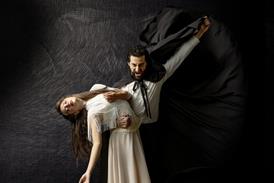
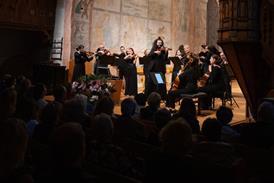
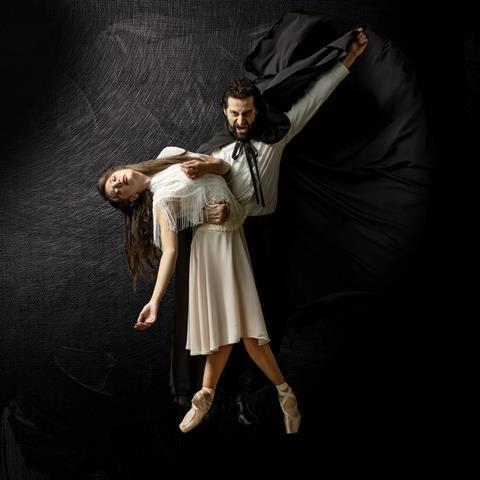
Now Kronos is returning to Dracula in a strikingly different guise. For Dracula, a dark shadow, a new full-length ballet premiering on 30 and 31 October at Santa Barbara’s Granada Theatre, choreographer Nicolas Blanc has reordered Glass’s music to create his own interpretation of the Gothic tale, complete with undead creatures, wolves and a ballroom scene. The musicians will perform onstage alongside the dancers, wearing specially designed costumes.
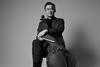
Speaking with US correspondent Thomas May ahead of rehearsals with State Street Ballet, Harrington recalled how Dracula began over dinner with Glass, discussed what awaits Kronos on the ballet stage and hinted at a few surprises for longtime fans of the score.
How did Kronos first become involved in Philip Glass’s score for Dracula?
David Harrington: We were in London, and Philip was also there. We ended up at dinner together after one of our shows – maybe it was after one of his shows – and Philip told me Universal had offered him the opportunity to write a score for one of their films. He had a choice of Frankenstein or Dracula – I think there might have been another. And I said, ‘Well, I think it has to be Dracula!’
A couple of weeks later, he said, ‘I’m imagining it would be for Kronos.’ And I said, ‘Fabulous, let’s do it!’ He got right into it very quickly, and basically he was writing one movement a day for about a month. This happened really quickly. That must have been in 1996.
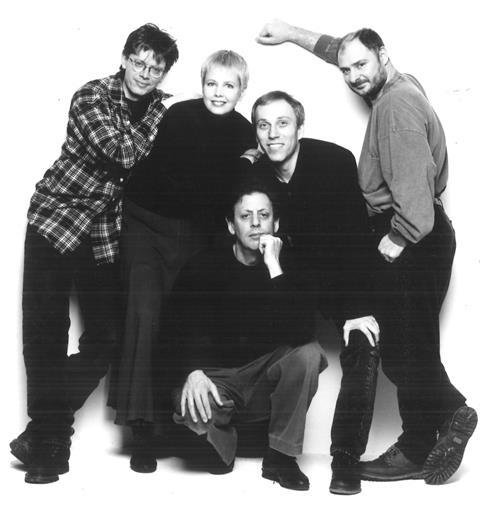
What was it about Kronos’s sound that made the string quartet such an effective medium for Glass’s Dracula score?
David Harrington: I think part of it was the kind of interior tone that we can produce. I think Philip heard something in the way Kronos had been playing his Fifth String Quartet, and the way we played the Fourth, and Company (No. 2) and Mishima (No. 3). He really responded to that tone. Some of the cues in Dracula I know were written for me and for Hank [Dutt], John [Sherba] and Joan [Jeanrenaud]. I can hear it. I’ve always thought that the Dracula score is some of Philip’s greatest music.
How did the score develop as a live performance with the film?
David Harrington: It immediately became a performance piece with the film and with Kronos, and then with Philip himself and Michael Riesman [Glass’s longtime musical director and keyboard collaborator] as well. There have been several versions of this, even from the beginning. We got our parts, and then it became clear that there would be keyboards as well. Michael conducted the score, keeping us all aligned with the film. That was always fun, an amazing experience. The six of us just had such a great time doing this. After several years, it became seasonal in a certain way. Halloween was the time for Dracula! The last time we did it live with Philip and Michael was at least twelve years ago. It’s been a while.
Last Halloween, we did a show here in San Francisco in which we included some music from Dracula with Timo Andres on piano. We also played all kinds of other scary music and seasonal music, trying to make an occasion out of that concert. It was so much fun, and we realised we liked this. This is good for us! The audience seemed to have a great time as well. Then we got a call from State Street Ballet. They wanted to do it for Halloween this year, and we looked at some of Nicolas Blanc’s work and thought, ‘This is going to be great. It’s going to be fun.’
Kronos has worked with dancers before. How does this new collaboration compare with those experiences?
David Harrington: Over the years, we’ve worked live with dancers. Merce Cunningham choreographed John Cage’s String Quartet in Four Parts, and we did some really wonderful things with the Margaret Jenkins Dance Company here in San Francisco in the early 1980s. We also performed Philip Glass’s music with Nederlands Dans Theater in the Netherlands. But it’s been a long time since we’ve appeared live in this kind of setting.
State Street Ballet has been working from the recording that Kronos made of the music for string quartet alone. It’s going to be fascinating when we rehearse with them, because my experience with dance – unless it was Merce Cunningham’s company – is that the tempo of the music is going to be very, very important. Since they’ve worked from our recording, I’m assuming we’re going to need to nail those tempos exactly, the way they’re used to dancing to them. We haven’t been in rehearsal together yet, so we’re going to find out!
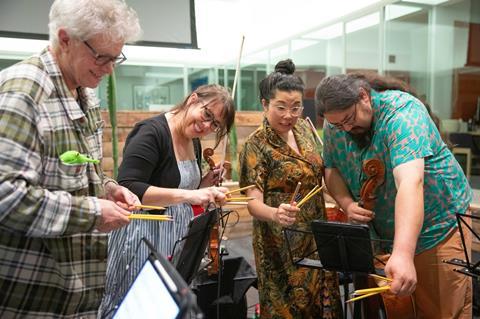
And you’ll be performing right onstage with the dancers. What can you tell us about that?
David Harrington: We’re on a set that has been specially constructed for us. And there will be costumes that are being made even as we speak. Some of this is going to be surprising for us, because basically they needed our measurements, which we gave them. There might be some wigs, but we’re not going to look like we have in the past.
Has the music been adapted for this new production?
David Harrington: What we’re going to do with State Street Ballet is an entirely new sequence of all the music. Nicolas Blanc is creating another story using Philip’s score and the original story, but the sequencing of the music is quite different. One thing Nicolas did not know was that after the first several performances of Dracula with Philip and Michael, Philip realised that we needed an encore. So he wrote this magnificent coda – an absolutely great coda. It’s not on the record because it wasn’t composed by the time we made it. So we sent Nicolas a recorded live performance of it, and that will now be included. In fact, I believe that’s going to start the show. So it really starts with a bang!
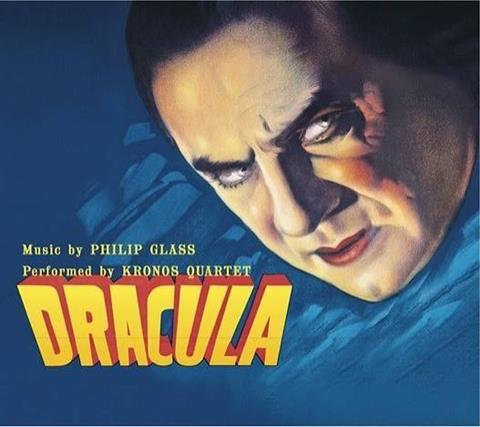
So audiences familiar with the original score are going to be in for a surprise?
David Harrington: A delightful surprise! There’s no film in this version. The ballet becomes the film. I think the idea of playing with time and imagery has gripped Nicolas’s imagination. You’re still going to have all the music, but the way it’s danced and interpreted for the audience will be refreshingly new. One thing I know about Philip is that he’s very flexible. He likes when his music takes new turns. We will also be creating some sound effects. There will be some narration – not much, but a little bit – some verbal statements or observations that are part of the piece. We’ll be working those out in rehearsal.
After all these years, does the original Dracula film still give you nightmares?
David Harrington: The thing that I keep telling the rest of Kronos is that, in the original version we played with, the accents of the actors and the way they spoke their lines were so beautiful. I’ve still got the cues written in before each of the movements that we play, and I make sure everybody knows what is being said in the original film at those points, the way we did it. It’s been fun for me to pass on to the other members of Kronos the way we’ve performed this piece for twenty-some years.
State Street Ballet presents Dracula, a dark shadow with Kronos Quartet at Santa Barbara’s Granada Theatre on 30 and 31 October 2026.
Read: Kronos Quartet at 50: Hunger for the new
Listen: The Strad Podcast Episode #39: Kronos Quartet’s David Harrington on musical activism
Read: ‘A living, breathing organism’: Paul Wiancko on leading Spoleto’s chamber music series
Read: Fiddles and folkore: Kronos Quartet transforms itself into a Hardanger band
Discover more Featured Stories like this in The Strad Playing Hub
Reference









No comments yet