









Anne Inglis reviews the autobiography of British violinist Peter Markham, a member of the Edinburgh Quartet for more than two decades
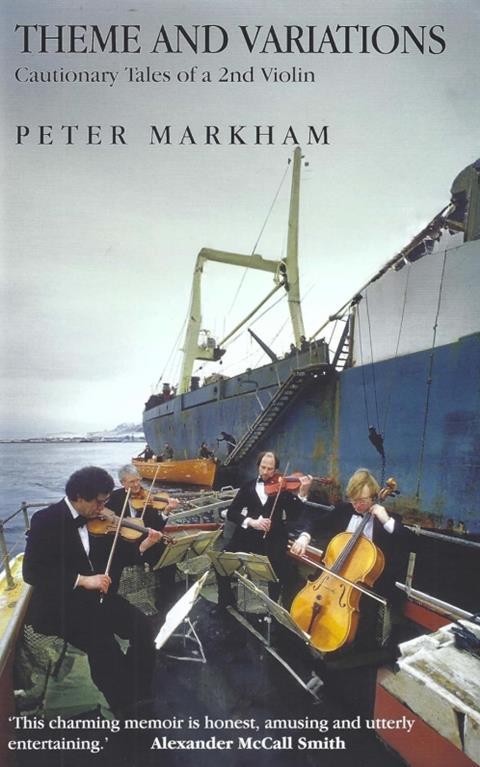
Theme and Variations: Cautionary Tales of a 2nd Violin
Peter Markham
272PP ISBN 9781739318123
Thirsty Books £20
The life of a touring musician has changed beyond recognition post-Brexit. The outcome has been at least an increase in bureaucracy, extra difficulties placed in the way of organising concerts abroad, and the costs of doing so in the areas of insurance, visas and overall administration.
This book is a sharp reminder of the state of our bureaucratic world, and how things just ain’t what they used to be.
Maybe Peter Markham didn’t intend this to be one of the results of his memoir, but this charming document reads like a postcard from a recent but definitely distinct past, a relaxed world of more generous arts funding, more available music teaching for all, good opportunities for talented young players, and a relaxed attitude to temporary misdemeanours within an orchestral setting, mostly triggered by alcohol.
Markham, born in 1945, tells a story of a modest background, a warm encouraging home environment and growing up with a father who held unflinching pacifist views, with the resulting lingering social repercussions.
Markham’s political awareness is one of the threads he carries on through his recollections, writing with candour and nailing his left-of-centre colours to intermittent signposts throughout the book.
The memoir has a diary-like character, honest, never self-serving, and an open window into his personal and professional world. He writes of his progress from an opportunity offered in the last two years of primary school to take up the violin, enjoying the experience and discovering an aptitude for the instrument, and giving a nod to his teacher Helen Matthews, Essex Youth Orchestra (‘I lived for the school holidays knowing another EYO course was on its way’), the Guildhall School and then a first job in the newly founded Ulster Orchestra.
He moved to the Bergen Philharmonic Orchestra (then called the ‘Harmonien’), followed by the Northern Sinfonia, and in 1975 he joined the Edinburgh Quartet, leaving the group after 23 years. There was teaching, freelance work and an apparent facility for identifying the right work at the right time.
He writes of a world of opportunity, happy circumstances and serendipity. Underneath this modesty is a steely self-awareness and understanding of his violin playing skill. Markham is a professional player and the self-deprecating second fiddle moniker disguises abilities to which he rarely refers.
I liked the amusing tales of bachelorhood, his cleverly unobtrusive references to his family, and the upbeat writing and pleasure taken in his working life with its unexpected turns. This is a book that will appeal to amateurs and professional fiddle players alike.
ANNE INGLIS










No comments yet