












Apollo Chamber Players’ new album confronts repression worldwide, blending commissions, narration and activism into a powerful statement on art as both resistance and refuge.
Discover more Featured Stories like this in The Strad Playing Hub
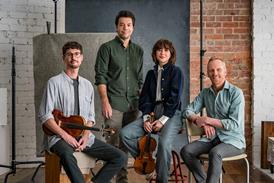
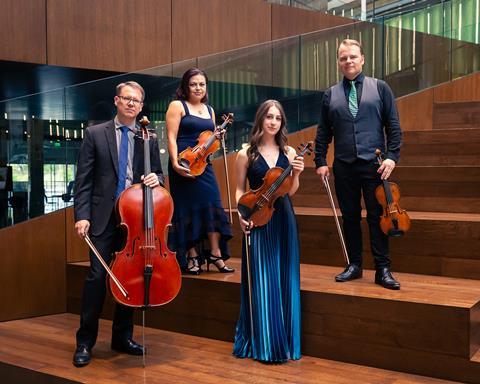
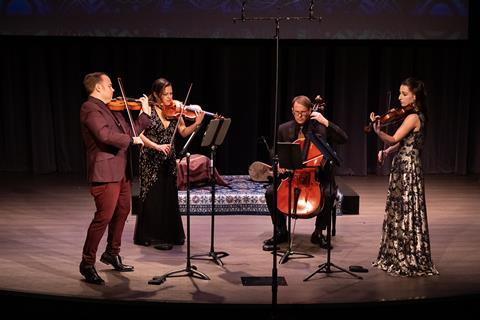
Chamber Music America’s 2025 Ensemble of the Year, Apollo Chamber Players, has never shied away from bold artistic statements. Their latest album, BAN: Stories of Censorship (Azica), is both a musically eclectic project and a stark reminder of rising threats to freedom of expression worldwide. Drawing on new commissions from composers with roots in Afghanistan, Turkey and the US, Apollo explores how censorship leaves its mark on culture, memory and identity.
The programme ranges widely in style and voice. Marty Regan’s The Book of Names features iconic actor and activist George Takei as narrator, weaving his own family’s experience of Japanese-American internment into a call to preserve democracy. Allison Loggins-Hull’s title work, BAN, evokes the silencing of marginalised stories through the visceral sound of books slamming shut. Works by Jasmine Barnes with poet Deborah D.E.E.P. Mouton, Mark Buller, Paul Miller (aka DJ Spooky), Erberk Eryılmaz and Homayoun Sakhi likewise channel lived experiences of repression into music that is by turns raw, luminous, and defiant.
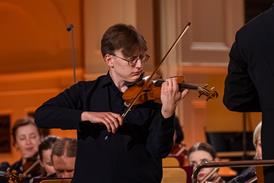
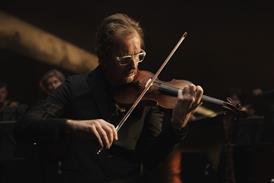
Violinist Matthew J. Detrick, who founded the Houston-based Apollo Chamber Players in 2008 and serves as CEO, reflects on the commissioning process, the challenges of performing such diverse works, and the ensemble’s conviction that art can serve as both resistance and refuge.
This album brings together a diverse group of composers and a wide range of musical vocabularies. How did you approach building a cohesive through-line across such different styles—and what did it demand of you technically and interpretively?
Matthew J. Detrick: Cohesiveness, unfortunately, comes from the increasing ubiquity of censorship and the stark reality that freedom of expression is under threat in the United States and worldwide. Each composer indeed speaks with a different musical vocabulary, yet what unites them – and us as performers – is the resilience of artists who refuse to be silenced. When Turkish-born composer Erberk Eryılmaz shared his own experience of censorship under the Erdoğan government, Fog Bell became a vital part of this story, echoing poet Melih Cevdet Anday’s call for artists to guide society ‘like a fog bell cutting through the mist’. This powerful metaphor became our North Star for this album.
Technically and interpretively, the diversity of commissions on this album demanded that we draw on decades of experience with contemporary music to express each work at the highest level, while seeking to unearth the deeper truths that bind them into a single arc of defiance and hope.
You’ve worked closely with composers whose music speaks to lived experiences of political repression, war, and erasure. What kind of conversations emerged during the commissioning and rehearsal process—and did any change the way you think about your own musical practice?
Matthew J. Detrick: I’ll never forget a conversation with Afghan-born musician Homayoun Sakhi during his visit to Houston for our final recording session. While driving to the concert hall, he recounted a childhood memory of watching his best friend murdered by gunfire in the street – a story that left me shaken. That he could transform such trauma into Arman (‘hope’ in Farsi), the most luminous work on this album, is a testament to music’s power to heal, transcend, and resist despair.
It’s a lesson for all. Moving personal stories like this change us and undergird our work, a reminder that our most vital role as performers is not technical perfection but expressed empathy.
Some of the works, like BAN and Revise?, confront censorship through extended techniques, unconventional textures, or amplified emotion. What did these pieces challenge or expand in your playing? How did the presence of spoken word, narration, or electronic elements affect your role? Did it shift your sense of timing, colour, or responsibility within the musical storytelling?
Matthew J. Detrick: BAN by Allison Loggins-Hull pushed us to embody censorship physically, through stomp-box amplification and the visceral sound of books slamming shut – gestures that inspired new precision and intensity. In effect, the stomp-box became the sixth member of the ensemble, equal in importance with the rest of us.
Revise? was a truly unique piece: the raw force of Deborah D.E.E.P. Mouton’s spoken word, paired with a chorus of eight vocalists, placed us in an intensely collaborative space that at times felt closer to witness than collaborator. As first violin, I acted as both performer and conductor, reading from the score while also staying agile enough to ‘feel’ the flow of Deborah’s delivery in real time. Timing was absolutely crucial – for maximum emotional impact, my cues had to align with her voice, making the performance as much about listening and responding as playing.
George Takei’s narration in The Book of Names is especially moving—both musically and historically. What was it like collaborating with him, and how did that piece evolve through rehearsal and recording?
Matthew J. Detrick: The Book of Names was birthed almost by accident – originally a string quartet add-on to our Revised season programme – but the combination of its elegiac music and the spoken names of interned Japanese-Americans proved especially moving. A few days after the premiere, I was cycling with my son when it hit me like a phaser that George Takei needed to speak his own name! To our delight he agreed, bringing his generosity, wisdom, and lived experience to the project.
We recorded and premiered the piece in a single day, and George stayed long after the concert, signing autographs and speaking with audience members. The more time we spent together – not only rehearsing but telling stories and sharing laughter – the more the piece evolved into a performance that reflected the closeness we had built.
I am also a lifelong Star Trek fan and passionately believe in the vision of humanity’s future the show espouses – one grounded in exploration, diversity, and cooperation across difference. Collaborating with George was incredibly meaningful – Apollo Chamber Players’ name honours my childhood dream of becoming an astronaut while also reflecting Houston’s history as the cradle of the Apollo space programme. George’s final words – ‘our democracy is a precious ideal that requires all of us to actively engage with it to keep it strong and true and shining’ – resonate deeply, inspiring an idealism so urgently needed in our fractured republic and the wider world.
You’ve performed these works live and in the studio. What kind of responses have you received from audiences—and what kinds of conversations has this project sparked?
Matthew J. Detrick: Audiences have responded with deep emotion and thoughtful reflection, especially to works like The Book of Names, Revise?, and Fog Bell. The project has sparked conversations about the fragility of freedom, the courage of artists under pressure, and the role of music in bearing witness and inspiring change.
It’s been powerful to see listeners connect with the stories behind each piece, feeling both the urgency (as I write this from an increasingly authoritarian America) and the hope embedded in the music. Mark Buller’s String Quartet No. 6: Firewall resonates in this context as well, reminding us that by engaging with these stories and issues again and again, each listener becomes another brick in the firewall against censorship.
What do you hope BAN: Stories of Censorship contributes to the wider conversation about freedom of expression—and what’s next for Apollo in this space?
Matthew J. Detrick: With BAN: Stories of Censorship, we hope to shine a light on the importance of freedom of expression, sparking reflection and action. The album – and the stories behind each work – reminds listeners that artists play a vital role in confronting injustice and inspiring resilience.
Looking ahead, Apollo’s next album, We the People, set for release in 2026 to coincide with America’s 250th birthday, continues this mission by exploring the fullness of the American story – its triumphs and challenges. Featuring new commissions like John Corigliano’s One Sweet Morning and Marcus Maroney’s The Color Blue, a work for string quartet and chorus curated from high school students’ reflections on democracy, the album captures the voices and concerns of young people navigating an uncertain world.
Through these projects, we aspire to create cultural harmony through musical exploration and to advocate for democratic values. Demonstrating the power of collaboration across genres and art forms can also help model the civic engagement and empathy our society so profoundly needs.
BAN: Stories of Censorship is available on Azica Records.
Read: Apollo Chamber Players: when ‘diversity’ became dangerous
Watch: A Tango performance from the Apollo Chamber Players
Read: Chamber Music America reveals recipients for its 2025 awards
Discover more Featured Stories like this in The Strad Playing Hub
The number one source for playing and teaching books, guides, CDs, calendars and back issues of the magazine.
In The Best of Technique you’ll discover the top playing tips of the world’s leading string players and teachers. It’s packed full of exercises for students, plus examples from the standard repertoire to show you how to integrate the technique into your playing.
In the second volume of The Strad’s Masterclass series, soloists including James Ehnes, Jennifer Koh, Philippe Graffin, Daniel Hope and Arabella Steinbacher give their thoughts on some of the greatest works in the string repertoire. Each has annotated the sheet music with their own bowings, fingerings and comments.
The Canada Council of the Arts’ Musical Instrument Bank is 40 years old in 2025. This year’s calendar celebrates some its treasures, including four instruments by Antonio Stradivari and priceless works by Montagnana, Gagliano, Pressenda and David Tecchler.











No comments yet