






Anne Inglis reviews Anne Sebba’s moving history of the all-female ensemble that performed in the notorious Nazi death camp
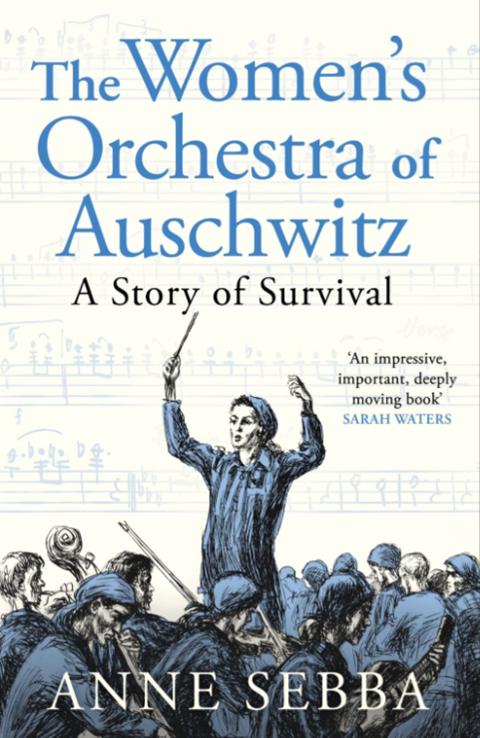
The Women’s Orchestra of Auschwitz: A Story of Survival
Anne Sebba
400PP ISBN 9781399610735
W&N £22
When I first received this book for review, my thoughts were that this subject had been well documented already, not least by the writings, interviews and public appearances of the eminent cellist and Auschwitz survivor Anita Lasker-Wallfisch. And indeed it has; her words and testimony bear witness to the cruelty and horror endured by the musical cohort, and fellow prisoners, within the death camps. There are many other memoirs and books also on the topic, and a large number provide references in the bibliography.
But here is a different approach, a studious and analytical one, which traces connections, coincidences and family links, and manages in a substantial volume to retain a narrative thread through a story of unspeakable and unimaginable horror, while giving voice to many of the key characters involved in this chance to stay alive.
Anne Sebba explores the moral difficulties of the musician prisoners, playing for their lives but witnessing the last minutes of others in the disembarkation from the death trains; accompanying the morning and evening roll calls, providing marches for those who could barely walk. There were privileges given to members of this women’s orchestra, and there was resulting dissent elsewhere. I was also struck by the lack of a happy ending for the survivors. Getting out alive was just one part of the life story for many; the repercussions mentally and physically, and the inability to talk about the experiences, providing a lifetime of anguish.
The main focus is on Alma Rosé, niece of Gustav Mahler, whose identity was realised by a fellow prisoner, and who was then chosen to marshal the already established female group of musicians. Sebba describes the genesis of the orchestra prior to Rosé’s arrival, and the gradual strengthening of the band through the admission of Jews.
Musical talent was recognised, sometimes at a very basic level. Instruments were a motley mixture, with a disproportionate number of mandolins (a popular instrument in the 1930s); and the band was made to work for hours to achieve a suitable standard. Rosé operated with relentless discipline, pushing her charges ever further to create the most professional ensemble she could muster. She had an unrivalled authority, able to demand and secure privileges for the musicians. It was a means of escaping the gas chambers, and Rosé knew the outcome if the band collapsed.
This is a difficult subject to write about. It feels prurient to look into this impossibly cruel period of history, although there is still reason to bear witness given the current political climate and despite the evidence of the plentiful Holocaust literature.
Anne Sebba has managed an exceptional balancing act in approaching the topic with a historian’s analytical approach, and supporting her research with some fascinating personal detail. She has exhaustively combed through archival material, and managed to flesh out some of the key players (captors and prisoners) to create a readable, detailed narrative. It is an unsparing read: illness, living conditions, inhumane treatment, the random selections, the reality of picking yourself up after losing your family the same day – nothing is hidden.
This is a triumph of stitching together an almost-erased history. It is a gripping narrative that spares no detail, but provides another important witness to an iniquitous moment in recent history.
ANNE INGLIS








No comments yet