










Love them or hate them, scales are at the heart of string training. Violinist and teacher Mark Knight examines why, when approached correctly, they are the gateway to a world of expressive freedom

Discover more Featured Stories like this in The Strad Playing Hub
Read more premium content for subscribers here
Few aspects of string playing provoke such divided reactions as scales. They are universally acknowledged as necessary, routinely prescribed, but just as routinely resisted. Like Marmite, they can elicit love and hate in extreme measure: for some players, scales represent discipline, clarity and control; for others, they remain a joyless obligation, something to be endured before ‘real music’ can begin.
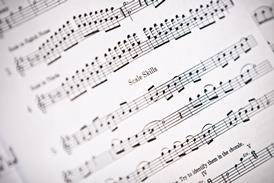
Ask students why they practise scales and the answer is usually the same: intonation and speed. Both are important, but they are only part of the picture. Scales are not simply tools for correcting faults, nor are they athletic exercises. When understood properly, they bring together technique, sound production and musical intent. They reveal how well the hands coordinate and how musical ideas can be realised without technical tension getting in the way.
Carl Flesch was clear on this point. In the first volume of The Art of Violin Playing (1924), he placed scale practice at the centre of instrumental mastery, not as a mechanical routine but as the means to understanding how the instrument functions.
My own engagement with Flesch’s scales began early. My violin teacher at school had been a pupil of Max Rostal, himself a former pupil of and later assistant to Flesch. Rostal also taught Yfrah Neaman, whose class I attended at the Guildhall School of Music and Drama. A daily regimen of scales was simply assumed: three-octave scales, and scales in 3rds, 6ths and octaves in every key, alongside Ševčík and Kreutzer. The work was never presented as a test of stamina, but as a way of building reliable technique and deep understanding of the violin.
Scales bring together technique, sound production and musical intent
Today, Flesch’s book remains one of the most influential texts for string players. It covers an enormous range of bowings, rhythms and technical variations. However, this richness can sometimes hide its main purpose. For players who are still consolidating their technique, the sheer volume of material can feel overwhelming. Practising complex bowings in difficult keys may be justifiable, but it is not always helpful from a teaching perspective.
This prompted my series, Carl Flesch Plus, a three-volume edition for violin and viola. My intention was not to replace Flesch’s system, but to clarify and develop it. By removing certain distractions, most notably prescribed bowings, the focus shifts to fundamentals: fingering, shifting, intonation and the quality of legato playing. A consistent rhythmic structure allows players to focus more closely on hand movement, how positions connect, and how sound is sustained across the instrument.
Revisiting Flesch’s original material also raised questions of consistency. For example, why are three-octave minor scales presented only in the melodic form, while double-stopped scales in 3rds and 6ths appear exclusively in the harmonic minor? One could argue that melodic minor scales replicate the intervallic structure of major scales, but presenting both melodic and harmonic formats in all keys would have offered clear benefits. The harmonic minor scale itself poses particular challenges: the augmented 2nd between submediant and leading note can be problematic, but it also encourages imaginative fingering solutions.
When practised with clear purpose, scales cease to be a chore. They become a source of confidence, freedom and expressive possibility. Scales may always provoke a ‘Marmite reaction’, but if they are approached with understanding, they can offer players something far closer to pure honey.
Read: Opinion: Practising scales in sequential order
Read: A lifetime journey of learning: the cellist’s guide to scales and arpeggio
Discover more Featured Stories like this in The Strad Playing Hub
Read more premium content for subscribers here











No comments yet