







Janet Banks reads Edward Klorman’s analysis of the six legendary solo works for cello by Johann Sebastian Bach
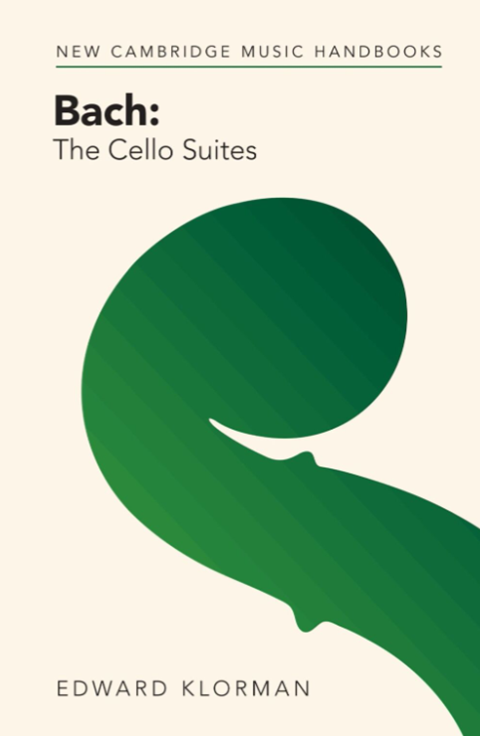
Bach: The Cello Suites
Edward Klorman
180PP ISBN 9781009054591
Cambridge University Press £18
Do we need another book on Bach’s Cello Suites? It didn’t take long for Edward Klorman, associate professor at Montreal’s McGill University, to convince me. This latest in the New Cambridge Music Handbooks series is very scholarly – there are 70 footnotes for Chapter One alone – but also very readable, and contains many revelatory insights.
What particularly caught my attention is the way in which Klorman uses the Violin Suites, for which we do have autograph manuscripts, to ‘support educated guesses’ (his words) about the Cello Suites, for which we do not. He starts by looking at how French music and dancing masters were fashionable in German courts, arguing that Bach would have been familiar with the French solo viol tradition.
He proposes Bach viewed the Cello Suites as an adaptation of the French style for the new violoncello. This comes under the spotlight in the section ‘What is a Violoncello?’ with some wonderful plates showing 17th-century musicians playing cello-like instruments in a variety of ways, including under the chin.
Chapter Three, on the four manuscript copies, is the most illuminating, based heavily on the research of Andrew Talle. Klorman argues – based on comparison of Bach’s autograph of the Violin Suites and Anna Magdalena’s rather hasty copy of it (with so many enlarged images of her mistakes that I felt quite sorry for her) – that Anna Magdalena’s version is far from reliable and should not be given the veneration it has hitherto received.
Only one of the Suites, no.4 in E flat major, comes in for a thorough analysis, with no particular explanation as to why this treatment is not afforded to the others.
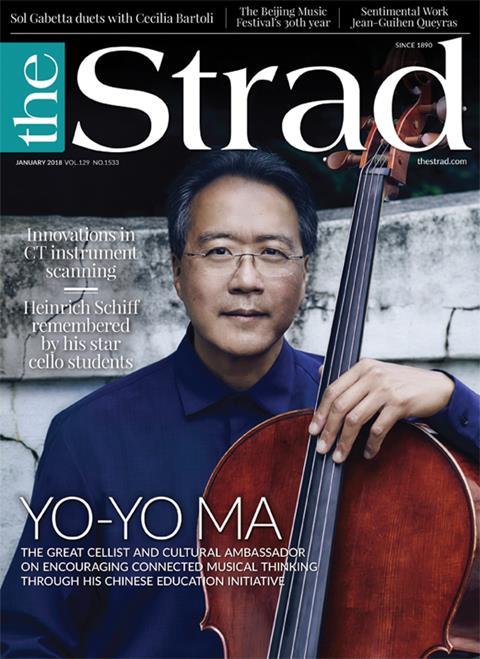
The final two chapters look at the Cello Suites’ reception and performances, right up to the current trend, begun by Yo-Yo Ma, of filming them on mountaintops. Their reputation in the first half of the 19th century as mere etudes, which Schumann and others thought ‘could be considerably improved’ by the addition of a piano accompaniment makes painful, if interesting, reading, and Klorman effectively dismisses the legend of Casals ‘discovering’ the Suites in the early 20th century by proving just how much they were being performed in Paris, London and Germany in the preceding years.
JANET BANKS








No comments yet