
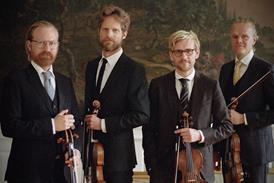


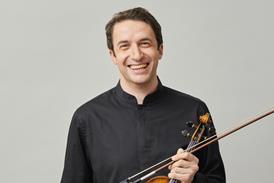








The Attacca Quartet cellist discusses or, The Whale, her new album with Caroline Shaw, and composing through the instincts of a performer.
Read more Featured Stories like this in The Strad Playing Hub
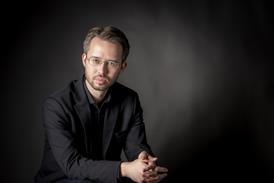
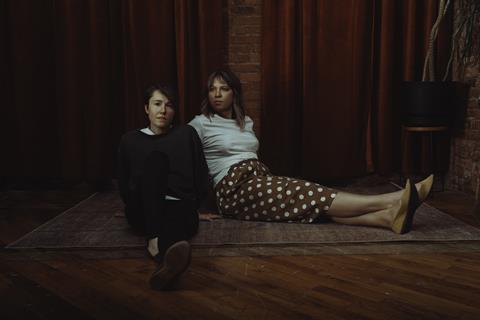
Andrew Yee and Caroline Shaw’s new release or, The Whale (on the Platoon label) grew out of friendship as much as formal planning. The album brings together original works, reimagined pieces and material drawn from the pair’s collaborative score for Wu Tsang’s Moby Dick; or, The Whale (2022), a feature-length silent-film adaptation of Melville performed with live orchestral accompaniment.
For Yee, founding cellist of the Attacca Quartet, the album also marks a significant point in her development as a composer. Alongside Shaw’s ‘Shenandoah’, ‘Will There Be Any Stars In My Crown?’ and ‘What Are You After?’, the track listing includes Yee’s ‘The Trees of Green-Wood’ and ‘The Light After’, as well as the co-composed ‘Moby Dick’ and Messiaen’s ‘Louange à l’Éternité de Jésus’ from Quatuor pour la fin du Temps.
At the 2026 Ojai Music Festival, where the Attacca Quartet appeared among the featured performers, Yee talked to US correspondent Thomas May about learning to compose through the instincts of a performer, hearing Shaw inhabit her music and why she remains ‘forever a cellist’.
What first sparked your collaboration with Caroline Shaw?
Andrew Yee: Caroline and I officially met at the Juilliard String Quartet seminar, back when she was in a quartet at school and Attacca was still in school. This was before she was ‘Caroline Shaw, composer’. Then Attacca went to Bravo! Vail in Colorado, and Roomful of Teeth was there as well, and that’s where we met Caroline as a quartet.
I had this thing I was calling the ‘Make Friends in Your 30s’ initiative. I realised I had fewer and fewer people in my life, so I wanted to actually go through the process of making a new adult friendship with somebody who didn’t live in my neighbourhood, which takes a lot of work.
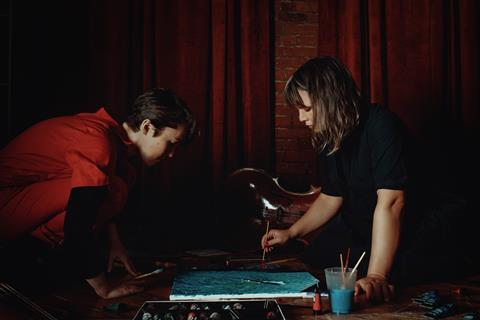
Caroline and I texted back and forth about hanging out, and eventually we managed to get together. After that, we talked about how both of us had focused on music so much that we had lost touch with visual art – painting and drawing. So we would go over to Caroline’s apartment and paint, listen to music and drink wine. That became the way we hung out.
How did that friendship become the basis for the album?
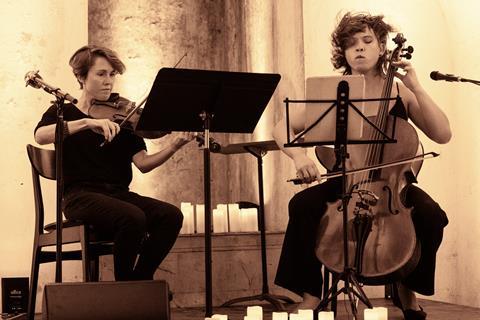
Andrew Yee: Caroline was asked to do a full show at the Kennedy Center, and I had played some pieces with her at Roulette and National Sawdust, so we put together a sort of throw-it-together show of her works.
We ended up playing that show for six or seven years. Every once in a while someone would hear through the grapevine that the two of us played a show, and we would be hired to play it somewhere random. Then I thought: we should record it, so people know what we do.
Over the years, every time we played a show, we added one extra thing. A performance at Green-Wood Cemetery led to ‘The Trees of Green-Wood’; ‘The Light After’ has a quote from Messiaen, so I thought: let’s throw the Messiaen on there and see what happens if Caroline sings the piano part.
All of these things came from playing around. Really, Caroline and I are both so busy that the only way we can see each other is if somebody books us together. This whole process of building the show and making the record is so that we can spend more time with each other.
How did working with Caroline affect your own emergence as a composer?
Andrew Yee: There were three or four composer-performers who bugged me a lot: Nate from my quartet, Jessie Montgomery, Jessica Meyer and Caroline. Caroline bugged me to the point where Wu Tsang was doing Moby Dick and asked Caroline to do the score. Caroline said: only if I can create it with Andrew. She was like: now you have to write with me for a long time.
Before that, I had tried composing a little bit, but I was terrified of the blank page because I didn’t know how to compose. I had blank staff paper and a pen, with my cello in the case, and I thought: what do I do?
It wasn’t until I started working with Caroline, and we started recording things to see how they sounded, then writing stuff down and recording again, that I realised I could come at composing from the lens of being a very seasoned performer.
If I was playing something on stage, what would I want to come next? That has guided my compositional practice: what would be fun to play? It is really handy, because then I end up playing it a lot. It is really nice that one of the first albums with a significant amount of my music on it is with Caroline, because she was such a huge supporter and door-opener for me.
What was the Moby Dick project like once you and Caroline began writing together?
Andrew Yee: It is a silent film, so there was no dialogue that we had to stay out of the way of. It was all music – 85 minutes of music – which was pretty special.
We went back and forth with Wu about her vision, sending examples, then she would send comments back and we would send edits. The first thing Caroline and I wrote together was Queequeg’s Coffin. There is a scene where Queequeg finds out he is going to die, and he has the onboard carpenter make him a coffin – and then he decides not to die. That became the first thing we wrote, and it is in the middle of the suite on the album.
‘The Trees of Green-Wood’ grew out of a performance with the series Death of Classical in a crypt at Green-Wood Cemetery. How did the piece come about?
Andrew Yee: Originally, I was writing a cello and viola duet to be a companion to Caroline’s piece ‘Limestone & Felt’, but I got into it and didn’t like it. So I decided to switch lanes and write her a song.
During the early pandemic, my wife and I would drive through Green-Wood Cemetery and look at all the trees. It was a place of real comfort for us. I looked up what trees they had there, and there was this long list with incredible variety.
I had all the trees arranged by the diameter of their trunks. I drew a curved line to show the shape of the work that I wanted, with the climax roughly around the golden section. Then I placed groups of trees in different places. The louder it was, the larger their circumference.
Then we took those groups of trees and wrote poetry from them – just what felt good to say out loud. I wrote the piece, and then I was so happy to have Caroline make it her own. There is this transformation that happens when a composer gives you a seemingly very simple score, and the performer takes it and says: here is how I believe this music to be.
I had done that for Caroline for so long. It was so nice to hear her inhabit my score in that way, and to own it. Then it became hers.
For ‘Really Craft When You’, I had the idea to use snippets of my favourite Caroline Shaw works as quilt squares, and to quilt those all together. Originally I asked Caroline if she could do it, and she said: oh no, you can do it, and you can have free rein. This was before I had started composing, so it felt like arranging, but also composing at the same time. When you zoom out, the whole album does feel like that: a collection of things placed in very intentional little zones.
How did ‘Shenandoah’ change once Caroline’s voice entered the texture?
Andrew Yee: Caroline originally wrote ‘Shenandoah’ for Yo-Yo Ma, and I loved it and asked if we could do it together. Having her sing the part in the middle, where she sings the actual tune – which originally was in the cello line – became sort of otherworldly.
The album includes ‘Louange à l’Éternité de Jésus’ from Quatuor pour la fin du Temps. For cellists, that movement can feel like sacred ground. How did you approach it with Caroline?
Andrew Yee: I feel an incredible responsibility, especially since that is the only piece on the album we didn’t write. As an undergraduate, I studied with Fred Sherry, who was part of Tashi and worked with Messiaen. I still play off Fred’s scores. So I do feel that lineage. As far as I am concerned, the piece is perfect. It is one of those movements that has everything in its right place. There isn’t too much of anything, and it doesn’t overstay its welcome.
When we decided to start doing it, I asked Caroline if she would be open to trying to sing the piano part, and she was really excited. The piece itself has so much loaded humanity within it, so to have the piano part as a vocal – this impossible vocal – was really exciting to us.
When we recorded it, it was only a few years after the heavy part of the pandemic, and my wife’s mother had passed away unexpectedly. We recorded Caroline’s part first, and then I went to play it. I only did two takes of the whole melody all the way through, and at the end of the second one I totally broke down.
Every once in a while when you play that piece, time stops. I feel really fortunate that one of the times that time stopped, the mic was running.
Across your work as a cellist, composer, quartet player and arranger, does the cello still feel central to your voice?
Andrew Yee: I am forever a cellist. That sound, at least for now, is very much part of what I consider the fingerprint of my compositional sound. A piece I wrote last year, Trans Requiem, has two cello sections, because if I am amplifying my experience, I wanted to make sure the cello played a central role. The label composer-performer is still very important to me. I don’t mind if people think: Andrew Yee, cello. I love the cello, and I know the cello.
In all aspects of my artistry, whether composing or playing, honesty is what matters to me. When I see an artist who is not being honest, it feels like a total betrayal.
or, The Whale is available from the Platoon label here.
Read: Cellist Andrew Yee named Moab Music Festival composer-in-residence
Read: Attacca Quartet, Caroline Shaw (voice)
Discover more Featured Stories like this in The Strad Playing Hub












No comments yet