
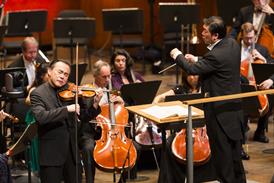
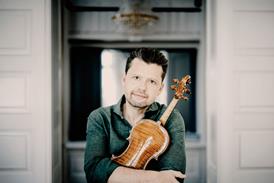
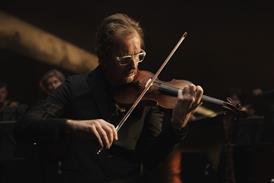

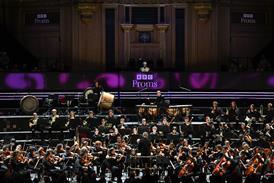






This season brings a new vantage point for Daniel Hope: guiding Wolf Trap’s Chamber Music at The Barns as artistic advisor before taking the stage himself, and navigating the growing intersection of performance and artistic direction
Discover more Featured Stories like this in The Strad Playing Hub
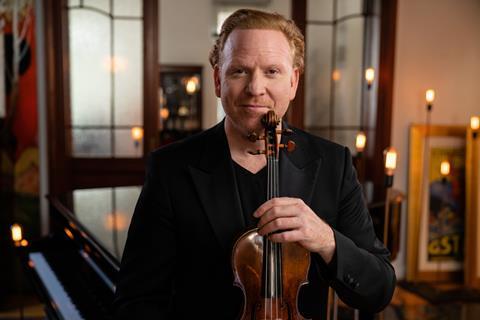
For Daniel Hope, the current season is bringing a shift in perspective. Best known as a performer, he has spent recent months shaping Wolf Trap’s Chamber Music at The Barns as artistic advisor. The series forms part of the Wolf Trap Foundation for the Performing Arts in northern Virginia, just outside Washington, DC. In that role, he has been thinking about the season from the inside out before appearing on its stage himself. His actual Wolf Trap debut on 8 March is therefore not just an introduction but a moment within a season already marked by his influence.
Chamber Music at The Barns holds a particular place in American musical life. Set within the historic German Barn – which marked its 300th anniversary this season – the series pairs physical intimacy with a sense of continuity. Audiences encounter chamber music at close range, in a space that naturally favours listening and exchange. This year’s programming reflects that atmosphere: established repertoire sits alongside a range of ensemble formats and voices, encouraging dialogue rather than display.
Hope’s own concert brings him into the piano trio repertoire alongside Wu Han and David Finckel, musicians long associated with the series. Their programme of Haydn, Beethoven and Dvořák speaks both to his longstanding connection with these works and to a broader programming philosophy that treats canonical repertoire as something renewed through context and collaboration.
Beyond Wolf Trap, Hope is preparing for his first summer as Intendant of the Menuhin Festival Gstaad – another role that places him at the intersection of performance and artistic leadership. Hope spoke with The Strad about shaping a season from behind the scenes, returning to the piano trio repertoire, and balancing performance with artistic stewardship.
You’re best known as a performer, yet you have already been shaping Wolf Trap’s Chamber Music at The Barns as artistic advisor. How does advising on a series differ, for you, from shaping a programme purely as a violinist?
Daniel Hope: When I shape a programme as a violinist, I am thinking from the inside out: about sound, gesture, narrative, the emotional arc of an evening as experienced through the instrument in my hands. Advising on a series asks something very different. It requires stepping back and imagining an entire season as a conversation – between artists, between generations, between repertoire and audience.
At Wolf Trap, I am not simply curating pieces I love; I am helping to shape a musical ecosystem. That means considering how one concert resonates with the next, how artists encounter one another, and how audiences are gently challenged as well as embraced. It is less about the spotlight and more about stewardship.
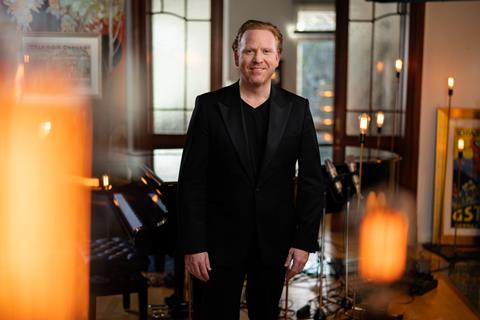
The Barns are an unusually intimate and historically resonant space. How does that environment influence the way you think about chamber music – both in performance and in your role as artistic advisor?
Daniel Hope: The Barns at Wolf Trap have a rare quality: they invite truth. The space is intimate, but not small in spirit. The wood, the architecture, the sense of history – all of it encourages a kind of directness on which chamber music thrives. There is nowhere to hide, and that is precisely the beauty of it.
As a performer, I find myself listening more acutely there – to my colleagues, to the silence between phrases, even to the audience breathing. As artistic advisor, that intimacy becomes a guiding principle. It encourages programming that values communication over grandiosity, dialogue over display.
Your Wolf Trap debut combines Haydn, Beethoven and Dvořák in a single programme. As a violinist, what draws you to these particular trios now – and, from an advisory perspective, what do they signal about the broader artistic direction of the series?
Daniel Hope: Bringing Haydn, Beethoven and Dvořák together is like tracing the evolution of intimacy itself. Haydn gives us wit and structural clarity; Beethoven deepens the psychological landscape; Dvořák opens the window to lyricism and a profound sense of home.
As a violinist, I am drawn to how these trios demand equality – no one voice dominates for long. They are about listening as much as leading. And they also give me the welcome opportunity to return to the piano trio: a genre which certainly governed my life for almost eight years as a member of the Beaux Arts Trio.
From a broader perspective, this combination signals something I care deeply about for the series: that the canon remains alive. These works are not museum pieces. They are living dialogues, and when placed side by side, they reveal continuity as well as transformation.
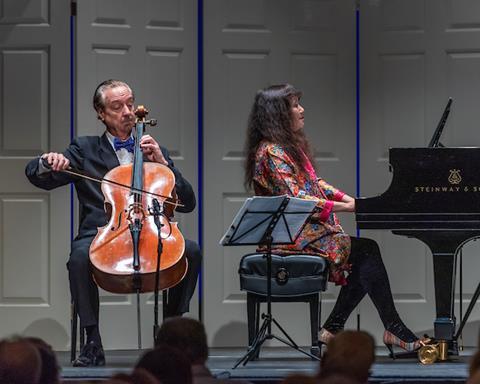
You will perform at the 8 March concert alongside Wu Han and David Finckel, musicians long associated with Wolf Trap’s chamber music identity. How does joining that partnership influence your approach onstage?
Daniel Hope: Playing with Wu Han and David Finckel is a privilege, but also a real act of friendship, as we have been making music together for more than 20 years. They carry with them not only immense artistry, but a deep connection to chamber music itself. Joining them is about entering a conversation already rich with shared experience.
Onstage, that means heightened awareness. Chamber music at its finest is an act of generosity – of making space for one another. With musicians of such stature and integrity, the goal is simple: to serve the music together.
The season balances canonical repertoire with a broader range of ensemble types and voices. How actively do you see the artistic advisor shaping questions of continuity, mentorship – and artistic risk?
Daniel Hope: Very actively. Continuity is essential – audiences need a thread, a sense of identity. But mentorship and artistic risk are what keep a series alive.
I believe strongly in creating platforms where established artists and emerging voices intersect. That is how traditions evolve. Risk, in this context, is not about provocation for its own sake; it is about curiosity. It is about asking: what happens if we place this work next to that one? What happens if we invite this voice into the conversation?
I believe strongly in creating platforms where established artists and emerging voices intersect
Alongside your work at Wolf Trap, you are preparing for your first summer as intendant of the Menuhin Festival Gstaad. How does thinking at the scale of a large international festival differ from advising a chamber music series – and what insights are shared between the two?
Daniel Hope: The scale in Gstaad is very different. A large international festival involves orchestras, opera, education academies, outreach, philanthropy – it is a complex organism with many moving parts. Advising a chamber music series is more distilled. It is focused, intimate, concentrated.
Yet the underlying questions are the same: How do we create meaning? How do we honour tradition while opening doors to the future? How do we make audiences feel that they are part of something shared and human?
In both contexts, I return to one principle: music is a bridge.
Looking ahead, what would you hope audiences might sense is distinctive about a chamber music season shaped with a performer’s perspective at its centre?
Daniel Hope: I would hope they sense immediacy and authenticity. A performer’s perspective is grounded in the lived experience of rehearsal, of risk, of that fragile moment before the first note sounds.
If a season is shaped from that place, it carries an awareness of what it truly feels like to make music together – the vulnerability, the exhilaration, the responsibility. Ideally, audiences will not only hear great performances, but feel that the season itself has been crafted with the same care, listening and imagination that define chamber music at its best.
Read: Violinist Daniel Hope appointed artistic advisor for Chamber Music at The Barns
Read: ‘See each concert as the most important one in your life’ - Daniel Hope’s life lessons
Read: A musical mosaic of Ireland: violinist Daniel Hope on ‘Irish Roots’
Discover more Featured Stories like this in The Strad Playing Hub

















No comments yet