
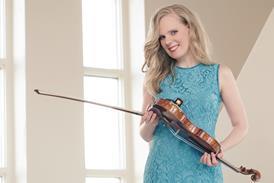

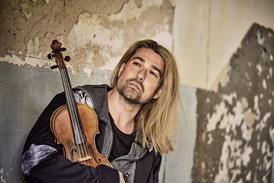





US violinist Anne Akiko Meyers discusses Eric Whitacre’s The Pacific Has No Memory, a new piece responding to the Los Angeles wildfires of January 2025
Read more Featured Stories like this in The Strad Playing Hub
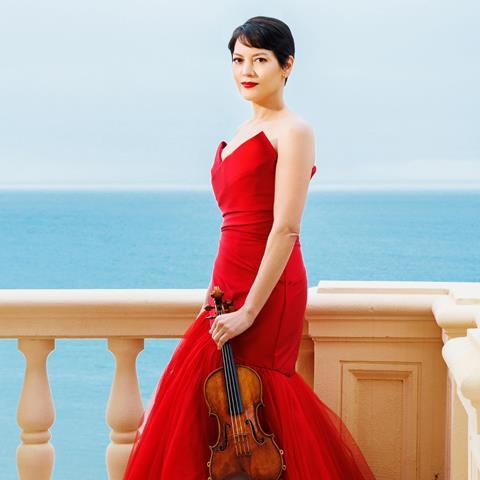
In January 2025, wildfires tore through the Pacific Palisades, leaving lasting scars on the landscape and on the lives rooted there. Violinist Anne Akiko Meyers was among those forced to evacuate, losing her family home and much that defined her daily musical life. For composer Eric Whitacre, a former long-term resident of Los Angeles, the catastrophe was witnessed first-hand during an unexpected visit, its impact shared with friends and a shaken city.
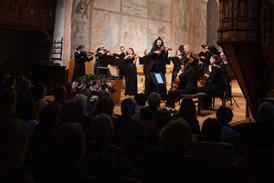
From this shared experience emerged The Pacific Has No Memory, a new piece for solo violin and string orchestra, written by Whitacre for Meyers. The title, drawn from The Shawshank Redemption, gestures towards the ocean as a place of release and renewal, where memory loosens its grip. Premiered at Carnegie Hall in May 2025 and recorded shortly afterwards with the Orpheus Chamber Orchestra, the work stands as a concentrated musical response to loss. The music is contemplative and intimate rather than monumental.
To mark the anniversary of the fires on 7 January 2026, Meyers is releasing her AVIE recording of The Pacific Has No Memory; she will also return to the Pacific Palisades to perform the work with Lucinda Carver and Seal Lullaby with conductor Grant Gershon in a commemorative context.
In the following conversation with US correspondent Thomas May, Meyers reflects on her collaboration with Whitacre, the evolution of the piece from page to performance and the violin as a solitary voice shaped by collective experience.
You’ve commissioned many major composers, but what felt uniquely ‘Whitacre’ about the collaborative process this time – especially as the piece shifted direction after the fires?
Anne Akiko Meyers: It was surreal – and entirely new – to be so personally impacted by the fires. The fact that both Eric and I experienced this tragedy, each in different ways, deepened our musical bond. His music suddenly carried a profound emotional urgency, something to hold on to. Learning The Pacific Has No Memory while displaced, in a temporary home that – ironically and eerily – overlooked the Pacific Ocean, was deeply poignant.
Eric’s writing is transcendent, ethereal and soul-stirring. Filled with otherworldly beauty, this piece gave me a place to grieve and to feel the full depth of that sadness.
The fact that both Eric and I experienced this tragedy, each in different ways, deepened our musical bond
The Pacific Has No Memory emerged from the devastation of the 2025 Palisades fires. When you first received Eric Whitacre’s transformed score – reshaped in the wake of that loss – what struck you most about how he translated that experience into musical language for the violin?
Anne Akiko Meyers: Eric drew inspiration from a scene in The Shawshank Redemption, when Andy Dufresne describes the Pacific Ocean as a symbol of hope and renewal. I felt that immediately in the music – its emotional depth guiding the heart towards calmer shores. Performing it brought an overwhelming sense of hope, as though the music itself were breathing the possibility of healing into life.
From the Carnegie Hall première to the session at SUNY Purchase just two days later, how did the piece evolve in your hands and with Orpheus? Did performing it live change your understanding of it?
Anne Akiko Meyers: In our first few read-throughs with the Orpheus Chamber Orchestra, I was struck by how the piece transformed each time we played it. It evolved organically – like the widening rings of a tree, its roots growing deeper with every performance.
Eric made real-time revisions during the recording sessions, allowing the piece to continue finding its shape, which I loved. There’s something magical about witnessing a new work discover itself – the freedom to explore and be surprised as it grows into something you never could have imagined at the start.
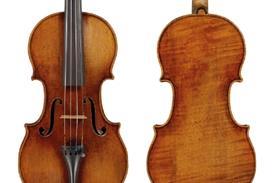
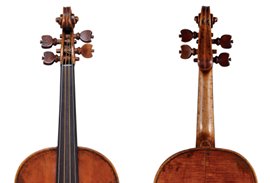
Your 1741 ’Vieuxtemps’ Guarneri del Gesù has an unusually vocal, human quality. How did that instrument’s personality guide the ‘lone voice’ at the heart of Eric’s score?
Anne Akiko Meyers: I’ve always felt that the violin is my voice. My goal is to find the right colours and shades to paint the score – and, as Vieuxtemps famously said, ‘sing, sing, sing!’ Shaping that vocal quality on the ’Vieuxtemps’ brought the voice in Eric’s score vividly to life.
Were there particular technical or colouristic decisions you made to create breath, space and ‘Pacific’ fluidity in the violin line?
Anne Akiko Meyers: I was deeply inspired by the storytelling in Eric’s writing and by the intimate dialogue with Orpheus. That musical exchange created a strong foundation from which the sonic landscape could unfold – full of breath, openness and flowing motion.
You’ve described this work as ‘salve for the soul’ – a kind of musical prayer. After living with it from tragedy through creation to recording, what does the piece mean to you now?
Anne Akiko Meyers: This music always makes me catch my breath. My home was in Pacific Palisades during the fire, and I will never forget the helplessness of watching our beautiful community devastated, turned to rubble. I remain astonished by the power of music – how it reaches the root of our being, soothing and comforting the heart as we try to heal.









No comments yet