








The instrument has been bought for a price exceeding the amount paid for the ‘Baron Knoop’ Stradivari violin in 2025
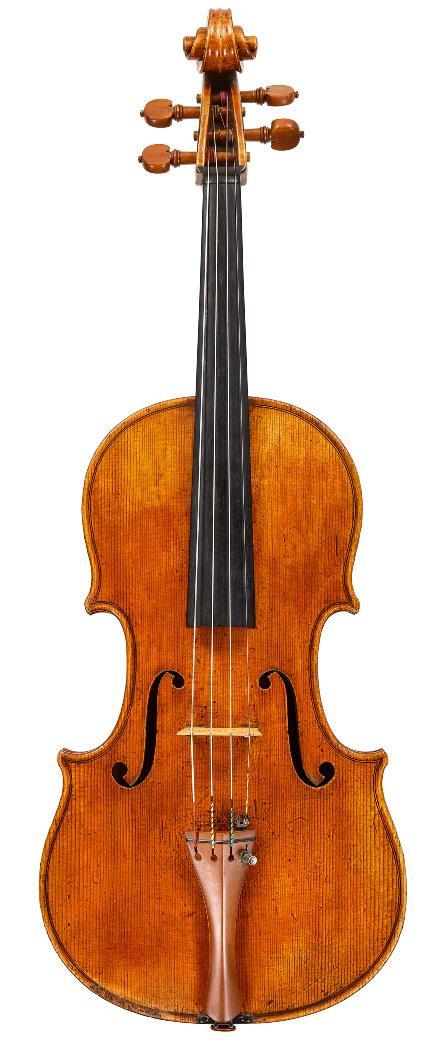
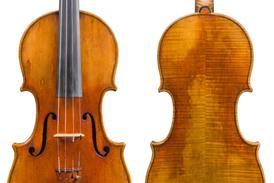
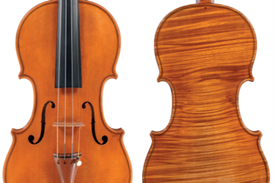
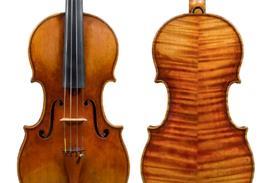
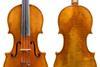
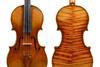
The c.1719 ‘Macdonald’ viola by Antonio Stradivari has been sold for a world record sum to the Stretton Society, a Berlin-based non-profit organisation bringing top musicians together with fine instruments.
The sale was completed in late 2025, with the highest purchase price ever for a stringed instrument, significantly higher than the $23 million paid for the 1715 ‘Baron Knoop’ Stradivari violin in 2025. The viola is now being played by Amihai Grosz, principal viola of the Berlin Philharmonic.
One of only ten surviving violas by the master luthier, the ‘Macdonald’ was made during Stradivari’s ‘golden period’ (1700–20), and was originally owned by the Marquis dalla Rosa of Parma. Over the next three centuries it was owned by several players, makers and dealers, including J.B. Vuillaume, John Betts and W.E. Hill & Sons.
‘As a Society, we are particularly happy that this instrument, long thought lost to the market, is now back in the hands of such a wonderful musician,’ Stephan Jansen, co-founder of the Stretton Society, told The Strad. ‘We are equally delighted to see the viola back on stage again, where an instrument of this stature truly belongs.’
The instrument’s name derives from its owner Godfrey Bosville, the third Baron Macdonald, who bought the viola in the 1820s. In 1964 it was purchased for $81,000 for Peter Schidlof, violist of the Amadeus Quartet, who died in 1987.
According to Jansen, a search for a player took place soon after the sale was completed. Grosz has been playing the ‘Macdonald’ for the past two months, having previously been performing on an instrument made in 1570 by Gasparo da Salò.
The dimensions of the ‘Macdonald’ are:
Length of back: 411mm
Upper bouts: 186mm
Middle bouts: 130mm
Lower bouts: 243mm
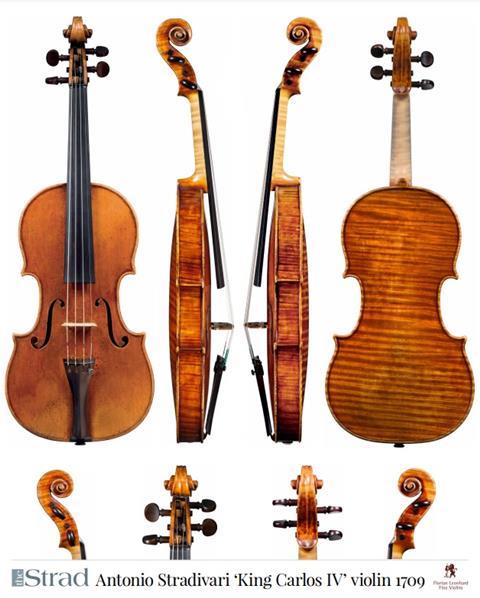
According to the Hill brothers in their seminal text Antonio Stradivarius: His Life & Work: ‘The style of this viola in certain details – the flat model, the squarer outline and corners, broad edge, and very sturdy aspect as a whole – plainly heralds that of many of Stradivari’s later productions; but the rather small and slightly Amatise sound-holes and clean finish of the work are typical of the earlier period.
’The wood of the back is of one piece, of broad and moderately handsome curl, the sides and head matching; that of the belly shows a broad and well-marked grain; the instrument is well covered with the red varnish so favoured by the master (a red tinged with orange), and its state of preservation leaves no room for complaint.’
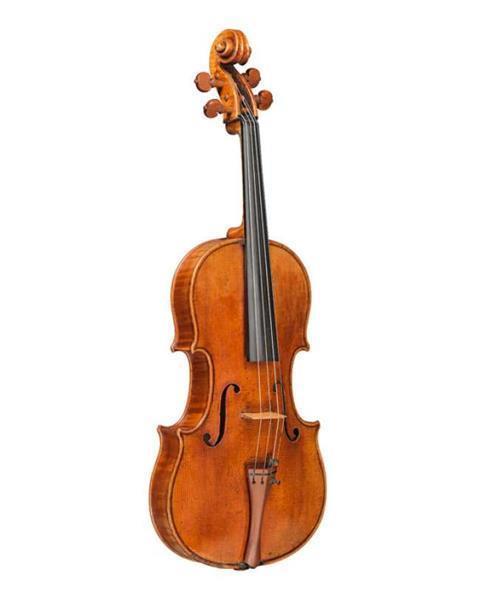
Photos: Tarisio
Read: Record breaker: ‘Baron Knoop’ Stradivari violin sells for $23 million
Read: 1741 ‘Vieuxtemps’ Guarneri ‘del Gesù’ violin is sold to anonymous buyer
Read: David Garrett: My whirlwind journey to owning a Guarneri ‘del Gesù’








2 Readers' comments