








John Dilworth was a very hands-on judge at the 2025 Metelka Violin Making Competition, where he was gratified to find the art of lutherie in a healthy state
Discover more lutherie articles here
Read more premium content for subscribers here
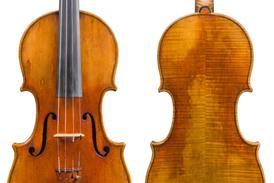
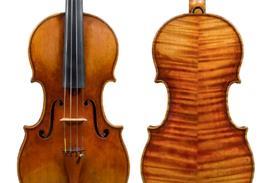
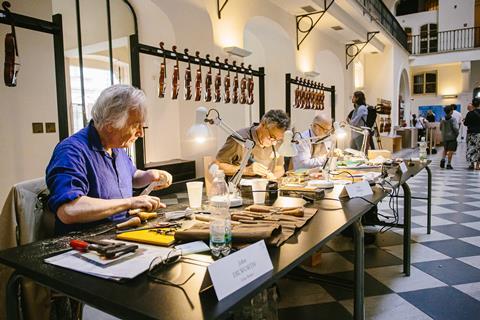
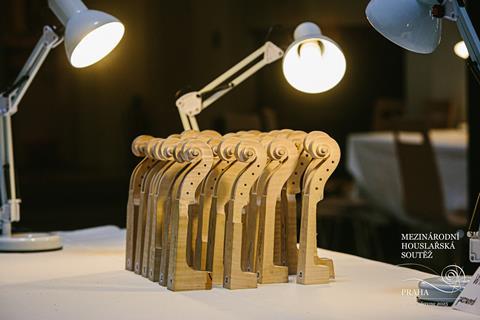
The first day of the 2025 Metelka International Violin Making Competition in Prague presented a rare and intriguing sight. The grand hall of the Czech Museum of Music, high-ceilinged and elegantly modern, had been transformed into a violin workshop, with rows of violin makers from across the world diligently carving scrolls at their benches. These were not just the competitors – in one corner sat the three judges, equally lost in concentration at the same task: to make a Stradivari scroll in one day. The real sense of quiet authority in the hall came from two violins from the museum’s collection, specially installed in a glass cabinet: the magnificent ‘Prince of Orange’ Guarneri ‘del Gesù’ of 1743 and the c.1729 ‘Libon’ Stradivari, keeping, as it were, a calm watch on proceedings as casual visitors and even groups of schoolchildren weaved their way between them in various states of curiosity and awe.
This year’s competition, the sixth since it was founded in Náchod in 1997, is unlike any other. It is designed to be democratic and collaborative. All the instruments entered are labelled by the maker and identifiably numbered. All are assessed and given scores over a range of 20 points in four separate divisions: craft, accuracy to the obligatory Stradivari model, varnish and tone. In addition, the scrolls made on the opening day are also assessed (with the exception, thank goodness, of the judges’ efforts) and contribute to the overall points. But it is not just the judges who give the scores – all the entrants are asked to examine, assess and score their colleagues’ work.
I have always been a little wary of competitions in general, perhaps because I have sat on various judging panels over the years but have never had the courage to enter myself. I am always conscious of the difficulty of choosing one violin that is ‘better’ than the rest. There is seldom an opportunity to credit a maker with what can objectively be decided as a greater sensitivity or taste. Perhaps it is impossible. But for young makers, competitions can be a vital way of finding a path in the professional world, achieving the approval and awards that come with success. What is most important to me, however, is that these events are opportunities to share ideas, technical or artistic, and generally contribute to the development and promotion of our historic craft.
The whole event was energetically and tirelessly led by the eminent Prague makers Jan Špidlen and Dalibor Bzirský to achieve precisely this, in partnership with the National Museum and with the aid of the Entente Internationale des Luthiers et Archetiers, Czech group Kruh umělců houslařů (Circle of Master Violin Makers) and sponsors including the Czech investments group RSBC insurance and HWS Specialty Arch musical instrument insurance.
With entrants from across the world, from Czechia itself and across Europe to Japan, Korea and Australia, an event such as this always presents some problem with communication, so English was designated as the official language.
I was probably the only one present who was unable to make themselves understood in two or three languages, which put me at a disadvantage, but my highly experienced fellow judges, Carlo Chiesa from Milan, and our chairman, the much-travelled Gregg Alf, coped admirably, and we were pretty much permanently engaged throughout the five days in conversations with the entrants. In my case, I conducted a great deal of it in sign language. But social and language barriers were lightened after a beautiful evening boat trip along the Vltava river for competitors and organisers alike. A lively Romani band and ample refreshments on board took care of that.
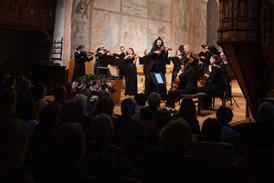
On the final day of judging, the top 20 instruments were played anonymously, behind screens, in the beautiful Bohuslav Martinů Hall of the Liechtenstein Palace. Short excerpts designed to show range, depth and clarity of sound were scored by the entire audience of judges and competitors as well as interested guests. It is always the part of a competition I fear the most, demanding a huge amount of concentration and recall, and notes feverishly scribbled in the brief pauses.
For all of us on the judging panel, being aware that the prizes and recognition are so important to participants, it is vital to be able to assign points and critiques justifiably, but always in the hope that the collegiate atmosphere of exchanging views and ideas is a greater general benefit. Some are inevitably disappointed and confused, but those among us who succeed are the ones who continue to learn.
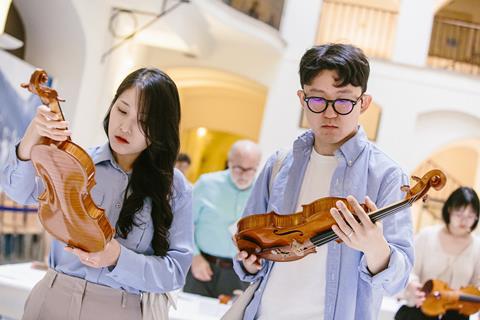
The wonderfully gratifying conclusion of the whole event was the general consensus in marking, from the judges and the competitors in all categories. Even among what was, to my eyes at least, an exceptionally accomplished and professional level across all the entries, a handful of instruments stood out; most from a remarkable group of young makers from Poznań in Poland. I had no difficulty myself in deciding that these were exceptional instruments, capturing the demanding goals of both authenticity and individual flair with faultlessly mature workmanship. Even the scrolls that these luthiers had carved on the first day stood out for their clean, accurate lines and perfect finish.
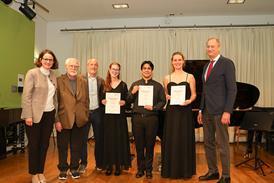
The only real difficulty was in trying to divide them, but the collected and computer-crunched score cards took that difficulty out of our hands. In the end, Paweł Kubacka of Poland virtually swept the board, with five awards for overall winner, best scroll, and best craft and artistic achievements. His colleague from Poznań Martyna Reske won the award for the best varnish, and Jan Lipiński prevailed for tone. Hyun-Jung Park of South Korea made her mark with third places in both scroll carving and artistic achievement, while Oleg Semenukha of Czechia and Samuel Kim of Italy featured well in the tone categories, and Ryosuke Ito in the varnish prize, preventing a complete Polish clean sweep. The full results can be found on the competition website metelka‑competition.cz
We concluded with a short conference, in which the judges all spoke in an intentionally light-hearted way, hoping to balance the intensity of what had gone before. All of us spoke of the difficulty of giving practical advice to what was so obviously a group of already well-informed and talented makers. In a general way we all discussed the role of the violin and its makers in artistic expression, and suggested possible new interpretative ways forward, with the two contrasting examples of Stradivari and ‘del Gesù’ powerfully present in their glass cabinet. Gregg Alf even brought into focus the potential threat of AI and the takeover of craft and expression by technology. The only thing we have in our defence is our passion for what we do, and we must continue to reflect on this, and how we do it.
Prague is a beautiful and welcoming city. It was a privilege to be there, and a joy to see that violin making seems to me at least to be in as dynamic, healthy and fruitful a state as it has been for many years, decades, or even centuries.
Read: Postcard from Newark: Newark School Lutherie Day
Read: Partial success for Newark violin making students as one-year courses announced
Discover more lutherie articles here
Read more premium content for subscribers here
An exclusive range of instrument making posters, books, calendars and information products published by and directly for sale from The Strad.
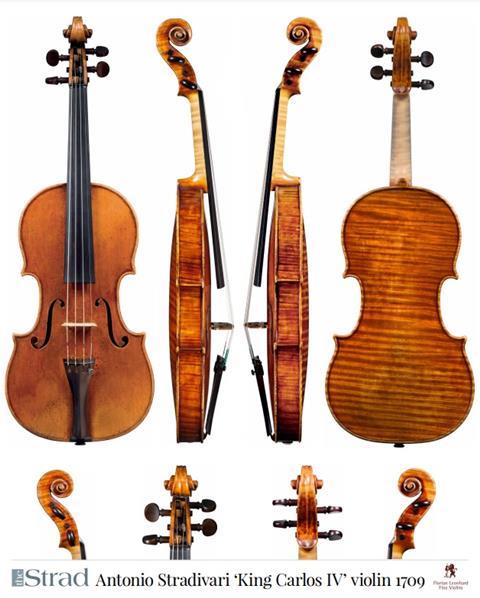
The Strad’s exclusive instrument posters, most with actual-size photos depicting every nuance of the instrument. Our posters are used by luthiers across the world as models for their own instruments, thanks to the detailed outlines and measurements on the back.
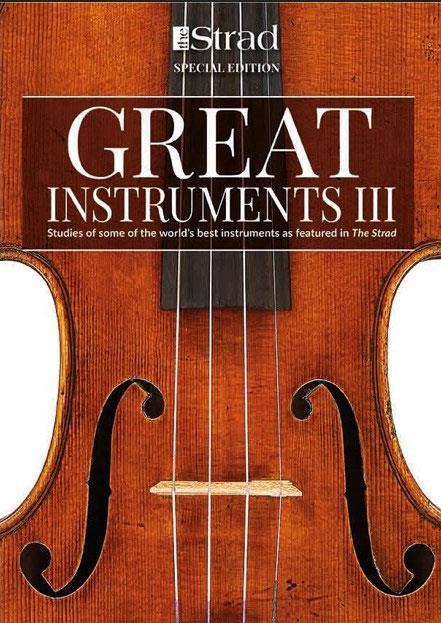
This third volume in The Strad's Great Instruments series brings together the finest scholarship, research and analysis by some of the world’s leading experts on stringed instruments.
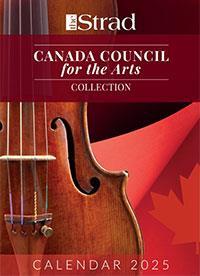
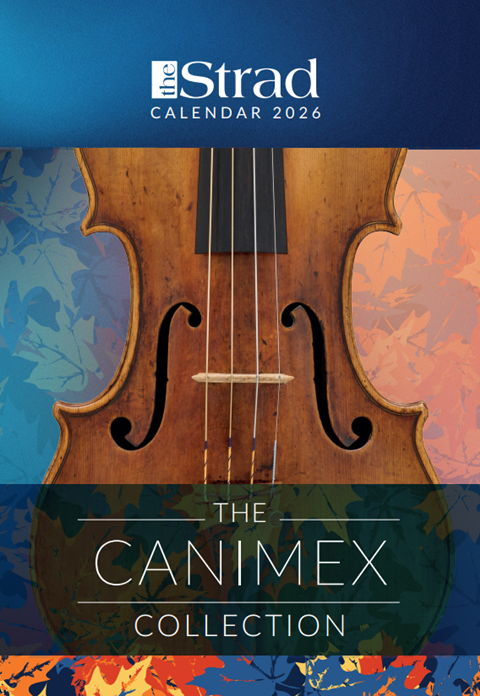
The Canada Council of the Arts’ Musical Instrument Bank is 40 years old in 2025. This year’s calendar celebrates some its treasures, including four instruments by Antonio Stradivari and priceless works by Montagnana, Gagliano, Pressenda and David Tecchler.









No comments yet