

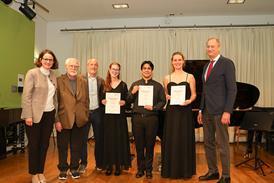


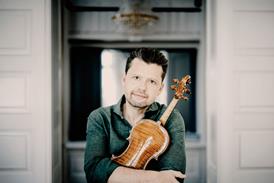










Andreas Hampel took the top prize in the French capital, with Piotr Pielaszek, Marcus Klimke and Jonathan Magerl also picking up awards
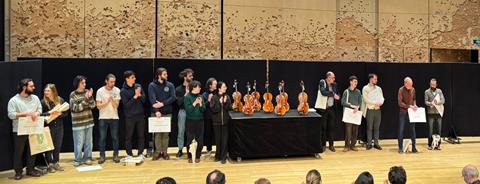
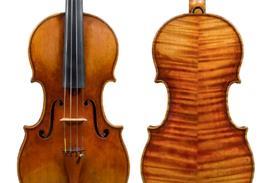
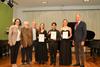
The 2026 International Viola Making Competition took place at the Philharmonie de Paris from 14 to 18 January 2026. German luthier Andreas Hampel took the first prize, as well as a special audience prize for sound quality. The second prize was taken by Polish luthier Piotr Pielaszek, who also received a special prize from the luthiers’ jury. Third prize went jointly to Marcus Klimke of France and Jonathan Magerl of Germany, who additionally received a special prize from the members of the Orchestre de Paris.
Following the awards ceremony, Hampel said he was ‘honoured and equally thrilled’ to have received the first prize. ‘I am very grateful, and see this as a great recognition of the work that my wife Susanne and I have done over the past decades.’
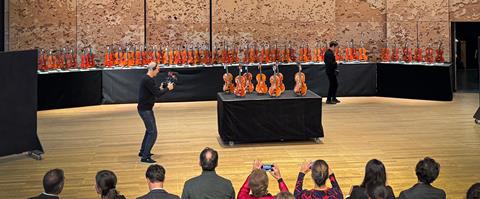
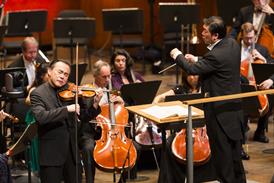
The luthiers’ jury comprised Jonathan Marolle, Ibiza Avalos and Riccardo Angeloni, while the players’ jury was made up of Pauline Sachse, Miguel da Silva and Ana Bela Chaves. A total of 63 makers submitted instruments for the competition, which were examined, played and evaluated over three days. The 15 highest-rated instruments were then played by members of the Orchestre de Paris in a public blind test, when the jury chose the final eight instruments. These were then played in a public concert for the grand final, also in a blind test, where the audience were also able to select their favourites by ballot.
In addition, there was a secondary competition for ‘the talents of tomorrow’. In this contest, both the first and second prizes were won by students at the Ècole Nationale de Lutherie de Mirecourt, while the third prize was taken by representatives of the Swiss Violin Making School Brienz, who also received a special prize from the violin makers’ jury.
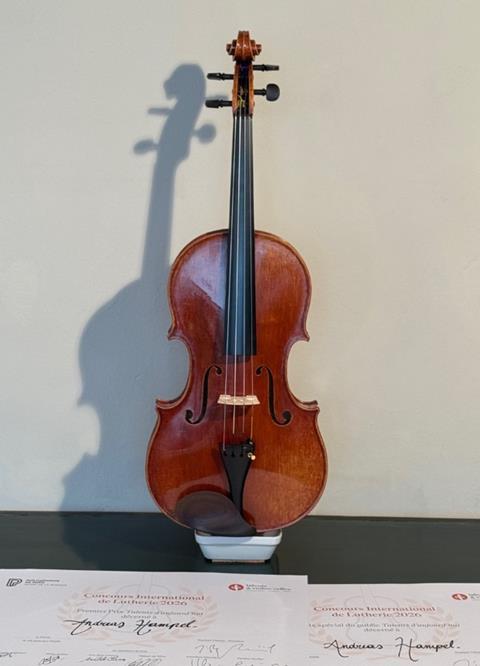
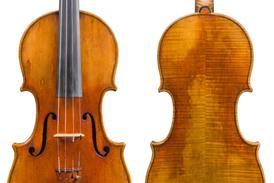
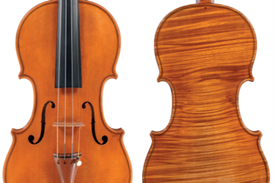
According to Hampel, the first prize-winning viola (above) ‘my interpretation of Stradivari’s 1672 ‘Gustav Mahler’ model. Starting from a scan of the original mould, I redrew it to 415mm size. Although I made other alterations (such as using maple for the back instead of poplar, and making a scroll without shoulders), the whole viola still radiated Stradivari lines and aesthetics. The oil varnish is a delicate reddish-brown colour, with clear signs of wear. The viola is not intended to be a copy, but rather to show the soft wear in the wood and varnish that we love in beautiful old instruments.’
Read: Winners announced at 2024 VSA instrument making competition
Read: Results announced for the 2025 Henryk Wieniawski International Violin Making Competition











No comments yet