





What did you know about creating and recording an album before this debut CD?
Not much about recording as a quartet, even though some of us had already recorded solo projects. In a quartet you feel the focus of each individual – and you also very clearly sense the presence, the concentration, and the breath of a fifth person, which is the quartet itself.
We hold the idea that recording an album is a form of sonic memory that we contribute to musical heritage.
Before recording this first CD, we didn’t realise to what extent a piece continues to mature even after being captured in the studio. Once the recording was finished, we sometimes found ourselves saying: ‘Ah, now we would play that passage differently…’
But it doesn’t matter if, years later or even just a few weeks after, our vision of the work has evolved: the recording captures, at that precise moment, one version of the work.
What did you learn during the process?
Throughout this process, you discover the dimension of teamwork even more than usual. During a recording, the drive toward collective inspiration has to be even stronger than in a concert, because you don’t have the audience’s energy – the audience is ‘us’: both the quartet and the artistic director.
We also learnt that you only realise you are truly ready to record… once the recording session is actually over.
What were your favourite parts of the recording process?
It’s hard to single out just one, but the entire preparation journey is absolutely beautiful. The process of searching is often more important than the final result.
One of the striking moments was rediscovering the momentum and energy of live performance. What we particularly loved was recreating that almost ‘live’ feeling – that state of presence in which you really sense that you are sharing something with the audience.
In the recording process, we also loved that moment when you are already at the heart of the piece, pushing yourself further with each take. When the adrenaline kicks in, everything comes alive.
How would each member describe their individual experience of the process?
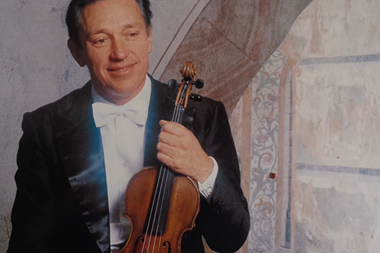
David Petrlik (first violin):
It is a very intimate moment I spent with my quartet, we spent more than one week just the four of us with Beethoven, the concert hall, our instruments and the artistic director and you can explore very profound sensations and emotions that you can’t find in your normal life.
Coming back to everyday life is like never before and you can feel the progress and the evolution as a group after a process and a journey like the recording of the three ‘Rasumovsky’ Quartets.
Yoan Brakha (second violin):
It was, for me, a true introspection into a part of Beethoven’s life. A musical experience that, given Beethoven’s personality and genius, took me on a journey of contrasts: from tenderness to anger, from joy to revolt. Beethoven pushed me to draw from my most extreme emotions and to go beyond the limits.
The experience of locking myself away with my colleagues, in front of the microphones, to record this Beethoven opus was a true mirror for me as an artist. The demands of this repertoire have been a source of joy and fulfilment, fully felt today as I face this album, ready to be presented to the public.
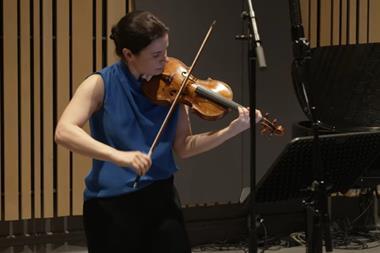
Hortense Fourrier (viola):
It was not easy at the beginning to accept this self-reflection exercise, and also to wait for the recording, but it was maybe one of the deepest and exciting experiences to totally immerse ourselves in this monumental music.
Rémi Carlon (cello):
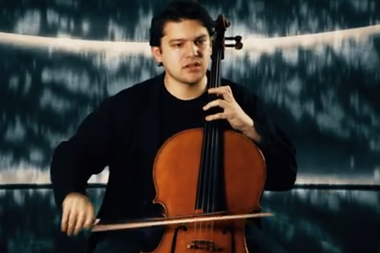
For me, this recording was an extremely powerful experience. We had been waiting a long time to make this first album with the quartet. It was a process that was both very intense and at times difficult, but above all deeply rewarding.
You really feel as though you’re ‘bringing something into the world’, giving concrete form to our interpretation of these three monuments of the quartet repertoire. For me, it was a defining moment – a real first time. There will never be anything else quite like it, and I will remember this moment for the rest of my life.
Beyond the Limits by the Elmire Quartet will be released on 28 November on all platforms. It features all three of Beethoven’s ‘Rasumovsky’ Quartets op.59. More about the quartet here.
Photo credit: Amaury Viduvier.












No comments yet