
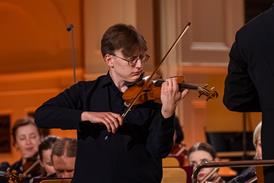






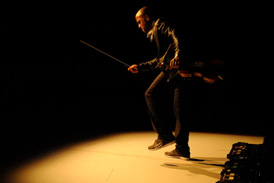







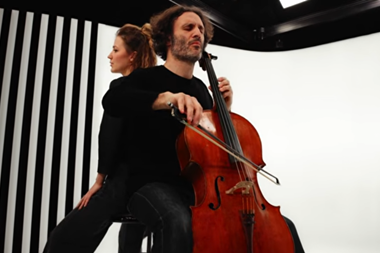
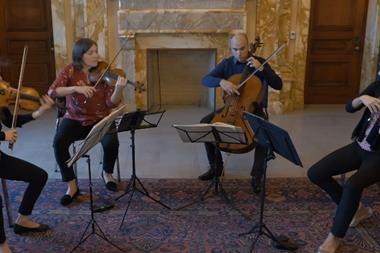
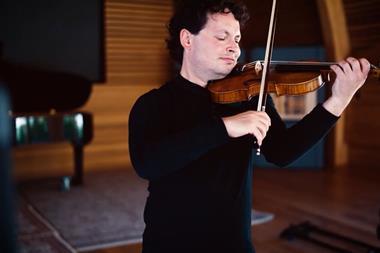
Roman Kim plays harmonics that, according to what we know about violin, shouldn’t be possible.
In this conversation with Daniel Kurganov, the violinist traces the origins of his signature technique – not to a conservatory or a method book, but to a throwaway comment he heard at 13 years old about a Russian orchestral player who could produce harmonics with a single finger on any note. Nobody knew how. The idea lodged itself somewhere in Kim’s mind and stayed there.
Years later, working alone until seven in the morning, he found them himself. Only afterward did he discover a passage in a centuries-old treatise describing the same phenomenon: harmonics ’not physically explained’.
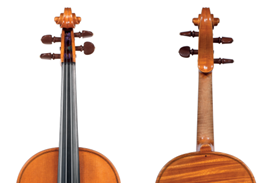
What emerges in their exchange is less a tutorial than a philosophy. Kim demonstrates the delicate variables – bow speed, contact point, the particular elasticity of his custom strings – and how small shifts can make the difference between a clean ringing overtone and nothing at all.
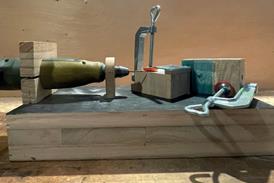
To ground the mystery without puncturing it, Kurganov is joined briefly by Henry from MinutePhysics, who helps map Kim’s ’impossible’ sound onto the underlying physics: how a bowed string can be coaxed into unusually stable vibration patterns, how touch and bowing location bias which modes survive, and why certain setups can make rare harmonics feel almost repeatable.
Then they return to Kim, where the point isn’t to reduce the phenomenon to an equation, but to show what it rewards: obsession, patience, and attention to variables most players never have reason to isolate.
The technique matters less than what it represents: proof that the instrument still holds secrets for those willing to search.
- News
- For Subscribers
- Student Hub
- Playing Hub
- Directory
- Lutherie
- Magazine
- Magazine archive
- Whether you're a player, maker, teacher or enthusiast, you'll find ideas and inspiration from leading artists, teachers and luthiers in our archive which features every issue published since January 2010 - available exclusively to subscribers. View the archive.
- Jobs
- Shop
- Podcast
- Contact us
- Subscribe
- School Subscription
- Competitions
- Reviews
- Debate
- Artists
- Accessories















No comments yet