







A contemporary champion scintillates in late Beethoven
THE STRAD RECOMMENDS
The Strad Issue: July 2026
Description: A contemporary champion scintillates in late Beethoven
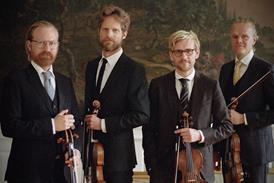
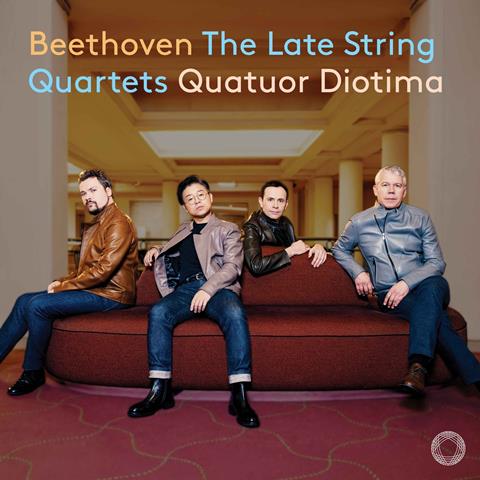
Musicians: Diotima Quartet
Works: Beethoven: String Quartets: E flat major op.127, B flat major op.130, C sharp minor op.131, A minor op.132, F major op.135, Grosse Fuge op.133
Catalogue number: PENTATONE PTC5187604 (3 CDs)
Robin Holloway, composer and commentator, is no worshipper of sacred cows. Beethoven’s late music, he says in his magisterial overview Music’s Odyssey (reviewed in the February 2026 issue), is approached ‘on one’s knees in awe – a position where one can also see the feet of clay’. Whether you (or they) agree or not, performers attempting to scale its peaks have to go all in or go home: its demands on the technique, stamina and intellect expose those who won’t meet it on its own terms.
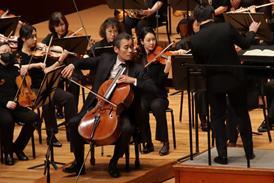
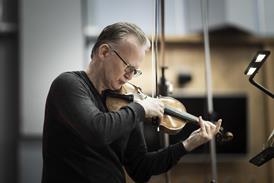
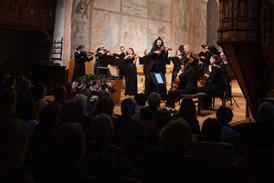
The Diotima Quartet keeps company among the most demanding of moderns, principally Boulez and Lachenmann. Beethoven finds a regular place in its performances but this is the first time in a 30-year career that the group has committed his music to disc. Without doubt, clarity is a virtue it brings to music that remains contemporary some two centuries after its composition.
Clarity of voicing, certainly: the mics are brought in close in a French farmhouse studio, and balance between the four instruments is shrewdly poised throughout. Clarity of purpose, too: tempos are well-judged in faster music but not indulged in slow movements. This clear-eyed attitude to music that can so often become freighted with spurious ‘meaningfulness’ prevents the ‘Heiliger Dankgesang’ at the heart of op.132 (for Holloway, ‘pious emotional blackmail’) or op.130’s Cavatina from wallowing and contrasts well with an appealing fleet-footedness in less weighty music such as op.127’s Scherzando or op.131’s Presto. There is clarity of text, too, via the use of Jonathan Del Mar’s recent urtext and acutely reactive responses to Beethoven’s myriad markings: sudden pianissimos pull back from fortissimos as if scalded; fp markings really stab in op.135’s Vivace.
Nevertheless, this is far from laboratory-conditions music making. Warming vibrato is judiciously deployed; expressive portamentos and telling little tugs at the pulse prevent the Diotima’s performances from becoming cold and analytical. The third disc encloses op.130, wildest of Beethoven’s children, with a gripping, cogent, untiring Grosse Fuge placed before the replacement finale, which allows a full range of performance possibilities and saves for the end of the set the last music Beethoven wrote.
DAVID THREASHER











No comments yet