





Bruce Hodges hears the group’s performance at Philadelphia’s Perelman Theater on 1 March 2026, while Leah Hollingsworth reports on its recital at Zankel Hall in New York’s Carnegie Hall three days later on 4 March 2026
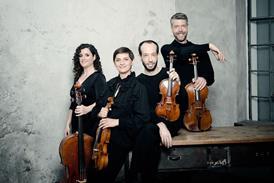
Once again, an ensemble in two similar programmes offered an opportunity for virtually side-by-side comparison. In appearances by the Takács Quartet in Philadelphia and New York, the common threads were Haydn’s ‘Rider’ Quartet op.74 no.3 and a new work by Brazilian–American composer Clarice Assad.
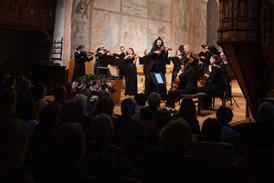
In the first evening, presented by the Philadelphia Chamber Music Society, many in the audience were caught off guard by the false ending of the ‘Rider’, which the ensemble managed with supreme comic timing. Hundreds of people erupted in premature applause, which took a few seconds to subside. Later, the group – grinning at its small triumph – finished to even more vigorous clapping and laughter.
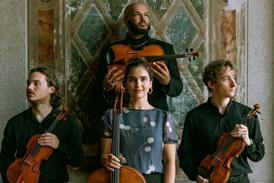
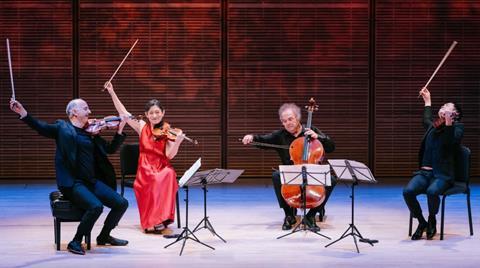
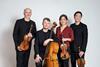
That humour continued with Assad’s NEXUS, a work that explores the subject of what it means to perform in a string quartet. Significantly, the opening featured cellist András Fejér alone on stage, a moving preface to his departure after this season. Soon first violinist Edward Dusinberre entered from the left, violist Richard O’Neill from the right, followed by violinist Harumi Rhodes to complete the ensemble. Assad gave the group plenty of theatrics, acknowledging their physicality, but also a sheaf of virtuoso cadenzas. Throughout, she mined the ideas of togetherness and separation.
In the clean acoustic of Philadelphia’s Perelman Theater, Beethoven’s op.131 ended the afternoon, which seemed a natural pairing with the Assad – not to mention a bit of sobriety in contrast to the playful first half. The foursome poured equal warmth and high contrasts into the score, with detail after detail emerging in a carefully considered manner – both a marvellous ‘farewell’ to Fejér and a nod to the ensemble’s future.
Three days later at Zankel Hall, the ensemble opened with the same artful Haydn, also done with real imagination (especially from Dusinberre in the Largo assai), elegant phrasing and utterly infectious playing in the Menuetto and Finale.
In a reprise of the Assad (co-commissioned by Carnegie Hall), the drama and staging were every bit as memorable as the music itself. The composer was inspired to add the theatrical elements after watching the Takács perform, and wanted to capitalise on its natural stage presence and ‘whole-body approach to musical expression’. That she did, with musicians walking around the stage, exaggerating facial expressions, stomping, sighing, and more, in a way that enhanced rather than detracted from the music. Virtuosity came through in solos and cadenzas – all executed with passion, precision and skill.
Transparent elegance and articulate textures characterised the Takács’s approach to Debussy’s String Quartet. The musicians achieved a magical ensemble sound throughout, and the finale combined subtlety and passion. As an encore, the group chose the Allegro molto of Beethoven’s op.59 no.3, exuberantly played at a spirited tempo.
Despite recent news of Fejér’s impending retirement, the ensemble has reinvented itself, adapted to new members, and manifested that change with the savvy Assad commission. These two outings only reconfirmed its longstanding tradition of imagination and artistry.
BRUCE HODGES









No comments yet