










Ahead of his third season at Spoleto Festival USA, the American cellist discusses musical risk-taking, participatory audiences and why chamber music must remain a living art form
Read more Featured Stories like this in The Strad Playing Hub
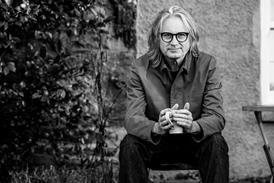
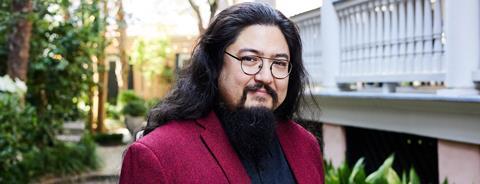
Paul Wiancko returns to Spoleto Festival USA this spring for his third season as Director of Chamber Music, continuing a new chapter for one of America’s most storied chamber series. Presented in Charleston’s historic Dock Street Theatre during the festival, which this year takes place from 22 May to 7 June, the Bank of America Chamber Music series has long occupied a distinctive place in American musical life, shaped over decades by figures including Charles Wadsworth and, more recently, the late Geoff Nuttall.
A cellist, composer and member of the Kronos Quartet, Wiancko took on the directorship at Spoleto in 2024, bringing an unusually broad artistic profile to the role. His appointment marked the first time the festival’s chamber music director was equally active as both performer and composer, a perspective increasingly reflected in programming that places canonical repertoire alongside contemporary voices and musical traditions beyond the conventional chamber canon.
The 2026 season places particular emphasis on American composers in connection with the United States’ 250th anniversary, including works by composer-in-residence Allison Loggins-Hull. Wiancko’s own compositional work also features this season with the premiere of his Violin Concerto no.1, Agrifolia, with Livia Sohn as soloist alongside the Spoleto Festival USA Orchestra.
Ahead of the festival, he spoke to US correspondent Thomas May about finding his footing after Geoff Nuttall, cultivating a more participatory atmosphere at Spoleto, and why chamber music must remain ‘a living, breathing organism’.
What have you learnt about the identity of the series – and about your own instincts as a curator – now that you’ve had a few seasons to shape Spoleto’s chamber music programme following Geoff Nuttall’s tenure?
Paul Wiancko: Over the last two years, it’s gone from this position that was almost inseparable from grief and sadness, because Geoff and I were such good friends, to something completely different. After Geoff passed away, Livia [his wife, the violinist Livia Sohn] told me he had once said he had never met anyone who loved music as much as I did. That meant a lot to me.
No one will ever do the job the way Geoff did – he was such a champion for every artist and composer and piece he presented – but for me it has transformed into this incredible excitement about simply sharing music with an audience in a room.
That has been life-changing for me: getting in front of a room full of people and telling them why you love something, then showing them why you love it when you play the piece. To curate 11 programmes across 17 days and 33 chamber concerts is such a privilege.
I realised this instinct has actually been with me since middle school. I used to bring CDs and headphones to school and make my friends sit down and listen to music I thought everyone needed to hear. That’s sort of what this job is.
There’s also a kind of living-on-the-edge energy to the performances at Spoleto. We have a short amount of time to put programmes together, and the audience feels that pace. It’s exhausting, but there’s something addictive about it too, for performers and listeners alike.
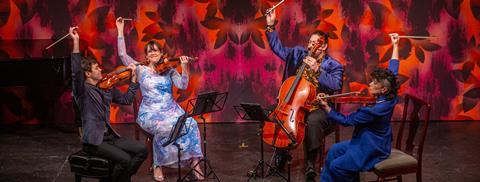
Spoleto audiences have deep attachment to the chamber series and its traditions. How do you introduce new ideas and repertoire without losing the sense of continuity that people value so strongly?
Paul Wiancko: Geoff was amazing at making sure everyone was along for the ride when exploring new ideas and new music. The audience has been incredibly receptive.
The people who are loyal to the chamber music series are the most loyal audience members I’ve ever met. They want to be participatory. I introduce every piece and artist from the stage, and sometimes engage in conversations with audience members during concerts. We even keep the house lights slightly brighter so people feel seen and the artists can feel the audience’s presence.
It creates this amazing feedback loop. It feels like you’re playing in a room full of friends. That’s a really unique situation.
This season places a major emphasis on American composers in connection with the United States’ 250th anniversary. At a moment when ideas about American identity feel increasingly contested, what does ‘American music’ mean to you in 2026?
Paul Wiancko: It’s of course a complicated issue of identity. What aspects of our culture and country should we be celebrating through music?
What I’m hoping to achieve is a reminder of how powerful American music has been in breaking rules and pushing through adversity. A lot of these composers faced enormous obstacles and still made it their life’s mission to compose incredible music.
There are still incredible hurdles for artists and music-makers in 2026, and music has always been a way forward through difficult moments in history. People rely on music to push through difficult events and difficult periods.
So this season is really a celebration of music as a way forward – music that has defined what art in this country can be. It’s also a reminder that we are the ones deciding what this country sounds like.
You’re simultaneously active as a performer, composer and curator – and this season also brings the premiere of your new violin concerto. Do those artistic roles feed one another creatively, or do they sometimes compete for your attention and artistic energy?
Paul Wiancko: It took me a year or two to get the scheduling of my personal life in order to handle all these different jobs, but at this point I can’t imagine not doing everything I’m doing, because everything feeds into everything else.
Being a composer gives me a different perspective when I’m performing, and it also gives me empathy when inviting another composer to share their life’s work with the Spoleto audience.
My work with the Kronos Quartet has also deeply affected how I think about programming and performance. There’s an element of risk to what Kronos does that is addictive. Often we play music where we don’t know what the reaction is going to be. But people want you to succeed – nobody brings tomatoes to concerts anymore. Everybody wants everyone to succeed when they’re presenting something new.
I’ve introduced a tiny bit more risk into the Spoleto ecosystem because I think it’s healthy to be challenged. If you don’t like something, chances are it clarifies what you do like, and you fall more deeply in love with the things you love.
Your programming often collapses boundaries between old and new music, canonical and lesser-known voices, western and non-western traditions. What assumptions about chamber music are you most interested in challenging right now?
Paul Wiancko: I want to be certain that we all know chamber music is not just a museum piece now – it’s a living, breathing organism. It’s a community that depends on collaboration and openness and support.
And it’s not limited to European and American music. The definition of chamber music in my mind extends to small-ensemble playing from anywhere in the world.
Last year we had Mahsa Vahdat, who brought Iranian folk and Persian musical traditions into the series alongside Vivaldi’s Four Seasons. That’s really important to me.
I want people to feel like they are part of history, not just looking back at a fixed version of it. When you hear music by Paula Prestini and Strauss and Gershwin and Dvořák on the same programme, something happens emotionally.
Something happens to the brain when we hear a sound from 300 years ago next to something written last year. The old feels very present, and the new feels like a direct result of everything that came before it.
When I’m curating, I’m thinking about the emotional journey of a concert programme the way I would think about composing a piece.
Allison Loggins-Hull joins the Festival this year as Composer-in-Residence. What drew you to her artistic voice, and how do you see living composers reshaping the future of festivals like Spoleto rather than simply being inserted into existing traditions?
Paul Wiancko: Allison’s work touches directly on issues of resistance and persistence, and on having to fight for your voice in adverse circumstances. That’s part of why I wanted her to be part of the season.
Her music addresses these issues directly while also being emotionally engaging and enjoyable music.
One of the beautiful things about the Spoleto chamber series is that even within this very intense environment, we still have the ability to thoughtfully integrate a composer-in-residence programme into the season. Having someone come down, explore their music with us and write something new for us every season is an incredibly meaningful part of the series.
The 2026 edition of Spoleto Festival USA runs from 22 May to 7 June.




















No comments yet