





![Ayanna Witter-Johnson [Jordan Woods] 7](https://dnan0fzjxntrj.cloudfront.net/Pictures/274x183/4/9/4/44494_ayannawitterjohnsonjordanwoods7_224583.jpg)


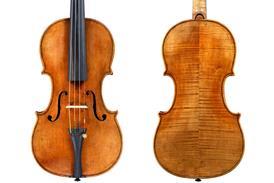




Carlos María Solare attends the Hambacher MusikFest for two days - 20 and 22 June 2025 - to hear performances of Beethoven, Mozart, Wagner, Dessoff and Borodin
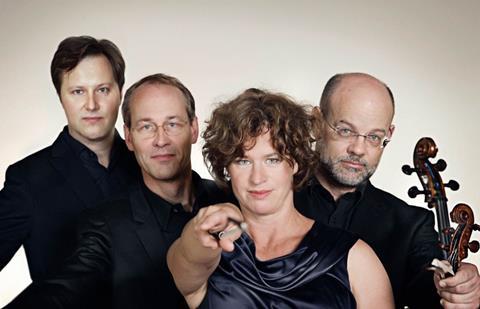
The Hambacher MusikFest is a chamber music festival run by the Mandelring Quartet on its home turf in Rhineland Palatinate, which happens to be one of Germany’s most celebrated wine-making regions. Ever since first attending it all of six years ago (see the August 2019 issue of The Strad), I’ve been looking forward to a return visit. Now, as then, the Atos Trio was the event’s main guest ensemble.
On 20 June, in the beautiful Baroque church of St Jakobus, a programme titled ‘Heard Anew’ afforded an unusual look at some masterpieces from the Viennese Classic era. The quintets for piano and wind instruments by Mozart and Beethoven were heard in arrangements for piano quartet.
While Beethoven did publish his piece in a string version, the Mozart was heard in a new arrangement, especially prepared by Christoph Schickedanz. With the four wind parts sensibly redistributed among the three strings, the piece worked quite convincingly in its new guise, affording each player a chance to shine in what Mozart considered ‘the best thing I’ve written so far’.
The Atos Trio violinist, Annette von Hehn, excelled in some high-lying ‘oboe’ writing, while her opposite number Sebastian Schmidt, leader of the Mandelring Quartet, morphed into an assertive violist, with nicely modulated sound. The other three Mandelring members – Nanette Schmidt, Andreas Willwohl and Bernhard Schmidt – were featured in the Beethoven arrangement, for which pianist Thomas Hoppe found an appropriately meatier sound than he had employed in Mozart.
From a violist’s perspective, the Gran Sestetto concertante for strings – an anonymous arrangement made in 1807 of Mozart’s Sinfonia concertante for violin, viola and orchestra – can be a frustrating experience. Many of the solo viola’s phrases have been re-allotted to other instruments, more often than not to the first cello.
However, the piece works on its own terms as a chamber music work – and the viola does get to keep that magical moment when minor turns to major in the slow movement! Briskly paced and crisply articulated, this performance made a most persuasive case for the arrangement, with Atos Trio cellist Stefan Heinemeyer emerging as a co-protagonist with constantly alive phrasing, and Hehn making much of the second viola part.
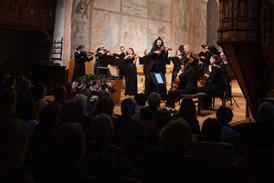
On 22 June, the MusikFest’s concluding concert at Hambach Castle featured Sebastian Gürtler’s effective transcription of Wagner’s Prelude to Tristan und Isolde for string sextet, soulfully performed by the Mandelring, Hehn and Heinemeyer.
The two-cello quintet by Dessoff was a spirited romp, as was Borodin’s Sextet, an intriguing mixture of Slavonic material and Mendelssohnian facture. Some reshuffling placed the Atos string players on the first desks for the festival’s final piece, Beethoven’s Fourth Piano Concerto in Lachner’s skilful arrangement for string quintet in lieu of the full orchestra. This awarded Hoppe a well-deserved solo spot that placed the limelight on his consistently imaginative musicality.
CARLOS MARÍA SOLARE
Review: Mandelring Quartet, Roland Glassl: Dvořák
Read: Violist Roland Glassl to depart Mandelring Quartet after 16 years
Read: Mandelring Quartet to play complete Shostakovich quartets in two days









No comments yet