









Philippa Bunting looks through the repertoire choices of the newly issued TCL strings books
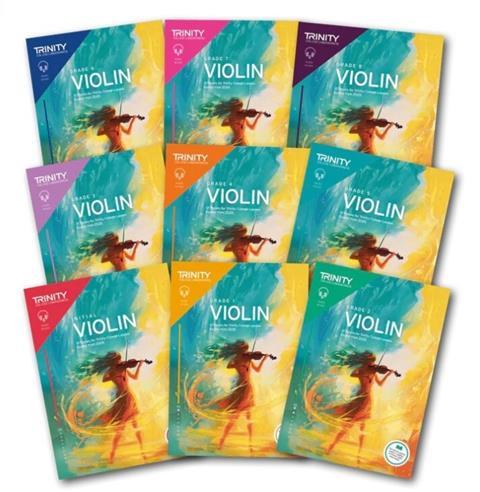
Trinity College London String Syllabus 2025
Trinity College London
Trinity College London (TCL) has been offering graded examinations in music since 1872. Graded exams offer a suite of qualifications based on a model of progressive mastery leading from the beginning of a learner’s musical journey up to diploma level and beyond. There are different models – some including technical work, sightreading and aural tests, and they are available in both face-to-face and digital iterations – but all, as we might expect, have the performance of repertoire at their heart.
And as compilers of any musical content – festival programmes, concert series, audition requirements, competition syllabuses or music exam specifications – know only too well, making choices and committing to them publicly is an enterprise that can potentially expose an underlying value system, opening it up to scrutiny (and therefore judgement).
The graded exams of today are a significant feature of the musical landscape in many musical cultures throughout the world, although they take place in an entirely different world from their 19th-century forebears despite sharing common DNA. Gone is the concept of the established canon, curated by wise greybeards. Gone also are many of both the boundaries of genre and style, and the conventions of what constitutes an instrumental music education. And so the burning question for those who make decisions in this space is: evolution or revolution?
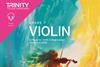
With this syllabus revision of 2025, TCL has made some dramatic changes. In the past, a syllabus would typically replace its predecessor, which would become obsolete. Instead, TCL has decided to extend the validity of the 2020 syllabus, and add to it twelve new pieces for violin at each grade, with some additional individual pieces available for viola, cello and double bass.
Taking advantage of the additional space this affords, TCL has come up with a broad and engaging approach to choosing repertoire, extending the range of authentic folk music, including works that friends and family will recognise and enjoy, and showcasing iconic items of violin repertoire alongside newly commissioned pieces. The underlying ethos is to inspire and motivate so that young learners can choose gems that feel impressive and special to play: making an exam more a celebration than a chore.
Always strong on the underlying technical progression, TCL has thought carefully about the fact that different musical languages can teach you the same things, including aspects of technique perhaps once thought the province of Western Classical music alone. They have been particularly successful at Grade 8 Violin, where an inherent conservatism towards the established canon can creep in, with an offer that sets Vivaldi and Wieniawski alongside Bluegrass showstopper Orange Blossom Special and Stephen Woods’s evocative, Grappelli-inspired Rendez-vous à Paris. Perhaps not a revolution but a welcome evolution nonetheless.
PHILIPPA BUNTING










No comments yet