










Nathaniel Vallois reads Marjory Serrano-Coyer’s guide for aspiring concertmasters to get the best out of their section, from technique and style to diplomatic attributes
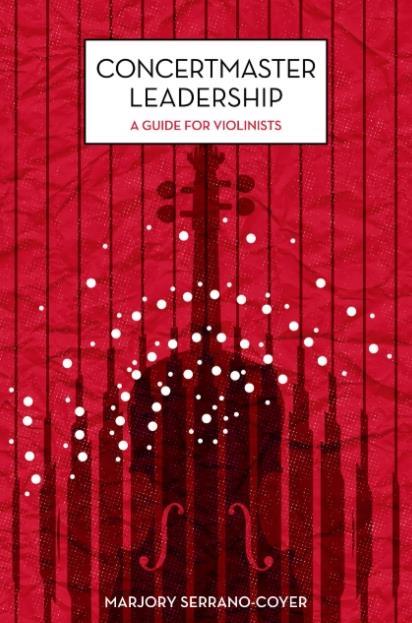
Concertmaster Leadership: A guide for violinists
Marjory Serrano-Coyer
128PP ISBN 9798292481126
INDEPENDENT £18.50
This compact, handsome and simply laid-out book explores the multifaceted qualities required for the position of concertmaster. As well as detailing concrete aspects of technique and style, the author examines the psychological and diplomatic attributes that go beyond musical excellence.
Areas of particular focus are: the resourceful and efficient marking of bowings; the stature to stand out as soloist where called for, but equally to blend in; the assurance and decisiveness to lead (in musical and in other ways); a deep grasp of the inner workings of the orchestra at every level; a thorough knowledge of the score; and strong yet adaptable communication skills.
While much of the book’s content is applicable to any type of orchestra, its focus is primarily on what the author refers to as community and semi-professional orchestras on the American music scene, rather than the more clear-cut distinction between professional and amateur orchestras as exists in the UK and many other countries. In essence, this means leading an orchestra that rehearses with less frequency and regularity than a fully fledged professional one. To manage this well, the concertmaster may need all the more alert leadership!
The author outlines key technical aspects, backed up with judicious practical illustrations. These matters are always discussed with musical style and context in mind, notably how they pertain to the wider orchestral picture at any given moment of the piece. There are plenty of very useful pointers relevant to all orchestral string playing, and welcome sections on techniques that tend to be neglected in individual learning – pizzicato, col legno, tremolando, the playing of chords in a violin section, and divisi lines.
I query the description of some bow strokes: for instance, to my mind spiccato is always a bouncing stroke and tremolando is nearly always to be played in the upper portion of the bow. The terminology for these can indeed be a confusing topic.
The book is sprinkled with pertinent and entertaining quotes, mostly from leading concertmasters. The author frequently refers to her own experience, with refreshing candour about her strengths and weaknesses. Some readers may find the personal touch a bit excessive, but it largely complements the substantial content, and certainly does not detract from it. She has done her best to produce a very thorough guide, with three additional appendices.
The first is a summary of technical, stylistic, musical matters, some of which are so subject to variation that in my opinion they require more lengthy, nuanced explanations. The second is a list of important violin solos, grouped by level of difficulty. I found an occasional error or misjudgement (Peter Davies instead of Peter Maxwell Davies, or the notion that much more detailed markings occurred with late 19th-century composers when really it was a gradual process over a longer period of time).
I especially liked the third appendix, which thoughtfully sets out many key questions through which to evaluate one’s leadership skills and build self-confidence in the role.
Serrano-Coyer exudes passionate devotion to her craft, which makes her book engaging as well as fundamentally practical. For the student leader, the less experienced, daunted or aspiring concertmaster – and even more generally for those preparing auditions – she has provided an excellent, detailed, empathetic reference.
NATHANIEL VALLOIS









No comments yet