





![Ayanna Witter-Johnson [Jordan Woods] 7](https://dnan0fzjxntrj.cloudfront.net/Pictures/274x183/4/9/4/44494_ayannawitterjohnsonjordanwoods7_224583.jpg)


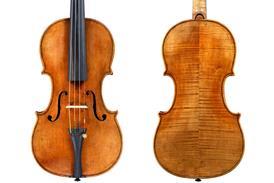




Erin Jones speaks to cellist Katie Tertell and historian Rosi Song about their mission to uncover the music of Cassadó, through their project ‘Lost in Plain Sight’
Discover more Featured Stories like this in The Strad Playing Hub
When Japanese pianist Chieko Hara died in 2001, her estate included both the personal documents and compositions of her late husband, Spanish cellist and composer Gaspar Cassadó. This collection was donated to Tamagawa University in Tokyo, where it remains archived in the Museum of Education. Musicians and scholars interested in exploring Cassadó’s oeuvre have faced logistical hurdles in order to access the work.
Rising to the challenge in recent years is an interdisciplinary duo of Durham University faculty who is on a mission to introduce Cassadó’s life, legacy, and music to a wider audience.
’Lost in Plain Sight’ is the research project co-founded by cellist and educator Katie Tertell and literary scholar and cultural historian Dr. Rosi Song. Each brings a unique expertise and perspective to this venture.
Song’s area of research is the Franco dictatorship after the end of the Spanish Civil War. Intrigued by the loss of Cassadó’s legacy, she was interested in telling that story in the form of a cultural biography. Meanwhile, Tertell is eager to create opportunities for Cassadó’s lesser known works to be played and enlisted the help of collaborating musicians in both the preparation and performance of the music.
In October 2024, the pair traveled to Japan to establish connections with the university and further access to his archived work, and they hope to return in 2026 to continue the process.
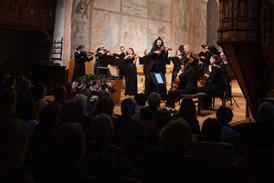
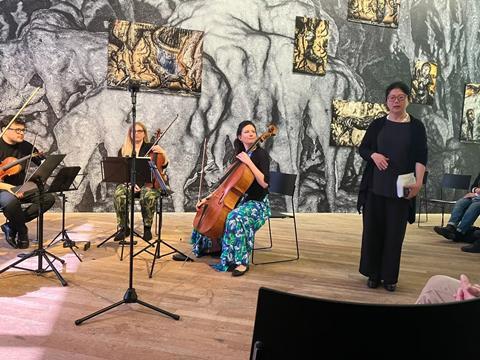
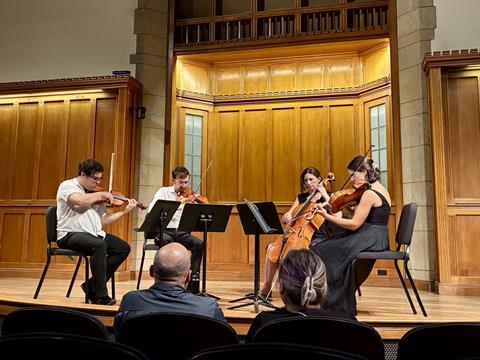
This autumn, Tertell and Song, along with their collaborating musicians, toured the east coast of the US. The performances blended musical concert with historical and cultural context, provided by Song. This November their tour continues in the UK with appearances at the Anglo-Catalan Conference at Newcastle University on 7 November and Echos Festival Instituto Cervantes London on 27 November. To learn more about the project, visit https://www.katietertell.com/cassado
Tell me about your most recent US tour. How was that received?
Song: In the Spanish departments of North American academia, one topic that is taught a lot and gathers a lot of attention from students is the Spanish Civil War. Part of the story that we teach our students is that the Spanish Civil War still has open wounds. We talk a lot about that legacy through collective memory, through trauma, and so on. I pitched Cassadó’s story as part of that legacy, that we can think about the loss of Cassadó’s legacy because of that complicated story.
What we offer is not a traditional lecture event, where I just stand there and talk for 45 minutes, but rather, I tell a story while the musicians play and we talk about the context from which to hear this music. I think that everybody who was part of those recitals really enjoyed it.
Tertell: What keeps me going in the project is the fact that every time we play his music and one of these undiscovered pieces, the audience feedback is so tremendous and so positive. It really encourages me to think that this is important and that this music relates to people and deserves to be performed. The tour was really successful.
When did you first become interested in Cassadó and how did you decide to take up the mantle of this project?
Tertell: I first came across Cassadó’s music when I was in my undergraduate studies at Indiana University. I have so many vivid memories of hearing Cassadó’s music for the first time. It was a masterclass with a cellist named Shannon Lee Hayden. I remember she played the third movement of the cello suite, and I was floored by how incredible this music was.
Connecting with with Rosi during the pandemic really opened a lot of doors because she had a huge amount of curiosity. We discovered a lot of material that is unpublished. There’s a lot of chamber music in addition to solo cello pieces. Inviting a musician into this project, you worry if people are going to think this is some little weird cello side project that they’re part of. But they really love it and many of those people have wanted to programme Cassadó’s works. It’s amazing to see how many musicians want to play it more and more.
Song: I thought that this was going to be my retirement project – writing this cultural biography told through Cassadó’s story – and that would take me to archives all over the world. When Katie and I connected for cello lessons, we met two weeks before the whole world stopped. During the pandemic, we started talking about Cassadó. I thought, I need to research, go to the archives, find the facts and gather information from letters and newspapers so that I could tell this story coherently.
It was interesting because Katie felt that we needed to play his music and see what people think. That’s a very different approach and part of the very rewarding outcome of this project was that every musician that has been involved in one of our recitals is looking to play Cassadó again, and to programme as part of their repertoire.
How have your differing disciplines and expertise complemented each other and in this collaboration?.
Song: I became a better listener of music through this project. I’m a big lover of classical music – my husband and I go to concerts where he’s a subscriber. But I think that my way of experiencing music has transformed profoundly. That gives me more hope that when I put this story together, as I’ll be able to produce a more informed scholarship.
I feel incredibly privileged to be able to sit and listen to the musicians during their rehearsals. And in true collaboration, I’ll come up with some historical background or cultural knowledge that I could bring at certain moments. I don’t know if that transforms the way they perform, but it feels like it informs them a little bit more. I learnt so much, and I developed so much respect for the musicians.
Can you give an overview of what in Cassadó’s body of work is available and what is archived that you’re trying to access?
Tertell: There are some incomplete cello and piano works that we would love to explore. There are a lot of works for guitar, and there are some orchestral works, including a work for cello and orchestra and some full orchestral pieces. Those are things that exist in the archives that we have yet to discover fully.
There are also a lot of works that we do have access to that we’ve performed, which are unpublished. Of the three quartets that he wrote, one was published and is out of print and there’s no score that exists. It’s just these really old parts that are on IMSLP. If anyone who’s reading this has a Cassadó part for the first string quartet lying around, they should get in touch with me!
The other two are unpublished and we were lucky enough to obtain scores from a private collection in Spain.
What was the goal of your trip to Japan last October and what did you learn from that?
Tertell: The British Academy Grant we received allowed us to create some academic writing about what repertoire is there and what exists. We knew by this point because we had been trying for over two years to establish connections in Japan we knew that it was going to be a long process. There are a lot of moving parts to these things in order to like make a successful brokering of cultural interest, so the hope is that we will return in 2026.
Assuming that you are able to secure funding to go back to Japan, what are you hoping to accomplish?
Song: We would like to establish a memorandum of understanding with Tamagawa University to have them understand that we’re not trying to take away the archive, but we’re trying to support them and to make it more accessible to others. They have planned to publish those manuscripts, but the presses that they work with are very local and if you are trying to purchase that, it’s very difficult.
We could try to mediate a press that has a more international distribution. For critical editions, there are critical editions in Japanese, but perhaps there could also be international critical editions that bring together musicologists or people that can write in English, and that they’re interested in producing.
What makes Cassadó’s music so special and worth preserving?
Tertell: There’s something very temporal, present, real and authentic in his music, and of course it’s got this fun, Catalan Spanish flair. There’s something in his music that is deeply expressive and exciting and honest. I think it’s because he didn’t see himself as a composer and perhaps he felt less boundaried about how profoundly his work was received.
We’ve loved working on some of the unpublished quartets, because it’s like excavating. They’re a little bit rough and raw. The parts are not full of every single marking and articulation like you would get in something that has been edited many times. It takes a compositional ear to find the music in it. That has been a remarkable journey for me, and I think it really helps musicians when they have to do that because you have to get into the head of the composer.
What is your dream for the outcome of this project venture?
Tertell: I’m working towards establishing funding and resources and getting everything in place to record Cassadó’s music. It is of utmost importance to me that these unpublished works become published. That depends on a lot of things, and rights are complicated especially with composers who died fewer than 70 years ago.
My long-term goal is that when I look back on my life that Cassadó’s music has entered the standard canon in a way that is beyond the limited cello pieces that we already know and love, but is part of regular programming of 20th-century composers in quartet concerts, as well as orchestral concerts.
Song: I would love to see a plan in which some of these out-of-print compositions find new publishers and publish in critical editions that will make his music accessible to others. It would be amazing if his two unpublished quartets get published just to put his name on the map again in Catalan Music. The crazy dream would be if his orchestral piece, the Rhapsodia Catalana, would be played again in Catalonia. There’s a lot of detective work that needs to be done.
Photos courtesy Katie Tertell.
Read: A neglected work from Wales: uncovering Grace Williams’s Violin Concerto
Read: Myth, music and the eternal appeal of tragic romance: violinist Rebeca Nuez
Discover more Featured Stories like this in The Strad Playing Hub


![Ayanna Witter-Johnson [Jordan Woods] 7](https://dnan0fzjxntrj.cloudfront.net/Pictures/100x67/4/9/4/44494_ayannawitterjohnsonjordanwoods7_224583.jpg)







No comments yet