


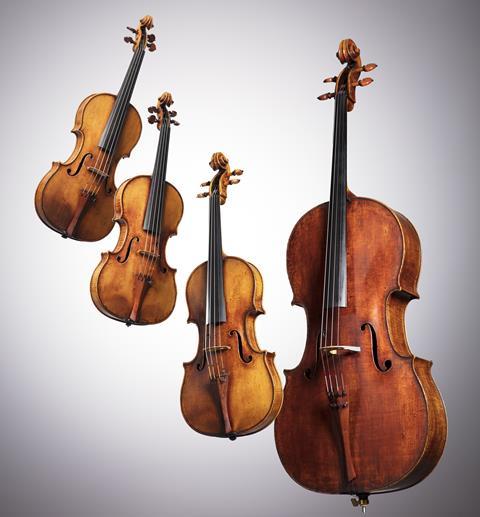
Tully Potter takes a closer look at the four Stradivari instruments formerly owned by Paganini, and later played by the Paganini Quartet
Discover more lutherie articles here
This is an excerpt from The Strad January 2026 feature, ’Paganini Quartet: When the stars aligned’. Read the full article here
It was always known that Nicolò Paganini had owned a quartet of Stradivaris – two of them had been subsequently owned by the banker and amateur cellist Robert von Mendelssohn – but they were not reunited until Emil Herrmann, New York luthier and dealer, started searching for them in the mid-1930s. He finally achieved the full set in 1944.
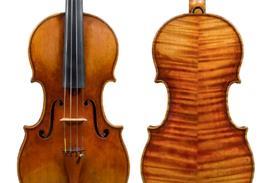
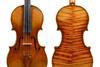
The dark red 1727 ‘Count Cozio di Salabue’ violin, which Paganini acquired from the count in 1817, was often played by the master himself, alongside his ‘Il Cannone’ Guarneri ‘del Gesù’. ‘This violin has a tone as big as a double bass,’ he declared. ‘Never will I part with it as long as I live.’ It was briefly owned in the 1890s by the French tenor Ernesto Nicolini, husband of the Italian soprano Adelina Patti and an excellent violinist.
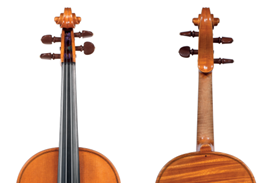
The Paganini Quartet comprises the 1727 ‘Count Cozio di Salabue’ and 1680 ‘Desaint’ violins; one of just 13 surviving violas by Stradivari, the ‘Mendelssohn’ of 1731, the tone of which so inspired Paganini that he commissioned Berlioz to write Harold in Italy for it; and the 1736 ‘Ladenburg’ cello, thought to be the maker’s last.
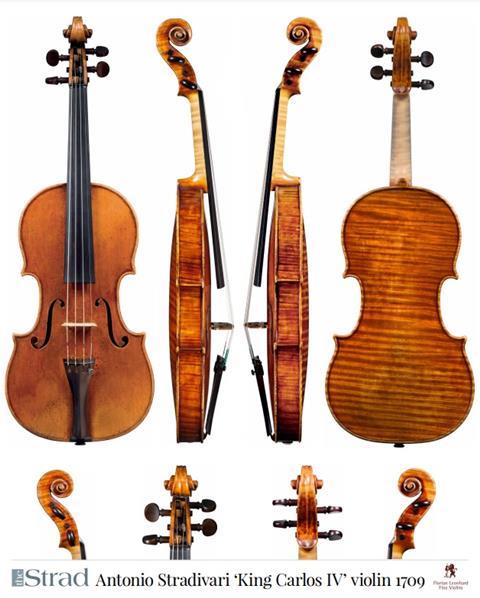
The 1680 ‘Desaint’ violin is an example of Stradivari’s debt to Amati. ‘It is typical of the period in every respect: influenced by Amati in overall model and in its golden-orange varnish, but with Stradivari’s original style visible in the more angular soundholes and less rounded curves,’ Toby Faber writes in his book Stradivarius (2004). ‘The violin would probably have taken about two weeks to make, as Stradivari followed traditional Cremonese techniques by then already over a century old.’
Paganini’s acquisition of the rare 1731 ‘Mendelssohn’ viola in 1832 was the reason he asked Berlioz for the work that became Harold in Italy (a century later, the instrument was regularly lent by the Robert von Mendelssohn family of Berlin to Adolf Busch for his performances of the work). Paganini loved playing the viola, and highlighted it in his Guitar Quartet no.15 and his Terzetto concertante for guitar, viola and cello.
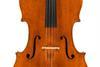
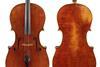
The 1736 ‘Ladenburg’, thought to be Stradivari’s last cello and made the year before he died, was owned by Jean-Baptiste Vuillaume, Ernst Ladenburg and Robert von Mendelssohn, who used it on at least one occasion to play Schubert’s String Quintet in C major with the Joachim Quartet. Robert’s son Francesco, regular guest cellist with the Busch Quartet and a member of the Klingler Quartet, could choose between the ‘Ladenburg’ and his father’s other Stradivari, the 1720 ‘Piatti’. The ‘Ladenburg’ was the first of the Paganini instruments that Herrmann acquired, in 1935.
After the Paganini Quartet disbanded, the Corcoran Gallery of Art was chosen as the ideal repository for the set of Stradivaris, because Anna Clark’s husband, Senator William Andrews Clark (1839–1925), had been a major patron of the gallery, even paying for a new wing.
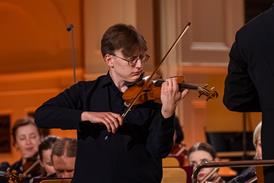
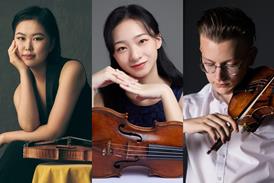
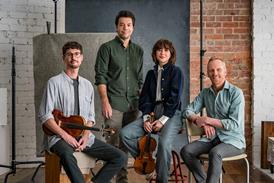
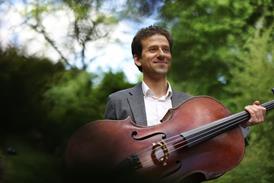
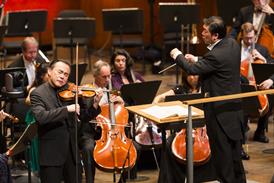
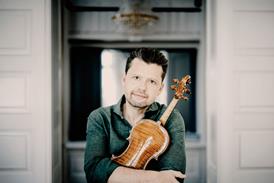
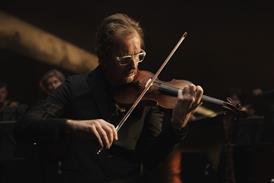
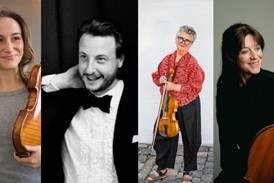
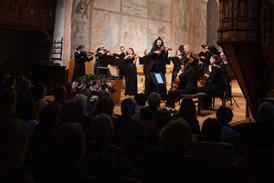
In 1982, after essential maintenance – especially to the cello – by ace restorer René Morel, the four instruments were lent to the Cleveland Quartet. In 1994 they were bought by the Nippon Music Foundation, and after the Cleveland, they went in 1995 to the Tokyo Quartet until that group disbanded in 2013. The Hagen Quartet then had them until in 2017 they were returned to their birthplace, in the hands of the Cremona Quartet. In 2019 the Kuss Quartet borrowed them for a live recorded Beethoven cycle at Suntory Hall, Tokyo, and the Goldmund Quartet became their latest guardians.
TULLY POTTER






No comments yet