











The violinist reimagines Bach’s iconic works through fresh arrangements, personal storytelling and a vibrant palette of contemporary sound, in her new album Colors of Bach
Read more Featured Stories like this in The Strad Playing Hub
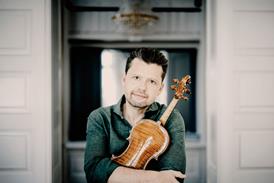
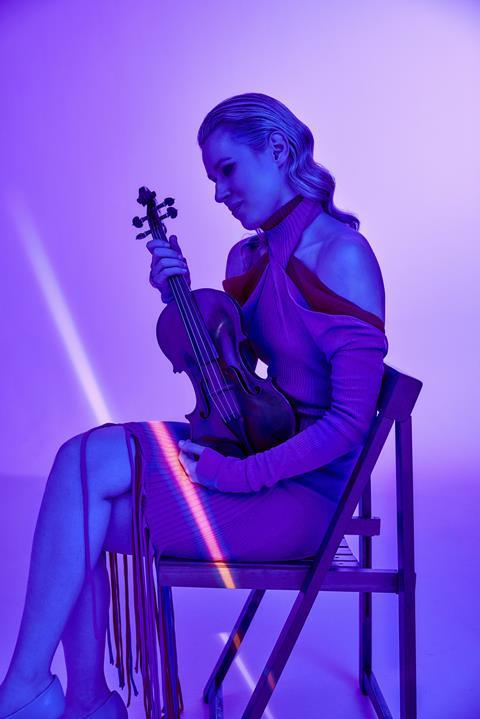
Norwegian violinist Eldbjørg Hemsing releases her new album, Colors of Bach, on 16 January on Sony Classical. Hemsing aims to reimagine the depth and richness of Bach’s music through entirely new arrangements, offering fresh emotional perspectives and contemporary soundscapes.
The album draws from a huge range of Bach’s works, including arrangements from the Partitas, cantatas, the Well-Tempered Clavier, the Notebook for Anna Magdalena Bach, and even includes the Violin Concerto no.2 in E minor, BWV 1042, in its entirety.
Hemsing worked with arrangers Tim Allhoff, Jan-Peter Klöpfel, and Jarkko Riihimäki to cast these familiar masterpieces in a renewed light, with the shared artistic philosophy to expand, rethink and reshape Bach’s music without diminishing it.
Hemsing shared her insights on the new album with The Strad.
Many of the pieces on Colors of Bach are iconic works like the Brandenburg Concerto no.1 and Erbarme Dich. How did you approach the challenge of reshaping such well-loved compositions while maintaining their essence?
Bach’s music is so perfectly constructed that any intervention must come from a place of deep respect and listening.
I often think of these arrangements in the same way I think about film adaptations of great literature. You can have the same source material – the same text, the same story – and yet each director creates a completely different world through their own sensibility, aesthetic, and emotional focus. The essence remains, but the perspective changes. That was very much my approach to this project and Bach.
With works as iconic as the Brandenburg Concerto No. 1 or Erbarme Dich, I wasn’t trying to rewrite Bach, but to reframe him. The score is the script – it is sacred – but the colours, the pacing, the atmosphere, and the emotional lens can be shaped.
I hope listeners feel immediately at home in Bach’s language, while also being gently surprised by new colours, playfulness, textures, and perspectives.
You’ve shared that ‘Air’ holds a deeply personal meaning for you. How did that emotional connection influence your interpretation and the decision to give this piece a new perspective?
‘Air’ holds an especially profound place in my life, because it is inseparable from the memory of my father. It is a rare and very vulnerable thing to dedicate a piece on an album to someone you love, and in a world where musicians are often pushed toward visibility, speed, and virality, I felt a strong need to slow down and recentre the conversation around what this music truly means to me.
‘Air’ holds an especially profound place in my life, because it is inseparable from the memory of my father. It is a rare and very vulnerable thing to dedicate a piece on an album to someone you love, and in a world where musicians are often pushed toward visibility, speed, and virality, I felt a strong need to slow down and recentre the conversation around what this music truly means to me.
Bach’s ‘Air’ on the G String is so often associated with funerals and farewells, and that is exactly how the memory was for me – at a moment of deep loss and devastation. For a long time, the piece carried only the weight of that traumatic experience. When we began shaping the concept for Colors of Bach, I realised that I did not want this music to remain bound to grief alone. I wanted to reclaim it.
This new Air Variation is my way of reframing that memory – of choosing to remember my father not through the lens of loss, but through light. He was bright, soulful, playful, and profound, and I wanted the music to reflect those qualities. Rather than a lament, it becomes a celebration of life, of joy, of warmth. In that sense, this is not just ‘Air’ as we know it, but ‘Fresh Air’ – a new emotional space in which both the music and the memory can breathe.
It is deeply personal, but I also hope it resonates with anyone who has lost someone close. If it can remind listeners of the beauty, laughter, and love that remain after loss, then it has fulfilled its purpose.
The album introduces fresh harmonic contexts and instrumentations. What inspired these choices, and how do they reflect your vision of Bach’s adaptability?
One of the things that has always fascinated me about Bach is how genius and adaptable his music is. His compositions are so structurally strong that they can exist in many different forms and still remain unmistakably Bach. The idea of introducing new harmonic contexts and instrumentations came from a desire to explore that flexibility and to place his music in dialogue with our own time.
I was inspired by the idea of colour – how different timbres, harmonic shades, and instrumental combinations can change the emotional temperature of a piece. Sometimes a small harmonic shift or a different instrumental voice can reveal something that was always there but hidden. For me, this was a way of honouring Bach’s universality and showing that his music is not frozen in history, but alive and endlessly renewable.
How did the collaborations with various artists shape the album’s overall sound and your own artistic journey through Bach’s music?
Collaboration was central to Colors of Bach. With three arrangers and a seven-person ensemble, it truly felt like a dream team of musicians, each bringing their own voice and imagination to the project. That diversity shaped the album’s sound in a very natural way and opened up new perspectives on Bach’s music.
Recording together was not only deeply inspiring, but genuinely fun. There was a strong sense of trust, openness, and shared curiosity, which allowed the music to grow organically and be shaped. Through this collective process, I discovered new colours and energies in Bach’s music, and it became a creative journey that has had a lasting impact on me as an artist.












No comments yet