
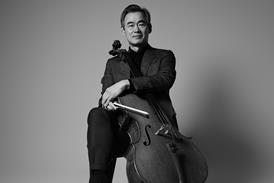


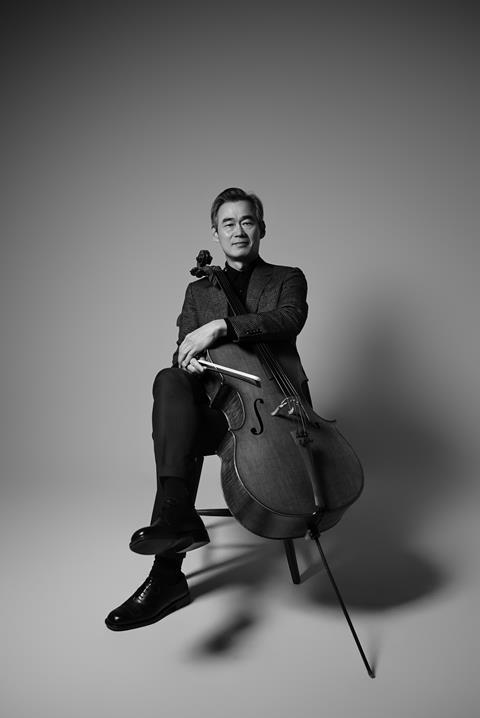
The South Korean cellist shares with The Strad the importance of sound in the Korean school of string playing, as well as what motivates and inspires his teaching methods
Discover more Featured Stories like this in The Strad Playing Hub
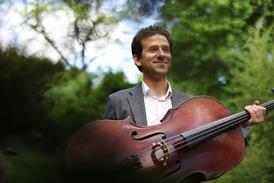
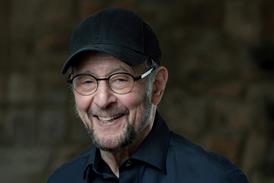
Cellist Sung-Won Yang is professor of cello at Yonsei University in South Korea, visiting professor of cello at the Royal Academy of Music in London and the artistic director of LG Chamber Music School. A native of Seoul, Yang graduated from the Paris Conservatory and Indiana University, where he served as an assistant to János Starker.
What are the main motivations behind his teaching? Yang spoke to Peter Somerford about the importance of sound production, tailoring methods to individual students, as well as his responsibility to pass on classical music to the next generation.
As an experienced teacher, do you think there is something that might be described as a ‘Korean School’ of string playing? It may be a big generalisation, but are there particular fundamentals of string technique that teachers in Korea tend to focus on when teaching talented young students, for example clean bowing or sound production?
Yes, it is very difficult to generalise, and perhaps I shouldn’t. However, there is common ground among Korean teachers and their talented young students, and that is sound. Sound is the voice of the music – the notes are, to me, like words – and over the years teachers have learned to place great emphasis on lyricism and the importance of singing, and students have learned to express themselves through this medium of great sound.
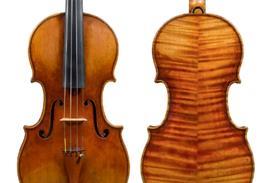
The Korean school emphasises great sound production, which can sometimes be a bit too aggressive. But especially with the help of the Kumho and Samsung foundations, which loan top Italian instruments to young players, the musicians learn not to impose anything on an Italian instrument, but rather to bring out the very best sound the instrument can express. So yes, clean and beautiful sound production is of foremost importance.
Clean and beautiful sound production is of foremost importance
Which aspects of playing technique or musicianship do you find yourself working on most with your students? Are these aspects the same ones that your teachers worked on with you?
It’s different depending on whether a student is studying with me for three years (as most do – rarely more) or it’s a one-off masterclass situation. When I teach, and I’m listening to a student, I analyse which aspects are most lacking and where I can be most useful.
If I see that the cellist in front of me lacks certain technical aspects, then I focus on bow technique, left-hand position, shifting, intonation, and so on. If a person already plays at a very high level but focuses only on the cellistic aspects, then I focus on musical and stylistic issues, and above all on what they understand and wish to convey musically.
If a student at Yonsei University arrives in my class, I plan so that by the time they leave, they have enough to work on independently for many years ahead – whether with another professor, which I always welcome, or on their own as they seek a position. What matters, whether at my studio or in a masterclass, is working so that the student becomes a better player and musician the year after – not right away. Even better if they remember it ten years later.
My former teacher János Starker worked in that direction, and I have developed my own way of continuing his legacy, but differently.
How would you describe your personal teaching philosophy?
I am a torchbearer. As performer and as a teacher, my mission is to carry on our Art to the next generation. Having been professor Starker’s student, assistant, and lecturer at Indiana University, upon saying goodbye, he told me: ’Keep carrying the torch.’
This metaphor – one of his most profound remarks – has been my enduring guide ever since. In those words, I found not just a farewell, but a timeless directive encapsulating my musical journey. The torch symbolises not only the traditions of classical music, but also the responsibility to illuminate the path for future generations.
Continuing my own journey, I am reminded of the flame within – connecting me to the expressiveness of music and to the legacy of those who paved the way. I carry the torch with reverence, understanding both the weight of tradition and the transformative power of classical music.
Sung-Won Yang features in The Strad October 2026 article ’A Korean wave: Korean string playing’. Read the full article here.
Read: Géza Szilvay: bridging tradition and innovation in string pedagogy
Read: Memories of János Starker: Hamilton Cheifetz
Discover more Featured Stories like this in The Strad Playing Hub










No comments yet