




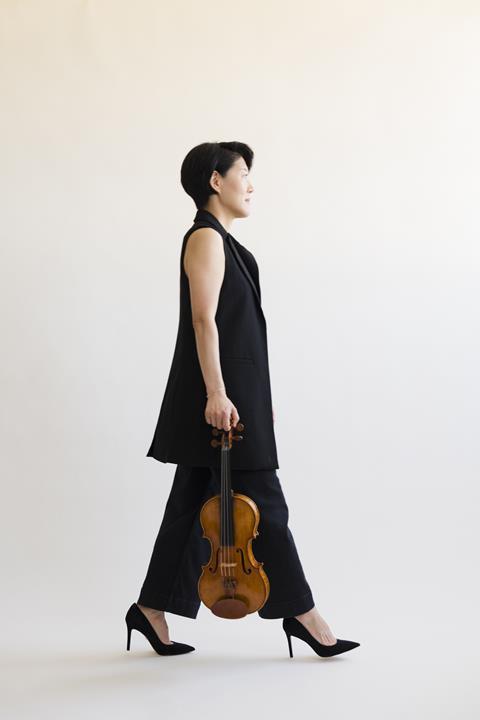
The violinist outlines how the medium of solo violin feels both timeless and contemporary, illustrated through her programme choices on her latest album
Discover more Featured Stories like this in The Strad Playing Hub
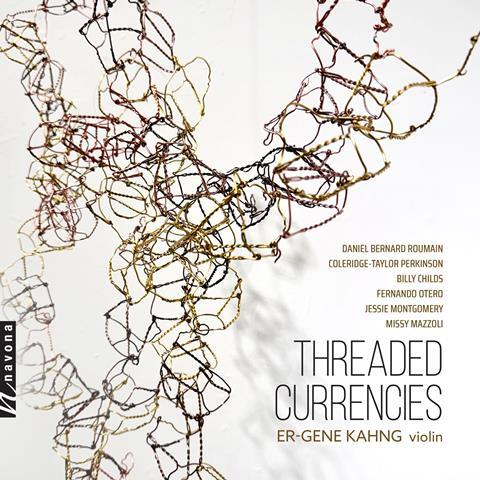
Threaded Currencies is my most recent project, equal parts thrilling, daunting, and deeply transforming. It was a way to meet the challenge of recording contemporary pieces for solo violin, grow as an artist from it, and share these meaningful pieces with a larger audience. The title comes from how the medium of solo violin feels to me: both timeless and contemporary. Its long, threaded tradition lets me examine a specific slice of repertoire history while still reaching for something in my playing, searching for currency and creating currency in our shared tradition and future.
None of the album’s pieces are premieres or commissions; however, I believe there is always a different kind of newness awaiting us as interpreters. What drew me to the pieces is that together, they form a contemporary palette of violin writing that explores intersectional identity. Fernando Otero’s Sonata Morrison, Daniel Bernard Roumain’s Filter, Coleridge-Taylor Perkinson’s Louisiana Blues Strut and Blue/s Forms, Billy Childs’s Four Portraits, Jessie Montgomery’s Rhapsody No. 2, and finally Missy Mazzoli’s Vespers, for violin and fixed media, were all pieces that I have loved for many years and that spoke to me deeply.
These composers pay homage to classical traditions while surpassing the boxes traditionally prescribed to us. I wanted the programme to celebrate and reflect the contemporary authenticity of a global and varied cultural identity. It’s simply a truer reflection of our time, and I think that unmarred presentation (exploring themes of multiplicity and intersectionality) is compelling, timeless, and timely.
The challenges were different in every piece. Solo playing means what we come to expect and/or need – colour, texture, character, density, dynamics, timbre, harmony, to name a few elements – all must form from a single instrument. Even with the stop-and-go, staccato nature of recording, mental and physical stamina and focus become much more intense and demanding, essentially having to be a one-person orchestra. Beyond that, all of these works ask the performer to inhabit several idioms at once, sometimes within a single phrase. Finding an honest way to do that, without flattening any one tradition into a stylistic gesture, was the project’s central challenge.
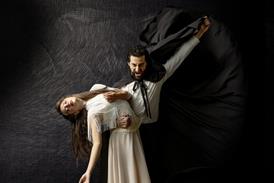
The accompanying video is Vespers as a film piece, my performance woven together with choreography and dance by Ashley Coupal of the English National Ballet, filmed by Isabella Turolla. It is the last piece on the album, and I love that the video lets the music leave my hands and enter someone else’s embodied imagination. All of these pieces have a rich capacity to take on another life, carried forward and made anew by the people who continue to perform and interpret them, whether it is another recording, another performance, or, in this case, an interdisciplinary collaboration. I hope this interpretation offers its own lens and shines a spotlight on music that was a thrill for me to perform and record.
As for what I hope listeners take away, I hope it’ll renew and re-engage listeners with the power, evocative nature, and versatility of the solo violin repertoire. I propose that we all live at some intersections of culture, tradition, and identity, so I would hope that hearing that tapestry modeled in various different pieces offers a truth we can appreciate, recognize, and embody in ourselves. On a more literal level, I also hope the album inspires listeners to learn more about the featured composers and to begin or continue interesting, complex, and nuanced conversations about the tradition, identity, and beauty of music.
Threaded Currencies is out now on Parma/Navona Records.
Read: Himari: the young violin sensation on Brahms, Heifetz and her debut album
Read: ‘Why not?’: how saying yes shaped my musical career
Discover more Featured Stories like this in The Strad Playing Hub












No comments yet