






In this Earth Day reflection, Darrian Lee examines musical repertoire by three living women composers, whose works intertwine environmental advocacy, womanhood, and contemporary classical music
Read more Featured Stories like this in The Strad Playing Hub
When I began my undergraduate degree in violin performance, I had already been playing the violin for roughly 15 years. It wasn’t until that point in my musical education that I realised I had yet to play a piece of music authored by a woman composer.
This was a jarring realisation since I always considered myself to be an advocate for women from a young age, having given speeches about equal pay in grade school. How could I advocate for equity, but only play works by men? My doctoral treatise, Nature-Inspired Violin Works by Living Women Composers, was born out of this question.
In response to the glaring absence of women composers from the standard repertoire that I, and every violinist, learns in their youth, my doctoral treatise was created with the expressed purpose of providing a voice to composers that are/remain underrepresented.
This project therefore enabled me to discover a wealth of incredible works and composers that deserve their time on the stage and in the classroom. By giving a voice to women composers, it is my hope that these contemporary works can become more commonplace for listeners and young musicians.
From a young age, I can distinctly recall an active concern for the climate crisis, and in university these concerns evolved as I learnt more about the interconnectedness the environment has with cultural and social issues. I came to understand that patriarchal structures impact the lives of women and also shape our economic attitudes. These attitudes prioritise the exploitation of the environment for short term capital gain, similar to the exploitation of women for the benefit of men.
It is the mutual experiences of women and the environment that led me to discover the concept of ecofeminism. Ecofeminism is a subfield of feminism that examines the mutual oppression and domination of both women and nature. I explored this concept in my research and through the interviews I conducted with 13 living women composers.
Each woman composer featured in my project was selected based on their work having been influenced by nature, referring to ecology either by title or programme notes, culminating in a repertoire list featured in the treatise. I then sat down with each composer and asked them a variety of questions concerning their history, work, nature influences, how womanhood may affect them, and, most interestingly, their perceived connections between women and nature.
Throughout the interview process, every conversation revealed the unique perspectives, experiences, and interpretations of the world that culminates in their compositional voice. Interestingly, and obviously, no composers’ answers could be predicted or generalised. It became clear that their perspectives surrounding ecology, womanhood, and its interconnectedness not only reveals aspects of their character but also shapes the messages within their music.
All the composers are worth exploring, performing, and listening to because of this. However, for the purpose of Earth Day, I have selected three composers from my research that I think clearly elucidate an ecofeminist perspective through their work. While I focused on violin works during my treatise, I will be discussing composers that have a variety of instrumentations that speak to the purpose of Earth Day.
Vivian Fung
Vivian Fung is a Juno award winning Canadian composer, currently based in California, whose work embodies the purpose of Earth Day. Her music reflects a consistent use of nature themes, many being focused on advocating for action towards the climate crisis.
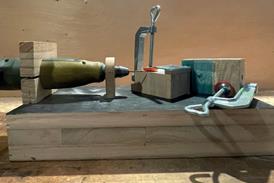
The most unique instrumentation that speaks to the climate crisis is her piece, The Ice is Talking, which is where Fung composed music to be performed by a percussionist on an actual block of ice with a blade. During the interview with Fung, she discussed growing up in the Canadian province of Alberta and how nature has become a metaphor by which she expresses her emotions in her music.
Fung’s work, The Ice is Talking, is an effort to bring attention to the melting of glaciers in the Canadian Rockies. The piece is played on a melting block of ice. The thawing of the ice during the performance is a medium through which Fung is able to channel her sadness concerning the melting glaciers near her hometown, which she mentions missing as she currently resides in California.
Similar themes can be found in other works of hers, such as Lamenting Earth and Violin Concerto No. 2: Of Snow and Ice, where she further addresses the climate crisis and the environment of Canada.
While nature is an important inspiration in Fung’s compositional process, during our conversation, she reflected upon the idea of a relationship between women and nature. Fung immediately began discussing how historically women were portrayed in art with illusionary references to themes of ’subversion and putting women in their place.’
Furthermore, Fung expressed that in art, especially visual art, ’it is in your face, historically, that the women are the muse’ and this is an extension of nature, since nature is a common muse as well. While she isn’t sure if there is a musical version of this concept, she does feel that it impacts how people perceive nature and that the ways women and nature are viewed as muses to be similar.
Stephanie Boyd
The second composer of note is an American-born composer, Stephanie Ann Boyd. I consistently feel the need to include Boyd whenever discussing music through an ecofeminist lens or composers inspired by nature because her work is so encapsulated by themes of nature and womanhood.
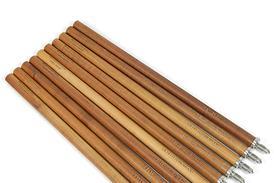
Boyd’s corpus is comprised of a variety of instrumentations that extensively address themes of nature. During our interview, she most explicitly spoke about her Conservation Concertos, which is an ongoing project where each of the concertos is for a different solo instrument with orchestra about different nearly extinct flora and fauna or other environmental concerns, such as plastic or pernambuco wood. Simply looking over her discography reveals her continual inspiration and dedication to nature in her music.
Another common theme throughout her works that speaks to who Boyd is as a composer, is her emphasis on ’right[ing] the wrongs’ for women through her music. An example of one of these pieces is Sheltering Voices, written to raise awareness for domestic violence by working with women’s rights activist and a choir comprised of women from homeless shelters.
The piece is broken into five movements to correspond with the five steps of recovery from abuse. Boyd mentions that ’appreciation is a function of exposure,’ and this piece, along with many of her other works, is intended to convey hard truths for audiences to dialogue with and reflect upon in their own lives.
Boyd was also keenly introspective about the relationship between women and nature as she reflects upon the natural rhythms and cycles of women in harmony with environmental cycles. While many of her pieces tackle these themes separately, she feels that these cycles reveal an inherent relationship.
Liliya Ugay
Liliya Ugay is the final composer I will be mentioning for Earth Day. She is a composer and pianist originally from Uzbekistan, currently living in Florida. Her work focuses on the ’exploration of the immigrant experience, cultural diversity, female identity, and motherhood.’
While her works do not directly address environmental issues like the previous composers mentioned, nature is a medium by which she expresses issues surrounding women. Ugay believes there is a relationship between women and nature, specifically between women and water, and explores this in her music.
Ugay spoke about how water connects the world and ’is in our bodies’ from the moment we are all born from the water within the womb. Two of her pieces clearly elucidate this idea, Chhlong Tonle and We Meet at the Water.
Chhlong Tonle, which translates to ’Crossing the River,’ is a piece for soprano and piano that tells the stories of three different women from different places around the world that address unique issues only women face.
We Meet at the Water even further explores the topic of women and water. The story is about a mother that lives on an island being consumed by water due to climate change and a daughter on the verge of giving birth who lives in New York. The daughter gives birth, ’loses her water,’ and the mother simultaneously dies from the destruction of the island.
For Earth Day, I hope you explore the music of Vivian Fung, Stephanie Ann Boyd, and Liliya Ugay. Their works truly embody an appreciation for nature, with what I would consider an ecofeminist twist, that goes beyond the canonical pieces that look at nature from a male perspective.
Ecofeminism allows for a new perspective of feminist and environmental concerns. By listening, or teaching, works by some of these living women composers, we can better advocate for the protection and appreciation of women and nature.
Art is a reflection of society and its values. If I perhaps was exposed to works such as these when I was younger, maybe I would have played a work by a woman sooner or pondered my place in nature as a young girl.
Again, as stated by Stephanie Boyd, ’appreciation is a function of exposure.’ We all could use more music in our lives that exposes us to new perspectives and challenges us, and hopefully, for Earth Day, foster more appreciation for the amazing world we all live in.
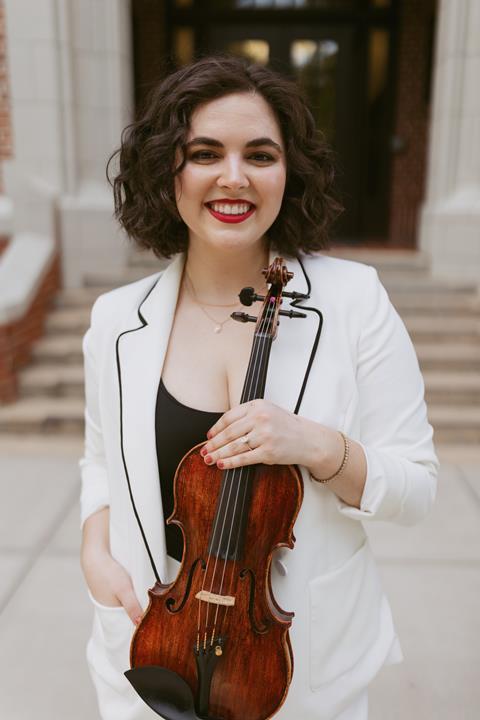
Dr. Darrian Lee is a violinist, adjunct professor at Enterprise State Community College, HERo Founder and Executive Director www.her-omusic.com
Read: The Artemis Bass Initiative: championing equity for women and non-binary bassists
Read: Session Report: the Neave Trio on recording Chaminade, Pejačević, and Clara Schumann
Read more Featured Stories like this in The Strad Playing Hub













No comments yet