















Getting the intonation right on your thirds and sixths can be tricky and misleading. Cellist Michael Reynolds shares some strategies to make the process less painful and more in tune
Read more Featured Stories like this in The Strad Playing Hub
My dad was both a terrific violinist and a very wise man. He once told me a very simple fact: make your sixths and thirds either very little or very big and you’ll be in good shape. I was a dumb teenager at that point, but that comment somehow penetrated my raging hormonal brain. What did he really mean?
Let’s start with thirds, and the key of D Major so that it’s applicable to all traditional stringed instruments, beginning with D on the G string and F-sharp on the D string. The D is straightforward, but where to put the F-sharp?
It would be easy to say ’let’s check it with the open A string and make it sound good’. This is where the liar thing comes in. If you play the Fsharp low enough so that it sounds pretty and relaxed with the open A, you end up with a vast gulf between it and the G next to it. This violates the general intonation rule of: ’Play your sharp notes sharp and your flat notes flat and everything will be fine’. You can try putting a little upward edge on the F sharp, creating just a bit of tension which begs the F sharp to resolve to the G.
The next third is a bit easier to deal with as both the E and G above it are non-negotiable notes that you can check with open strings (for cellists and violists, play the E with the A above it, and if you’re really virtuous with the open A to double-check the D-string A). Relative to my dad’s comment: that third will feel large in the hand. Skipping F-sharp and open A above since we’ve already decided that your F sharp should be sharp, we end up with G and B above it.
On the cello and the viola, students often wonder where to put the B; they’d fall off the fingerboard if they try for the string above it. You can either have a tuner handy to play a B or check the E on the D string with the open A and go straight across. (Author’s note: I’m not a huge fan of tuners; they’re sort of like the babysitters we had as kids, always telling us not to do stuff but never telling us why).
Students often pout a bit about the B being so high, but I usually suggest that they get over it since a B has to be in tune with the open E on a violin (or a tuner if you decide to cheat). That third will feel tiny in the hand if it’s in tune.
Last example in this key I promise: the next third is A and C-sharp; I’m sure that you’ve already guessed that the C-sharp should be high (it is the leading tone in the key after all). And so forth… the bottom line here is that in many keys, there is almost always one non-negotiable note that can correspond to an open string in some way; it’s really just between you and your conscience how far you want to bend a sharp or a flat.
In summation, a scale in thirds starting on lower note tonic should feel like this in the hand: tiny, huge, puny, miniscule, quite small, ginormous, humongous, and again microscopic.
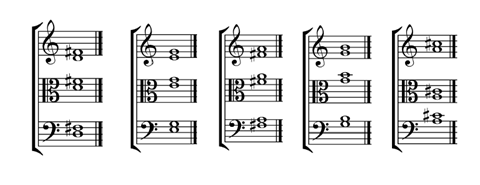
Moving onto sixths, in the same key (again accommodating violinists), the lowest sixth is open G and the E above it. This is a tricky one, because to make the sixth nice and peaceful, the E has to be a bit low, but if you check it with the A string above it, the jig is up; the unforgiving fourth you encounter demands that it be higher. This is a great example of how a sixth can be a liar; just like a good con man, you fall for the ruse until the virtuous A string shows you its nefarious nature.
One thing that can really help all of this is to tune your fifths as tight as you can stand; this will make the above-mentioned interval more palatable. Next: A and the F-sharp above; in thirds, we’ve already covered the relationship of F sharp and open A (the F-sharp should be sharp!).
The next sixth is B and the G above it. Where should the B be? We’ve already established that a B is not negotiable; it cannot be seduced by the open D as a checking note (if you do, it will sound a bit flabby (and imagine your horror if you play that with an open E string or a tuner). Again, you will have a kind of delicious tension between the B and G if the B is probably placed.
Just for fun, you can follow the circle of 4ths downward from open A to E to B; that will seal the deal on where the B should be. Last sixth I promise: C Sharp and the A above it. You already know what I’m going to say about the C-sharp since it’s the leading tone for the key.
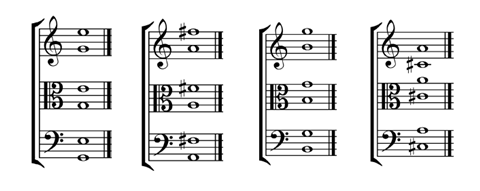
All of this is of course open to a touch of negotiation, particularly if you’re in a string quartet and you’re discussing differences in intonation between Haydn and Brahms. Should thirds be more open in Haydn or not? –another reason for a good argument!
For cellists: if you recently misplaced or burned your scales book, you are welcome to visit my Cellozilla website and download any or all scale systems to further explore these notorious liars.
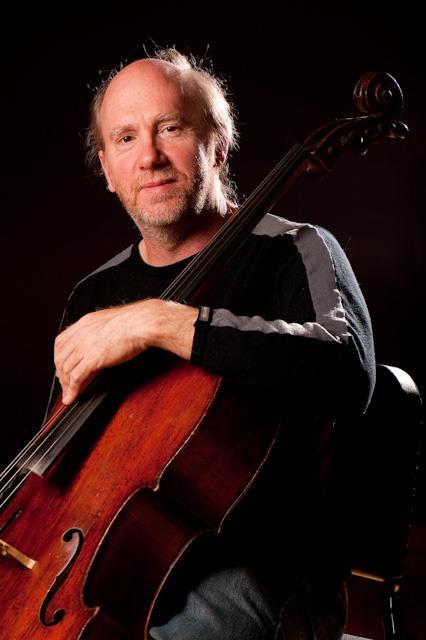
Michael Reynolds is professor of cello at Boston University. He enjoyed a 40-year performing career of over 2,000 concerts worldwide as founding cellist of the Muir Quartet and as a soloist; accolades include a Grammy nomination, a Grammy, two Grand Prix du Disques, the Gramophone Award and a performance at the White House.
Read: What in-tarnation? Exploring expressive intonation with cellist Michael Reynolds
Read: Don’t play, teach!
Read more Featured Stories like this in The Strad Playing Hub













No comments yet