
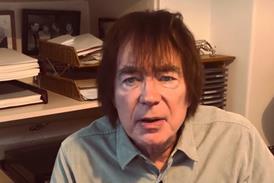
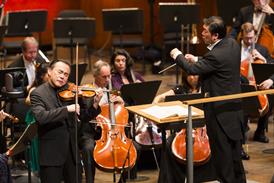
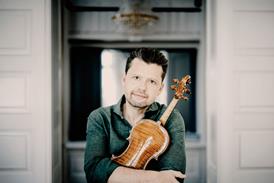
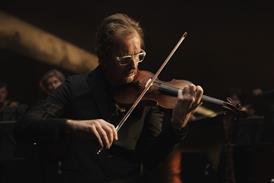


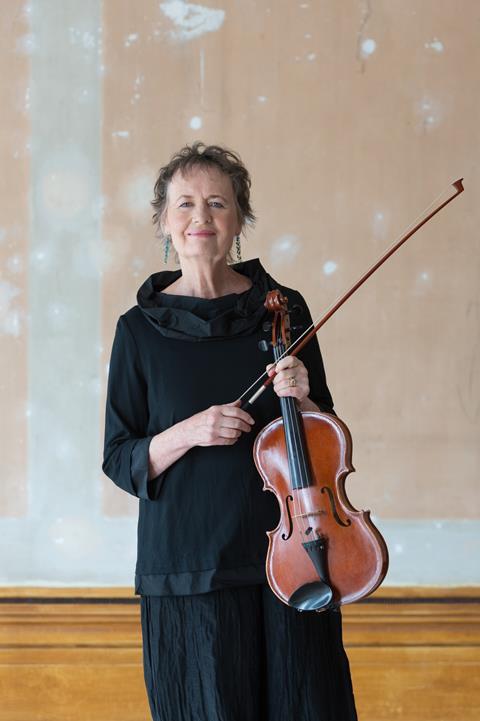
Sally Beamish’s new album House of Wonder features a compilation of viola works combining her own music with six commissions, including from her three children. As she approaches her 70th birthday, she reflects the role the viola has played in her life
Read more Featured Stories like this in The Strad Playing Hub
My new album House of Wonder marks a 70-year milestone with a collection of my own recent viola music, plus six brand new commissions from other composers. And I am playing.
I was a full-time professional in the 1980s. I avoided solo and duo playing. Larger chamber music suited me better – that special collaboration with other musicians.
As a member of Odaline de la Martinez’s pioneering contemporary music ensemble, Lontano, I remember the brown envelopes coming through the door, and the apprehension of opening a new, often complex score.
Now, an email attachment heralds the arrival of a completely new work that I have commissioned myself.
Since the age of four, composition has been my first language, and my go-to means of processing life events. I learnt to read music from my mother, Ursula Snow, a violinist with the Academy of St Martin in the Fields. Every occasion triggered a tune, a song. Birthday presents to godmothers and teachers were little piano pieces folded up and presented in decorated envelopes with ‘love from Sally’ on the front.
I took to the piano naturally, aged five, and at nine, Mum started teaching me the violin. This didn’t go well. I was easily frustrated, and lessons would end in tears and foot-stamping. I stopped the lessons, but took full advantage of the fantastic free music provision then available at state schools. Percussion and harpsichord lessons with top performers Heather Corbett and Nicholas Kraemer, at Camden School for Girls. Borrowing a clarinet, a cello, a guitar from the school cupboard – just to see… Relishing the discovery of orchestral repertoire in the junior London Schools Symphony Orchestra. Enjoying, but not practising, the violin.
Frustrated, my mother signed me up with the legendary Sheila Nelson, who didn’t simply teach the violin – she organised her pupils into chamber groups. I played in a string quartet for the first time, which was unforgettable. Then Peter Morgan, head of music at school, suggested the viola. Suddenly I was more in demand. I’d been preparing an audition for the National Youth Orchestra on tambourine. The orchestra’s category of ‘general musician/percussionist’ seemed the most likely entrance point. As a violinist, I was dubious of my chances. But on viola, there seemed to be hope. I was accepted – and composition lessons with Alan Richardson were included.
On leaving school, it never occurred to me to study composition. I knew of no female ‘professional’ composer. But the viola, I thought, would be an ideal way to support my composing.
The viola would be an ideal way to support my composing
I studied at the Royal Northern College of Music with the inspirational Bronislaw Gimpel, Patrick Ireland and Atar Arad. I wrote for my fellow students. I wrote for my teachers. It was a currency that felt natural and important. On piano, as accompanist, I gate-crashed lessons and masterclasses in all instruments and learnt about how each one functioned.
I began to wonder if I could study composition post-grad, and applied to several institutions, without success. Maybe this was partly because my music was tonal – not the ethos of the time.
So I opted to continue with viola after all, and after an intense two years in Bruno Giuranna’s acclaimed class, returned to London in 1980, where I immersed myself in freelance performing for the next ten years. But, still composing, I learnt from the composers I worked with, and from the viola’s strategic position in the middle of the score.
Then, in 1989, I had my first child, my beloved Gabrielli viola was stolen, and I recognised my need to free up more time to write music. A move to Scotland proved more than just a practical choice. Enthralled by the landscape and the culture, I began to forge a more confident compositional voice. I stopped playing altogether.
Jump forward 20 years and my third child, Stephanie, already a singer and harpist, took part in a gap-year apprenticeship with the Dutch luthier Guust François. Her first instrument was a viola – the same size as the stolen Gabrielli. I began playing again.
And for the first time since childhood, I found myself playing my own music.
My viola writing became simpler, more direct and more idiomatic. Perhaps because of the risk I might end up playing it myself…
The pieces on House of Wonder follow my first steps into solo performance. In 2016 I premiered Glanz, a memorial for Peter Maxwell-Davies, from behind a pillar in St Magnus Cathedral, as I didn’t want to go onstage.
Night Songs was the last commission from my friend and patron Dr Gerry Mattock, and is inspired by the band I formed with my husband Peter Thomson to perform popular songs. Gerropaedie was written as a birthday gift for Gerry. Crescent is a set of brief glimpses of my childhood home.
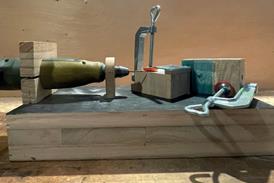
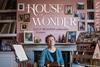
Continuing Gerry’s enthusiasm for commissioning, I asked each of my children – all singer/composers in disparate genres – to write something. Harpist Stephanie’s folk-infused House of Wonder describes my composing shed in the garden; Laurie’s Lurk is a gnarly tango for viola and accordion, and Tom’s improvisatory soliloquy is entitled Where You Are.
Cradle Song was a birthday present from my Swedish friend Karin Rehnqvist; a lullaby drama for a grandchild which, like Night Songs, is narrated by my husband, Peter Thomson. Chris Stout and Catriona McKay, whose extraordinary originality within the Scottish traditional style has remained an inspiration over the years, have gifted me a tune. And there’s a mesmeric new piece by pianist Joseph Havlat.
Playing again after such a long time was a challenge and an opportunity. Violinist Richard Ireland – son of my teacher Patrick – mentors professional players. We discussed communication, motivation for performing and how the body can sabotage expression.
During the lockdown I discovered online the inspirational Christian Howes, who specialises in enabling classically trained string players to dare to improvise. The McKay/Stout tune requires a different approach to the instrument, as does Stephanie’s song. Christian helped me to find the sound: ‘Just copy your daughter’s voice. It’s perfect.’
The album reflects family and friends. My mother and I both played with the Academy of St Martin in the Fields, and their concert on 11 June features Seavaigers: written for Catriona and Chris. Michael Collins will give the UK premiere of my concerto for basset clarinet – Izakhi. Added bonuses are Tom Irvine’s forthcoming gig with his band Celebrant at World Heart Beat on 4 June, the recent release of a single from Laurie’s band Middle Toe, the birth of Stephanie’s first child and her first EP.
So many things to celebrate. In a curious way, the album and the concert bring my life full circle.
Read: The viola: the composer’s instrument of choice?
Read: Preparing to perform the Elgar Cello Concerto on the viola: Rosalind Ventris
Read more Featured Stories like this in The Strad Playing Hub







No comments yet