



![Ayanna Witter-Johnson [Jordan Woods] 7](https://dnan0fzjxntrj.cloudfront.net/Pictures/274x183/4/9/4/44494_ayannawitterjohnsonjordanwoods7_224583.jpg)





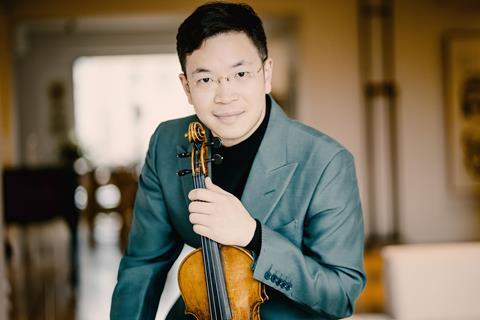
The Taiwanese–American violinist on his formative influences and the importance of chamber music
Discover more Featured Stories like this in The Strad Playing Hub.
Read more premium content for subscribers here
My first teacher in Taiwan, Li-Wen Wang, taught me the joy of playing an instrument. I remember that she would make playing duets with her a treat, so it linked the idea of chamber music to something to look forward to and appreciate. I’m eternally grateful that she planted these seeds at the very beginning of my musical life.
It was quite a culture shock when I came to the US at the age of twelve to study at the Juilliard School. Up until then, I wasn’t used to teachers asking me what I thought – I had been used to doing what they told me without question. But my teachers, Hyo Kang and his assistant I-Hao Lee, really opened my mind and helped me to become my own teacher. Mr Kang knew how to build young musicians’ repertoire and prepare them for the life of a musician, whether that was ways to talk to presenters or how to present yourself in the most authentic way. He wanted his students to be well-rounded musicians with the chance of a long career.
Kyung Wha Chung was also an incredible influence. One of her most important pieces of advice was to be patient. And the older I get, the more that resonates with me. It’s incredibly valuable to have the depth to be patient in both your life and your career.
Looking back, I wish that I had stepped out of my comfort zone more often. The more experiences you have early on, the more things you have to reflect on as you mature. Perhaps if I had been exposed to more styles of teaching, I would approach things differently today. And now, as a teacher myself, I can’t help but think about this a lot. Even though we can ultimately only see things from our own perspective, we must accept that our way of teaching isn’t necessarily suited to all students. So as teachers we need to be flexible within our own range to guide students in different ways.
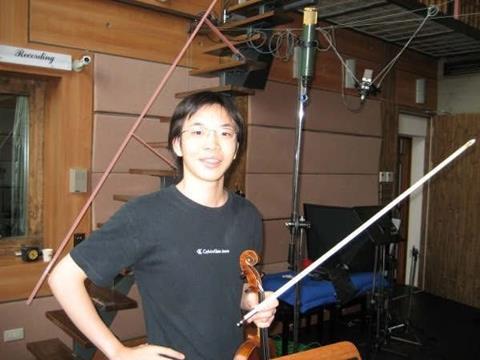
Playing chamber music is of utmost importance in a young musician’s life, no matter what career they pursue. My own approach has been shaped deeply by mentors such as David Finckel and Wu Han, whose work at Music@Menlo demonstrates how thoughtful repertoire building and fostering collaboration help young musicians grow into independent artistic voices. Even in public school music programmes, chamber music is valuable, whether or not children go into music. It teaches discipline and how to be supportive, and encourages independence. You learn to argue, compromise and make a cohesive group out of that. Chamber music really is a microcosm of life.
Something that could be improved in our industry is to develop more training programmes for people to strengthen their skills in arts administration. These jobs and positions are so influential that they need to be strategically taught and nurtured. For the next generations to thrive, tomorrow’s leaders need to create the right atmosphere, and be well equipped to do so.
INTERVIEW BY RITA FERNANDES
Listen: The Strad Podcast: How to hold a masterclass with violinist Paul Huang
Read: Music for our time: violinist Paul Huang on his new album ‘Mirrors’
Discover more Featured Stories like this in The Strad Playing Hub.
Read more premium content for subscribers here











No comments yet