


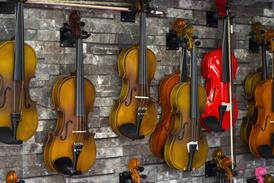


The musical director for the Milano Cortina 2026 Winter Olympic Games opening ceremony speaks about the guiding concept of ‘Armonia’ or harmony, plus how string act as connective tissue between tradition and modernity
Read more Featured Stories like this in The Strad Playing Hub
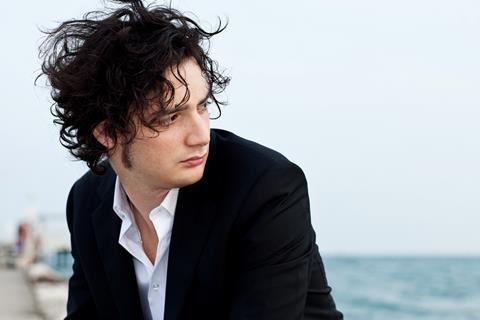
In February 2026, Italy will host the Winter Olympic Games across the cities of Milan and Cortina d’Ampezzo, welcoming athletes and audiences from around the world. The Opening Ceremony of the Milano Cortina 2026 Olympic Games, set to take place in just under fifty days, will present a large-scale artistic vision combining music, imagery, and performance under the official concept ’Armonia’ (Harmony). Italian composer Andrea Farri has been appointed musical director of the ceremony, overseeing the creation and coordination of its entire musical landscape.
Farri, born in Rome in 1982, is known for a compositional language that blends classical orchestration with electronic sound worlds. His work spans film, theatre, and large-scale live productions, and has earned international recognition, including a Globo d’Oro for Best Film Score in 2015 and the Soundtrack Stars Award at the Venice Film Festival in 2023 for Io Capitano.
For the Olympic Games Milano Cortina 2026, Farri will write and direct music for a large orchestra alongside string ensembles, soloists, and electronic elements, shaping a score designed to resonate with a global audience. He shares his thoughts on the creative process:
- - - - - - - -
For a few extraordinary hours, sport, ritual, imagery and music will come together in a shared global moment. I am deeply honoured to serve as musical director for the Opening Ceremony of the Milano Cortina 2026 Winter Olympic Games, working alongside a vast creative team to give sound to its guiding concept: ’Armonia’ – harmony.
Harmony, for me, is not only a musical idea but a cultural one. It speaks of coexistence: between past and future, tradition and innovation, intimacy and spectacle. These tensions have shaped my work since the beginning. Growing up in Rome in the 1980s, I studied classical music in the morning, played rock in the afternoon, and danced to electronic music at night. That freedom – this absence of stylistic prejudice – has defined my compositional language ever since, from cinema to theatre, and now to the Olympic Games.
The Opening Ceremony will speak to the world, but it must first speak truthfully about Italy. Music stands at the very centre of that narrative. Italian musical identity is inseparable from melody – what, in ancient times, we simply called aria. No matter how electronic, contemporary, or abstract my writing becomes, it is always anchored in melodic thought.
Italy’s musical values live simultaneously in nineteenth-century opera and in the folk songs of rice weeders; in Giovanni Pierluigi da Palestrina, who shaped Western polyphony and inspired Bach, and in the Camerata de’ Bardi, who unknowingly laid the foundations for something not unlike rap by theorising sung speech. I was shaped equally by classical and popular music, and I see no contradiction there. On the contrary, that dialogue is our tradition.
A critic from Radio3 Suite once described my music as ’a blend between electronic music with classical and contemporary orchestral style elements, in an innovative sound that does not neglect the Italian musical tradition’. I hold onto that description as a compass – especially when writing for an event of this magnitude.
One of the greatest challenges of composing for an Olympic Opening Ceremony is scale – not only physical, but temporal and emotional. A stadium demands power, projection, and clarity. But I have resisted the temptation to make everything monumental from the first note. Sometimes restraint speaks more directly to a younger, global audience; minimalism, in its own way, can feel closer to the present moment.
I approached the ceremony as I would a film soundtrack: a single, unfolding story, built from recurring themes that evolve over the course of the evening. Grandeur must be earned. Rather than beginning triumphantly, I wanted the music to grow, to accumulate meaning, tension, and release. My hope is that the result feels powerful, youthful, and genuinely moving.
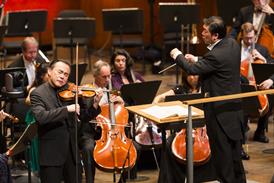
Strings occupy a central role in the musical architecture of the Milano Cortina 2026 Opening Ceremony. Their expressive range, physical immediacy, and ability to communicate emotion without words make them uniquely suited to a global event of this nature. When music tells a story, the feelings it conveys are universal – and for that reason, the orchestration must remain clear, direct, and emotionally legible.
The string writing is intentionally uncluttered. Rather than pursuing complexity for its own sake, I focused on line, gesture, and resonance. As an old Jimmy Durante song reminds us: ’Love is the answer’. That sense of emotional directness is what binds the music together.
One of the main musical ideas of the ceremony is a string ostinato – a repeating figure that provides rhythmic drive and forward motion. This ostinato will be transformed throughout the evening, reappearing in different harmonic, textural, and expressive contexts. Rhythm gives us movement, speed, and momentum, echoing Pierre de Coubertin’s Olympic motto: Citius, Altius, Fortius – faster, higher, stronger.
Strings also serve as a connective tissue between tradition and modernity. Their sound allows seamless dialogue with electronic textures, synthesisers, and percussion, anchoring futuristic sonorities in a recognisably human voice. In this sense, the string section becomes both narrator and bridge – linking orchestral heritage with contemporary spectacle.
Although I have recently recorded soundtracks in London with the London Contemporary Orchestra, for this project I chose to work primarily with Italian musicians. While we cannot yet reveal the orchestras, choirs, and soloists involved, I can guarantee that they are of the highest artistic level.
I have always preferred the challenge of modernity to the prudence of tradition. Aside from a few deliberate references to classical or popular heritage, this ceremony looks firmly toward the future. Synthesisers and drum machines play a vital role, interwoven with classical and contemporary orchestral writing. This approach reflects my own musical upbringing. My generation experienced all styles coexisting simultaneously, without hierarchy. To write freely today means embracing that reality. Balance, in my work, does not mean equilibrium – it means taking risks.
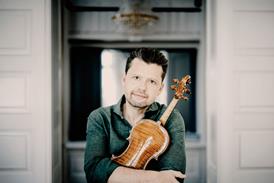
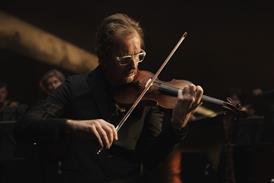
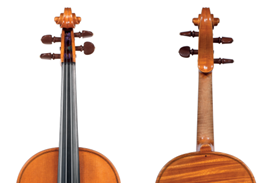
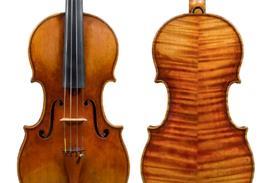
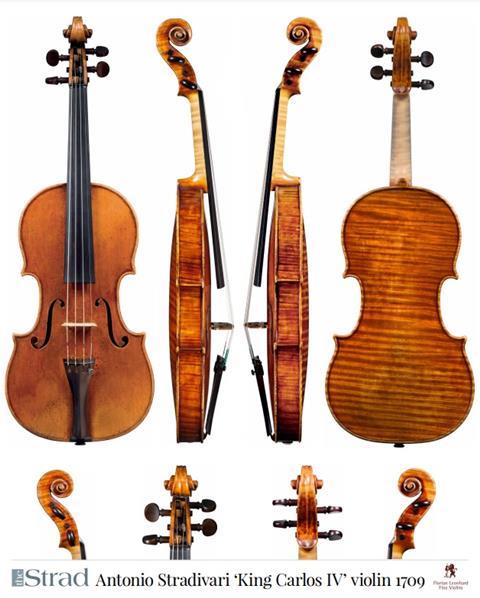
Finally, there is a moment that feels particularly meaningful. The legendary Stradivari instruments were made from wood sourced in the forests of Paneveggio, near Predazzo – remarkably close to one of the Olympic venues. Yes, there will be a segment written for violin, orchestra, and synthesisers, performed by a great soloist playing a Stradivari from 1705. One of the most extraordinary instruments ever created, sounding once again in its ancestral landscape – this, too, is armonia.
If the Opening Ceremony succeeds, it will not be because of spectacle alone, but because music has done what it has always done best: unite emotion, memory, and imagination in a shared human experience.







No comments yet