

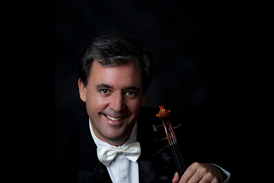
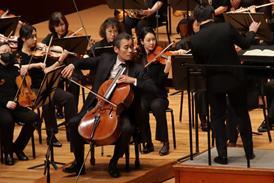

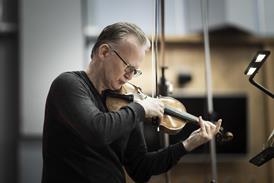
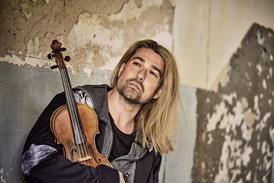



Hector Scott argues for the embrace of the creative exchange of ideas in music education, rather than a repetitive replicated approach that avoids innovation
Read more Featured Stories like this in The Strad Playing Hub
Humans have always been tribal creatures. The longing to belong to a group, a community, a shared identity is woven into our cognitive DNA and for hundreds of thousands of years, survival depended on the tribe. To be accepted was to live; to be exiled was almost certainly to perish. Within those early human groups, cooperation and conformity were not weaknesses but tools of endurance.
As civilisation evolved, this tribal mindset did not disappear; it simply found new forms. The agricultural revolution bound us into collective labour and industrialisation created the hierarchy of the factory. Today, our tribes are digital, algorithmic, and global being formed through shared screens rather than shared fires.
We live in an age of unprecedented connectivity, and yet this very connectedness has led to something paradoxical: uniformity. In our quest to standardise, streamline, and compare ourselves globally, we risk erasing the very differences that make human creativity, and particularly music, so rich.
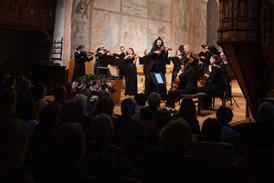
Walk into almost any conservatoire or music school across the world and you will find remarkably similar curricula. From London to Tokyo, Sydney to New York, the pillars of music education stand nearly identical: principal study, theory and harmony, aural training, ensemble work, history, pedagogy.
The repertoire is familiar too with Mozart concertos polished to gleaming homogeneity, scales played using the systems of Flesch and Galamian, etudes and caprices by Kreutzer, Rode, Dont or Paganini drilled endlessly into the fingers of young performers. This system, forged in Europe and exported worldwide, has produced generations of technically superb musicians.
Yet it has also cultivated a perilous sameness. The artistry that once expressed national identity, personal vision, or spiritual depth has been replaced by a kind of institutional neutrality. A global ’classical accent’ that smooths away difference.
In the pursuit of musical excellence, we have neglected artistic excellence. The two are not the same. Musical excellence is mastery of craft and concerns intonation, phrasing, tone, and precision. Artistic excellence, on the other hand, is the pursuit of meaning: vision, emotional depth, intellectual curiosity, and risk. When a student is told to play Mozart in the ’right’ way rather than their way, something vital is lost. The chance to encounter the music as a living dialogue rather than a fixed doctrine.
The modern conservatoire mirrors the industrial model that birthed it. Teachers ’deliver’ information; students ’produce’ results. Assessments measure compliance to the standard rather than divergence from it. Like the factory worker on an assembly line, the musician learns to replicate, not innovate. This is not just an educational concern, it’s a cultural one.
In the pursuit of musical excellence, we have neglected artistic excellence
Consider the opening of Mozart’s G major Violin Concerto, K.216. Too often, modern interpretations place undue weight on the second beat, giving the phrase a martial quality – a kind of ’one-two, one-two’ march. Yet Mozart marks the first beat forte and the second piano in the orchestral opening, revealing a subtle hierarchy that transforms the phrase from military to dance. To misread that is not merely to misinterpret notation; it is to misunderstand the spirit of the time, a moment when music still spoke to the head, heart, guts and feet.
It is not just a matter of correctness; it is about character. Uniformity of teaching and audition culture has blurred these distinctions. Students learn to meet expectations rather than challenge them. The artistry is bestowed by the conductor, not born from the performer.
Uniform training has drained such understanding from performance. We produce musicians fluent in technique but estranged from imagination. The forest of human expression is being cleared, note by note, for the monoculture of global ’excellence.’ Ironically, our tribal instincts, once about survival, now reinforce this uniformity. Musicians, eager to belong to the global ’tribe’ of professionals, conform to its rules and rituals.
Students fear stepping outside stylistic boundaries; teachers perpetuate the methods they themselves were judged by. Institutions benchmark against one another, reinforcing sameness in the name of prestige. Social media amplifies this conformity, rewarding performances that are polished and algorithm-friendly but rarely challenging or new. The dopamine hit of approval replaces the deeper satisfaction of discovery. In this way, our tribal mind has been re-engineered not to protect us from predators, but to protect us from standing out.
To reclaim creativity, we must nurture divergence. Not deviance for its own sake, but authentic individual and cultural expression. A globalised world does not need globalised musicians but rather, it needs many musical worlds in conversation.
In early education, this means shifting from instruction to exploration. Instead of telling a child how a piece should sound, ask how they want it to sound. Perhaps ’Go Tell Aunt Rhody’ becomes a barking dog, or ’Long, Long Ago’ a lullaby. The point is not correctness but connection. Imagination first and refinement later.
Higher education, too, must loosen its grip on the Western standard. The world’s musical traditions such as Indian ragas, West African polyrhythms, Chinese guqin improvisations, should not be exotic electives but equal pillars of study. Each tradition teaches its own way of hearing and being. The goal is not to erase the European heritage but to place it within a wider, untamed human chorus.
Perhaps what we need is not to abandon our tribal nature, but to reimagine it. A healthy tribe does not enforce sameness, it celebrates shared belonging through difference and in music, that means building communities of creative risk, not conformity; dialogue, not creed. Our instruments should not be tools of imitation but vessels of identity.
To play is to speak, as in saying something only you can say. In that moment, we move beyond the factory, beyond the algorithm, beyond the standardised audition excerpt. We rediscover what music has always been: a conversation across boundaries, a bridge between tribes.
If we can learn again to listen to one another and embrace our different rhythms, textures, and tonalities, we might just find our way back to the essence of what makes us human.
Listen: The Strad Podcast #88: Silkroad’s Global Musician Workshop with cellist Mike Block
Read: Why you should stop and think before you play
Read more Featured Stories like this in The Strad Playing Hub










No comments yet