
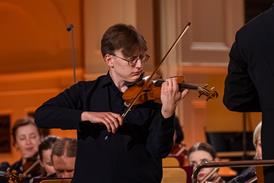



Ahead of the Benedetti Foundation’s appearance on BBC Radio 4’s Appeal, violist Danya Rushton shares how the Foundation has helped her find her unique voice and identity through connection with music and like-minded musicians
Read more Featured Stories like this in The Strad Playing Hub
20-year-old violist Danya Rushton is a Benedetti Foundation Ambassador. Rushton is autistic and has ADHD (Attention-Deficit/Hyperactivity Disorder), which can make connecting with people challenging for her. Her first exposure to the Benedetti Foundation was in January 2020, when she attended a Foundation orchestral workshop, which provided her with a sense of community with like-minded musicians. This continued as the sessions moved online during the pandemic, giving Rushton the connection she needed during the time.
Once schools started reopening following the pandemic, Rushton found the transition back to everyday life challenging, and for some time did not speak. In 2024, Rushton began studies at London’s Royal College of Music and applied to become a Benedetti Foundation Ambassador, receiving training to develop her teaching and workshop leading skills.
For Rushton, involvement with the Foundation has been transformative, providing her with the space and confidence to truly be herself, helping her shape the start of her career in music education.
She spoke with The Strad about how the Benedetti Foundation has given her purpose, helped her find her voice and built her confidence.
Looking back to that first Benedetti Foundation workshop in 2020, what did it mean to you to find a community of like-minded musicians at that time?
In January 2020 I was 14. I didn’t know it yet, but all live music events and all of my music lessons were about to shut down because of Covid and did not fully re-open until Summer 2021, so this was one of the last live orchestral performances that I took part in that year.
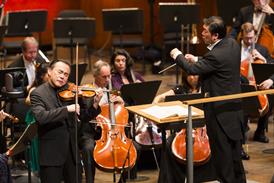
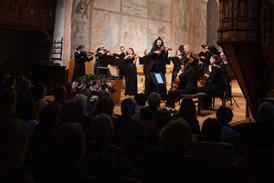
Turning up at the Southbank Centre that weekend, for the inaugural London Sessions, there were a lot of people (probably about 300 young musicians) and there was a buzz in the air. I was very excited to have an opportunity to see Nicola Benedetti and hearing her perform was the highlight of the weekend for me; she has always been an inspiration to me. I was also looking forward to playing in the orchestra and working with the conductor, Natalia-Luis Bassa.
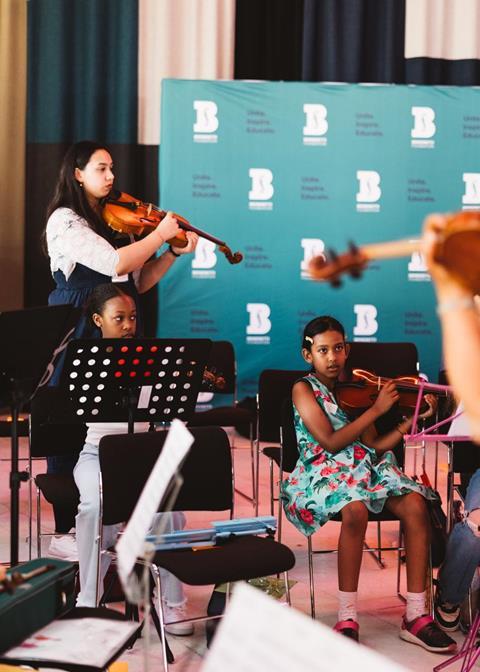
At the time, I had a sense that I was part of something new and exciting, and that we were all part of the Benedetti Foundation’s mass strings community. It was also about all aspects of being a musician: the schedule included orchestra rehearsals, Kodály warm-ups, a session on mindfulness and inspiration from Sheku Kanneh-Mason playing for us. It was also for all levels: from beginners, primary school learners, to more advanced performers and teachers attending teacher development workshops. I also remember seeing Benedetti Foundation Ambassadors, who were students at conservatoire and thinking that I wanted to do that one day.
In the months that followed, the Benedetti Foundation activity became even more important once everything moved online, and in-person music-making disappeared altogether. The Benedetti Foundation had regular online sessions and I submitted recordings for an online montage. These activities gave me a sense of connection, motivation, kept music alive in my life and made me feel part of a supportive community of like-minded musicians. The absence of live performance opportunities meant that online projects were a way to stay connected and the Benedetti Foundation made a real difference to me.
You’ve spoken about how challenging the transition back to everyday life was after the pandemic. How did music – and your connection with the Foundation – help you through those difficult years?
The transition back to everyday life after the pandemic was not easy for me and I really struggled. After months of online lessons and no live music, returning to in-person rehearsals and performances felt strange and really overwhelming.
During lockdown, participating in online projects and submiting recordings kept me connected to a wider musical community. That sense of belonging helped me stay motivated and inspired me to keep learning. It was also a really important reminder that music is not something that we can do in isolation: music connects us with other musicians and our audiences.
For me, it was the only way that I knew how to express myself as I completely lost the ability to speak to people and socialise. I struggled so much that I needed an EHCP (Education, Health and Care Plan) in Sixth Form to help me communicate and interact with others: music was my only voice.
More than anything, it also gave me something to aim for: I knew that I wanted to apply to join the Benedetti Foundation Ambassador programme as soon as I was old enough and had started at conservatoire.
Starting at the Royal College of Music (RCM) and becoming a Benedetti Foundation Ambassador are huge milestones. How has this experience shaped your confidence and your approach to teaching and leading workshops?
One of the best things about the Ambassador programme is the opportunity to learn from very skilled tutors and mentors who are great role models. Through their guidance, I have been able to develop skills and take part in performance opportunities and workshops throughout the UK.
I felt more confident about making the application to the Ambassador programme because I was a student at the RCM. It has also strengthened my ability to share knowledge and engage with others as well as given me Time to be able to rediscover my voice and identity.
Participating in the Ambassador programme, particularly the workshops, residencies, and supporting younger musicians has taught me a lot about communication and adapting to different levels of experience. It has made me think about ways to encourage students and create an environment where everyone feels they are included, motivated and having fun, in particular I have an interest in special educational needs provision and would really like to get into presenting children’s concerts.
I have also learnt that effective teaching is not just about demonstrating how to play your instrument, it requires being holistic and is about more than just the music as well as helping students discover their own voice and passion for music. Taking part in the Ambassador programme I received training on how to teach well, the advice helped me to find out the kind of teacher I’d want to be, which gave me the confidence to try out teaching myself and this has shaped the way I approach both teaching and performing, giving me a sense of purpose and confidence.
For you, the Benedetti Foundation has been more than just music. What does finding your voice and purpose through this community mean for your future in music education?
The Foundation has helped me to find my unique voice and identity, both as a performer and as someone involved in music education who can support and encourage others. Being part of this community has reinforced how important it is to create inclusive environments where everyone feels valued.
Nicky’s campaign during lockdown to save live music showed me that advocacy matters and how important it is to fight for what we believe in.
As someone who has been diagnosed with ASD (Autism Spectrum Disorder) and ADHD, I have first-hand experience of some of the challenges learners face and I want to advocate for special educational needs provision. The Foundation has given me experience of delivering workshops and training and this has given me confidence and skills to speak out and provide support.
I hope to be able to help learners discover their skills and love for music, regardless of their needs or abilities.
The Benedetti Foundation features on BBC Radio 4’s Appeal, a weekly three-minute programme highlighting the work of a charity and inviting listeners to support its mission. The Foundation’s Appeal, fronted by Nicola Benedetti, will be broadcast on 18 January with a repeat on 22 January, and also available on BBC Sounds. Donations can be pledged after the first broadcast on 18 January – search online for BBC Radio 4 Appeal.
Read: The Strad Recommends: Nicola Benedetti: Violin Café
Read more Featured Stories like this in The Strad Playing Hub








No comments yet