







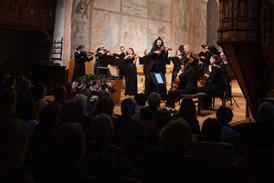



Richard Linnett reports back from Santa Fe Pro Musica’s season finale on 3 May, featuring a varied programme including Beethoven’s ‘Kreutzer’ Sonata and works inspired by it
Read more Featured Stories like this in The Strad Playing Hub
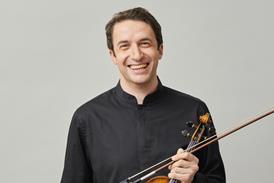
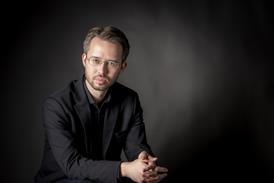
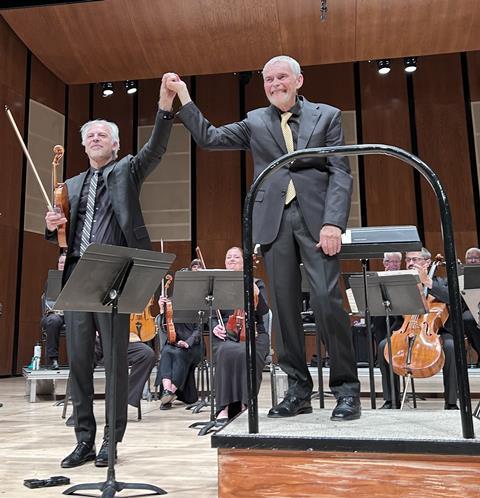
Colin Jacobsen, the artistic director of Santa Fe Pro Musica, is a wonderful storyteller who happens to also be a virtuoso violinist. Case in point, The Kreutzer Project, a programme created by Jacobsen and his chamber music group The Knights that explores multiple narratives behind one of the most storied compositions in the classical repertoire, Beethoven’s Violin Sonata no.9, for piano and violin, otherwise known as the ’Kreutzer’ Sonata.
Pro Musica’s season finale on 3 May in Santa Fe showcased The Kreutzer Project, which included the Violin Sonata no.9 and a trio of works that were inspired by it. Leos Janáček’s String Quartet no.1 ‘Kreutzer Sonata’, was performed in an arrangement for chamber orchestra by Colin’s brother Eric Jacobsen, a conductor, cellist and member of the Knights, and Michael Atkinson, a horn player (neither were present for the show.)
The arrangement was big, busy, full of brass and winds, as well as a snare drum, and unfortunately felt like a Phil Spector ‘Wall of Sound’ echo chamber, drowning out the subtleties of the source quartet.
Anna Clyne’s solo cello and string piece Shorthand was on the menu, the title taken from a passage in Leo Tolstoy’s tragic novella The Kreutzer Sonata, which was also part of the programme in spirit (and in the programme notes): ’Music is the shorthand of emotion,’ is the quote from the book.
The Clyne piece, a beautiful pared-down rhythmic echo of Janáček’s take on Beethoven, featured the rapturous cello work of Karen Ouzounian. At the last minute, Jacobsen dropped one of his own works from the programme, Kreutzings, an homage to Rodolphe Kruetzer’s Etude no.2, and giving props to his guest cellist, swapped in a recent Ouzounian composition Songs of the Sap, another gem, and the one piece in the mix unrelated to the Kreutzer theme, inspired by Anatolian Armenian folk music.
The revelation of the show was the Kreutzer Concerto, Colin Jacobsen’s spectacular arrangement of the original sonata, which substituted the piano for a small orchestra of five violins, two violas, two cellos, a bass, flute, oboe, clarinet, bassoon, two horns, a trumpet and kettle drums, conducted by Pro Musica founder Tom O’Connor (who also conducted the Janáček).
The concerto really should become standard repertoire, it brilliantly captured the brooding passion and wild outbursts of the Beethoven piece without the contrast of the piano. The strings and winds contributed a sweet flow and a warm cushion for the solo violin, played with rich colour and fire by Jacobsen. The arrangement was very generous to the flute; local legend Jesse Tatum soared on her instrument, a shimmering hovering presence in the background that lent the work a haunting otherworldliness.
Tolstoy’s famous and once controversial novella (it was censored in Russia and the US) is a story within a story told to a stranger on a train by a man who murdered his wife, a pianist, after she was seduced by a young violinist while playing Beethoven’s work. It is said Tolstoy was making the point that music is the devil’s mischief, encouraging loose morals, adultery and murder.
Jacobsen’s stated intent was to explore these themes and the stories behind the music. Ironically, you might say his brilliant arrangement of Kreutzer dropped the pianist and dodged the mortal conflict, creating a nice harmonious package instead.
The Kreutzer Project was originally performed and recorded by the Knights in 2020. The last performance, before the Pro Musica finale, was in the autumn of 2022 in Europe. Thankfully Jacobsen dusted it off again this year, and according to his introductory comments, meant it as a segue to his next project, Democratic Vistas, which will be performances of the complete Beethoven Symphonies over three years, paired with mostly contemporary American works.












No comments yet