









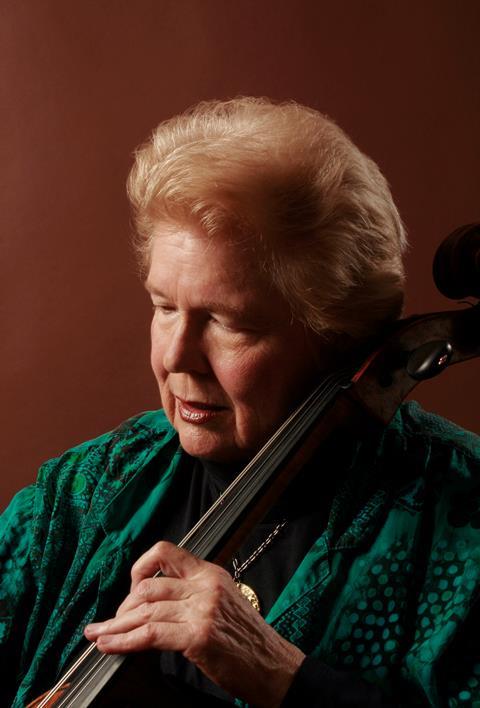
The US cellist, who performed with the Francesco Trio for almost 40 years, recalls the exhilaration and challenge of playing Beethoven’s joyous ‘Triple’ Concerto
Discover more Featured Stories like this in The Strad Playing Hub.
Read more premium content for subscribers here
I’ve had a lifelong passion for Beethoven since I started playing the cello. Almost the first pieces I played were his cello sonatas, and I’ve spent my whole life trying to understand his world, his culture and his musical life. It’s a shame that people tend to overlook the ‘Triple’ Concerto, as it’s one of his great masterpieces, and I’ve always seen it as the closest thing we have to a Beethoven cello concerto: it’s the cello, for instance, that gets to introduce all those beautiful themes.
I played the ‘Triple’ many times with the Francesco Trio. The relationship between the solo violin, cello and piano parts makes it feel like a chamber piece, and it needs to be played with that kind of sensitivity despite the presence of the orchestra behind. Unlike something like the Brahms ‘Double’, I think it should be performed with the rapport of a chamber group that’s performed together often, as the themes are tossed around between the three of you.
It’s what I call a dangerous piece: you must have the confidence to take risks in the knowledge that the other players will understand what you’re doing. In fact, there’ve been times when I’ve heard a brilliant, faultless performance that’s impressive, but leaves me feeling disappointed. I find myself thinking: where’s the joy?
I was first asked to play the ‘Triple’ while I was still a student, and even though I’d already performed concertos, my tutor told me, ‘No, you’re not ready to play that yet.’ Even now, my students sometimes tell me they don’t feel ‘comfortable’ playing it, so I remind them that music isn’t a matter of comfort.
You need to be able to use your body to express freely the feelings that the music evokes within you – and sometimes, the intensity of Beethoven requires you to go further than you physically can. It takes boundless energy, trust, and even a sense of the operatic; it’s like you’re three characters performing together on stage. I don’t think it’s a coincidence that he was writing Fidelio at the same time, in 1803–4.
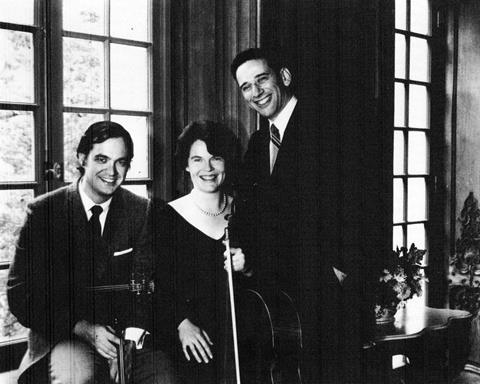
I was in my twenties when I co-founded the Francesco Trio in 1964 with the violinist David Abel and the pianist Nathan Schwartz, whom I married in 1971. David and I had begun playing duets together and then we invited Nathan to join us to play trios, and it went on from there. When we started playing the three solo parts of the ‘Triple’ together, We latched on to the work as one of great vitality and celebration for the Trio and the orchestra alike, through its many themes, its energy and its musical exuberance. both for the Trio and for the orchestra.
Mastering it wasn’t easy, but it gave us the chance to become accustomed to the virtuosic figures, the harmonies, and the way they are handled back and forth, and it also helped us discover Beethoven’s innate sense of fun and joie de vivre within the piece. It’s impossible not to play it without a sense of relish for the various licks and interactions.
There are other concertos for the cello that appear harder, obviously. But the cello part of the ‘Triple’ has its own demands: there are whole sections, especially in the upper register, that can make you feel confined within the positions, as if you’re walking on eggshells. When I was first practising those, I recall playing them down an octave, and only once I found the expressiveness within the music and felt comfortable did I begin to play them higher. But once I had the part in my fingers, I loved it. I couldn’t stop exploring the different aspects of the concerto; listening to it, living it, and expressing it in all the different ways I could imagine.
INTERVIEW BY CHRISTIAN LLOYD









No comments yet