


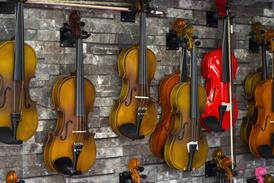

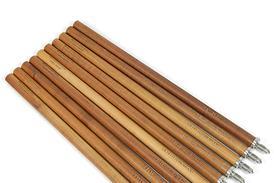

Carlos María Solare reports back from Klanggestalten in Berlin, held from 31 October to 2 November 2025, where highlights included the Signum Quartet performing on different combinations of new instruments and bows
Discover more lutherie articles here
The work group Klanggestalten, founded in 1998 and portrayed in The Strad on occasion of its 10th anniversary (cf. the March 2008 issue), unites luthiers and bow makers from all over Europe who meet regularly to compare notes and work together. Once a year, a group exhibition is held, affording the possibility to listen and try out the group members’ latest creations.
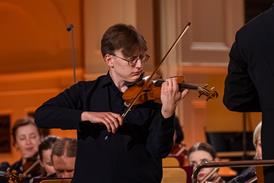
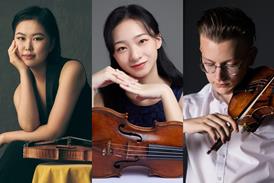
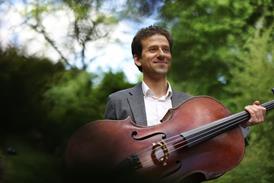
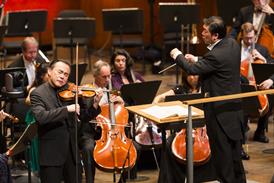
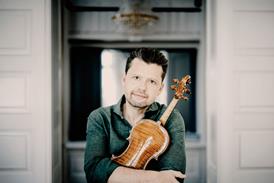
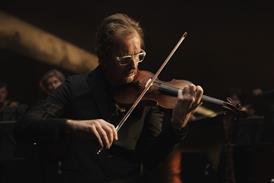
At each such occasion, sound checks are held to allow for direct comparison within the various instrumental categories. At the 2025 show, the violins were presented by Suyeon Kang (Belcea Quartet, ‘Hanns Eisler’ Music Academy Berlin), the violas by Nimrod Guez (Würzburg Music Academy) and the cellos by Leonid Gorokhov (Hannover Music Academy, Guildhall School). An intriguingly contrasting pair of double basses was featured in Giovanni Bottesini’s Gran Duetto No. 1, performed by Piotr Zimnik (Berliner Philharmoniker) and Jon Mikel Matínez Valgañón (Gürzenich Orchestra).
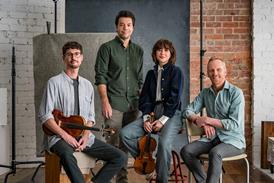
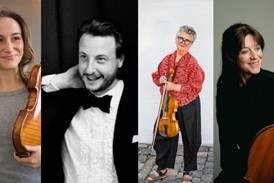
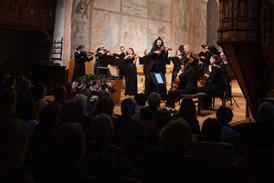
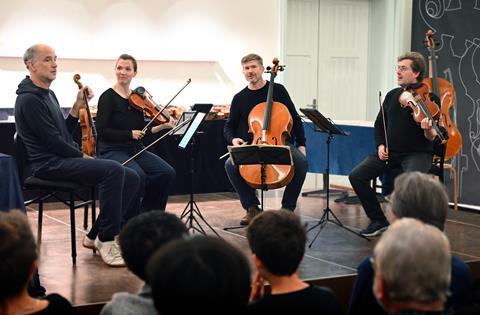
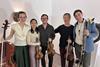
A special highlight at the same concert, on the evening of 1 November, was a recital by the Bremen-based Signum Quartet that included Joseph Haydn’s String Quartet in G minor (Op.20 No.3) and Leoš Janáček’s String Quartet No. 1, ’Kreutzer Sonata’. In order to showcase as many instruments and bows as possible, the players chose a different combination for each of the eight movements of both pieces.
The Signum members sought to choose each instrument according to how well its character fitted a particular movement. Since such an endeavour would ideally have needed much more time than was available, they of necessity let their choices to a certain extent be led by the degree of comfort each instrument afforded them.
The experiment resulted in a constantly changing kaleidoscope of timbres. It was fascinating to hear, following two sombre movements in Haydn’s ’Sturm und Drang’ mode played on accordingly dark timbred violins, how the Poco adagio blossomed out in completely different, bright sonorities! Arguably a certain amount of struggle with the unfamiliar instruments even proved advantageous, the Janáček coming across in a particularly impulsive manner.
The level of craftsmanship was extremely consistent, throughout and beyond the chosen instruments, making it invidious to highlight some instruments at the expense of others. The Signum players also diplomatically refrained from revealing whether they had any preferred instruments, while unanimously agreeing on the huge benefit such an exhibition affords to all musicians, not just to those specifically looking for a new instrument.
’Klanggestalten is the perfect place to find out what’s happening in modern instrument and bow making, and to help you realise which features of a bow or a fiddle are most important for you. Hearing them played by a first class instrumentalist in the sound checks can make a different impression than when you try them out yourself.’
Carlos María Solare
Video courtesy Bärbel Bellinghausen.







No comments yet