


















In striving to become the best player or educator you can be, it’s important not to fall into the trap of unhelpful perfectionism, say violinists and teachers Claire Allen and Christine Goodner

Discover more Featured Stories like this in The Strad Playing Hub
Read more premium content for subscribers here
Perfectionists never stop noticing the gulf between reality and the ideal, and they never stop longing to bridge the gap,’ says psychotherapist and author Katherine Morgan Schafler in her 2023 book The Perfectionist’s Guide to Losing Control: A Path to Peace and Power.
Striving for accuracy and improvement is rewarded in the field of classical music and is built into musicians’ training; however, as we reach towards the ideal, perfectionism can become a complicated stumbling block.
While many professions prize excellence and attention to detail, the classical music world is unique in that training typically starts at a very young age. The line between striving for excellence and buckling under perfectionism is thin, and teachers must discourage all-or-nothing thinking that leads to students feeling that their self-worth and identity are intertwined with their musical achievements. Equally, to maintain a healthy mental balance, students need to learn to treat themselves compassionately when faced with criticism, feedback and the reality that they may not yet be where they want.
In lessons, perfectionist thinking can show up in many different ways. Students may show visible frustration when learning new skills: they may have low tolerance for breaking something into smaller steps, or trouble getting started because of a fear of failure, or they may engage in negative self-talk as a form of forced motivation. This mindset limits growth, so it is important for teachers to assess how their own communication strategies can combat this type of thinking.
For example, teachers can consider when and how often to stop a student when they’re playing, as frequent stops can lead an already sensitive student to brace for criticism and become hyper-aware of mistakes. When possible, allowing a student to play through all or large sections of their piece can help them feel more comfortable about playing, and it also helps build stamina.
Depersonalising the language used can also help discourage negative mindsets. Rather than saying, ‘Your tone was really scratchy,’ a teacher could say, ‘I noticed that the tone was scratchy during string-crossings.’ Eliminating the ‘you’ and giving a specific, almost clinical description of the problem can help the student avoid taking feedback personally, which then allows them to focus more freely on the aspects that need improvement.
Teachers may need to manage their own perfectionist mindsets
Helping students look back can also provide them with a valuable perspective on what they’ve already achieved. For instance, a statement such as, ‘Last year at this time we were just starting vibrato exercises, and now it’s sounding so lovely in your pieces!’ can help students to see the progress they have made and feel hopeful about future growth.
Music teachers have been in the detail-orientated, excellence-seeking world even longer than their students, and may need to manage their own perfectionist mindsets. They may have a need for every element to be ‘perfect’ before allowing a student to move on to a new piece, or they may blame themselves for student outcomes in performances, auditions or competitions, or believe that music lessons alone can ‘save’ a student in need. Each teacher must decide their own priorities and expectations, including what ‘performance-ready’ means and who they would consider a ‘successful’ student. The practice of self-compassion can also help a teacher create a more effective and supportive learning environment.
Whether a teacher is seeing perfectionism in their students or working through it themselves, the answer is not to strive less for excellence or to lower standards. Rather, it is to balance out the drive for refining and improving with a healthy dose of perspective and compassion for ourselves as humans by focusing on the growth, not the gulf.
Read: Opinion: How improvisation can help with perfectionism
Read: ‘When someone is healthy inside, it sounds that way’ - Mental health services in conservatoires
Discover more Featured Stories like this in The Strad Playing Hub
Read more premium content for subscribers here
The number one source for playing and teaching books, guides, CDs, calendars and back issues of the magazine.

In The Best of Technique you’ll discover the top playing tips of the world’s leading string players and teachers. It’s packed full of exercises for students, plus examples from the standard repertoire to show you how to integrate the technique into your playing.
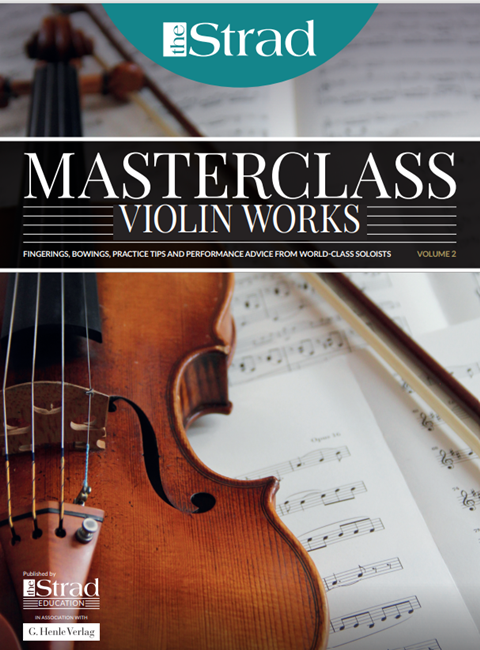
In the second volume of The Strad’s Masterclass series, soloists including James Ehnes, Jennifer Koh, Philippe Graffin, Daniel Hope and Arabella Steinbacher give their thoughts on some of the greatest works in the string repertoire. Each has annotated the sheet music with their own bowings, fingerings and comments.

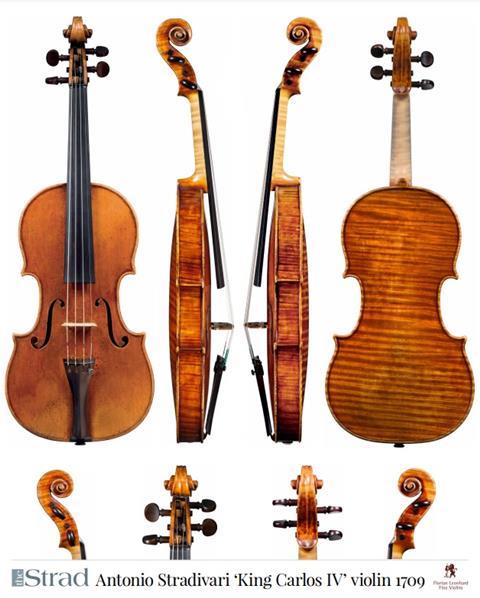
The Canada Council of the Arts’ Musical Instrument Bank is 40 years old in 2025. This year’s calendar celebrates some its treasures, including four instruments by Antonio Stradivari and priceless works by Montagnana, Gagliano, Pressenda and David Tecchler.














No comments yet