







Cellist and teacher Naomi Yandell highlights how valuable and insightful it can be for string students to rehearse with a musician outside of their teacher – especially a pianist
Discover more Featured Stories like this in The Strad Playing Hub
Read more premium content for subscribers here
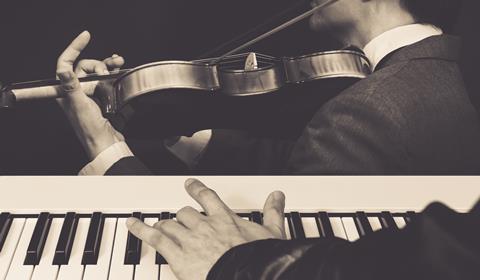
As my students will tell you, I am less than proud of my piano playing and I apologise for it in lessons on a regular basis, bemoaning the fact that I unfortunately didn’t listen to my piano teacher all those years ago – and maybe subconsciously hoping that they will take this as a cue to listen to what I have to say to them. Simple accompaniments aren’t a problem, but it’s when we embark on more complex repertoire that I start to flounder. Until my students have an initial grasp of these more advanced pieces, I fill in the harmony as best I can to ensure that everything is broadly in place; but then I want them to have a more fulfilling experience with a good pianist, in the form of a trusted local piano teacher, collaborative pianist – or, in occasional cases where appropriate, a pianist parent.
Of course, there is always preparation to do before the introduction of such a pianist: I like to ensure that my students feel confident enough to communicate to them the speed at which they wish to play, that they’ve practised leading where necessary, and that they have a good idea of the piece as a whole by having listened to recordings. At this point I feel that they are ready to start the process of refining their performances and taking them to the next level.
When students work with a pianist in my absence, the debrief is always interesting even if it is often a little, well, brief. I ask them how it went and they are usually positive, feeding back to me the thoughts of the pianist and telling me what they have been advised to change or improve. However, it is the rehearsals that I attend with both student and pianist that seem to be the most enlightening. The reason? The pianist and I inevitably have our own ideas as to how the piece should be interpreted, and by hearing our discussion, students begin to understand not only that this is OK, but that differences of opinion are expected and valued.
The expression on students’ faces often reveals surprise, especially because they are drawn into the conversation, with their ideas being sought in a meaningful way. It is almost as though they haven’t really considered that making interpretative decisions is a vital part of creating a unique and personal performance; too often, despite my best efforts, they think that what they play (and how they play it) is either ‘right’ or ‘wrong’. Students also seem to benefit from the knowledge that although people can have very different ideas, at the heart of any decision-making should be a wish to work out the intentions of the composer – the score can only communicate so much.
There are further advantages to working as a team. Often the pianist will bring to a student’s attention something that I have been trying to impress on them, such as the importance of sustaining the vibrato through a long note, perhaps, or letting the music ‘breathe’. It seems to me that modelling and sharing this collaborative approach is far superior to working on a piece with just one teacher, even if they are a capable pianist.
Perhaps I should forgive myself for my less than perfect piano skills and acknowledge that there is a silver lining detectable here. After all, working well with others in music is a subtle affair with lots of give and take. This type of approach helps students to forgo ‘right’ or ‘wrong’ for ‘better’ or ‘not so good’ and take the collaborative thought process with them, not only in their music but in other aspects of their lives.
Read: Opinion: Duets as a teaching tool
Read: There is no such thing as a piano ‘accompanist’
Discover more Featured Stories like this in The Strad Playing Hub
Read more premium content for subscribers here













No comments yet