





In the first of a two-part series, cellist and researcher Joanna Latała debunks the myth that is ingrained in many performing musicians: that time away from one’s instrument comes at the cost of progress
Read more Featured Stories like this in The Strad Playing Hub
’I haven’t had a proper week off in ten years.’
When my friend said those words, I honestly thought I had misheard her. Ten years? It seemed impossible. I asked why, expecting to hear about an impossibly busy concert schedule, endless travelling or another season filled with performances. Instead, she smiled and quietly replied, ’I’m afraid.’
Afraid of what?
Of losing her discipline. Of coming back and discovering she couldn’t play at the same level. Of breaking a routine she had followed for years.
That conversation stayed with me long after we had finished talking. The more I reflected on it, the more I realised it wasn’t really about one musician. It reflected something much bigger; a belief quietly shared by countless performers. Somewhere along the way, many of us began to believe that recovery comes at a price. We convince ourselves that every day away from the instrument is a step backwards rather than an investment in becoming a better musician.
Over the years, I have heard exactly the same fear from conservatoire students preparing for competitions, experienced orchestral musicians in the middle of demanding seasons, internationally performing soloists and university professors. Different careers, different instruments and different stages of life, yet the same quiet anxiety. Perhaps the question is not whether musicians need recovery. Perhaps the real question is why so many of us are afraid of it.
We grow up. Our practice often doesn’t
From the very beginning of our musical education, we are taught that consistency matters. Teachers encourage us to practise every day, reminding us that regular work builds technique, discipline and confidence. They are absolutely right. During the early stages of learning, daily contact with an instrument is invaluable. Even a short practice session helps develop coordination, musical understanding and the habits that every young musician needs. Without that consistency, it is difficult to build solid technical foundations.
The challenge is that while musicians grow, their approach to practising often doesn’t. Many professionals have been playing for 30 or even 40 years. Some have spent decades performing in orchestras, while others have built careers as soloists or chamber musicians. Yet many continue to practise almost exactly as they did when they were teenagers – not because those routines are necessarily the most effective, but because they are familiar. Familiar routines feel safe, even when our lives have changed completely.
As professionals, we ask far more of ourselves than we did as students. We build careers, raise families, travel constantly and perform under pressures we could hardly have imagined as teenagers. Yet we often continue trying to improve using methods designed for children preparing for weekly lessons rather than adults building long-term artistic careers.
Every now and then, a quiet thought appears: Maybe there is another way. Almost immediately another voice answers: What if I practise less and everything falls apart? Fear wins. Instead of changing the way we work, we simply try to work harder.
Elite performers understand that improvement happens through cycles of stress and recovery—not through endless repetition – Bounce by Matthew Syed
Athletes recover. Musicians keep practising
Earlier this year, while watching the tennis at the Australian Open, I noticed something that stayed with me long after the tournament had finished. After almost every match, regardless of whether the player had won or lost, the interviews ended in almost exactly the same way:
’Now I need to recover and prepare for my next match.’
No one apologised for needing rest. No one spoke about recovery as though it were a luxury or a sign of weakness. It was discussed as naturally as training itself because, in elite sport, recovery is not what happens after performance, it is part of performance.
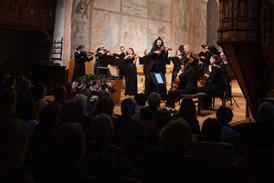
It made me wonder what would happen if we asked classical musicians the very same question after a demanding concerto, recital or orchestral concert. How many of us would answer, ’Now I need to recover’? Probably very few. More often, we leave the stage already thinking about tomorrow’s practice session, the next rehearsal, the audition coming up next month or the passages that still need improving. The performance ends, but mentally we rarely leave it.
What fascinates me is that many musicians understand recovery perfectly well in every other area of life. They run, cycle, swim or go to the gym, happily following training plans that include recovery days because they know muscles become stronger during recovery, not during exercise itself. Yet when it comes to practising an instrument, that same understanding somehow disappears. Suddenly the answer becomes, ’Yes… but music is different.’ Is it?
Performing is more physically demanding than we think
One of the reasons musicians struggle to value recovery is that we rarely think of performing as physical work. We do not cross finish lines, lift heavy weights or collapse after a concert in the way athletes sometimes do after competition. From the audience, it often looks effortless. We are sitting down, standing relatively still or making movements that appear small and controlled. It is easy to believe that what we do is demanding emotionally but not physically.
Our bodies tell a different story.
During one televised performance, concert pianist Yuja Wang agreed to wear a heart-rate monitor, offering a fascinating glimpse into what happens inside a performer’s body during a live concert. Her heart rate reached levels comparable to vigorous physical exercise. It was a reminder that the body does not distinguish between running under pressure and performing under pressure.
Adrenaline, concentration, muscular tension and emotional intensity all place enormous demands on our physiology. We may leave the stage without feeling physically exhausted in the way a runner does, but our nervous system has often been working at full capacity for hours.
Perhaps the first step towards changing the way musicians think about recovery is changing the way we think about performance itself. Before we can learn to recover well, we have to recognise that there is something worth recovering from.
Stress is not the enemy. Recovery is the antidote – The Power of Full Engagement by Jim Loehr & Tony Schwartz
The fatigue we rarely notice
When musicians talk about being tired, they usually mention aching shoulders, stiff backs or sore forearms after long rehearsals. Physical discomfort is easy to notice because we can feel it immediately. Mental fatigue is different. It builds quietly throughout a rehearsal or performance until, by the end of the evening, our attention, emotional energy and decision-making have been working continuously for hours without us even realising it.
Every performance demands hundreds of small decisions that audiences never see. We constantly monitor intonation, rhythm, balance, articulation, phrasing, ensemble, sound quality and communication with other musicians, all while managing our emotions and remaining fully present under pressure. By the final applause, it is not only our muscles that are tired. Our brain is exhausted as well. Yet unlike athletes, we rarely acknowledge this invisible fatigue. We simply pack our instruments, congratulate one another on a successful concert and begin thinking about the next performance.
Perhaps that is one of the biggest differences between music and sport. Athletes expect to feel tired after competing. Musicians often expect themselves to feel ready to practise again the very next morning.
Read part two: Why recovery makes you a better musician: what musicians can learn being away from their instruments
Joanna Latała is a Polish-born cellist and researcher specialising in mental training for musicians. Based in Scandinavia, she has performed at venues such as Carnegie Hall and Berliner Philharmonie. In 2023, she founded the platform Achieve Performance Mindset, where she shares insights on performance psychology to help musicians build mental resilience.















No comments yet