







The US cellist talks about his inspirations and the power of sound
Discover more Featured Stories like this in The Strad Playing Hub.
Read more premium content for subscribers here
Sound is what made me fall in love with the cello, and it still excites me today. One of my earliest teachers taught me vibrato by way of half-step upward shifts on one finger. After a few weeks, she had me stay in place but do the shifting motion, and voilà, suddenly I was producing a beautiful vibrato. Guiding students towards a good sound is very important to me; it can be incredibly frustrating for students if they don’t sound good, especially if they’re gifted, and they might even give up.
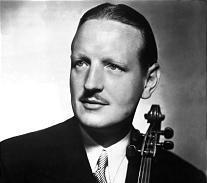
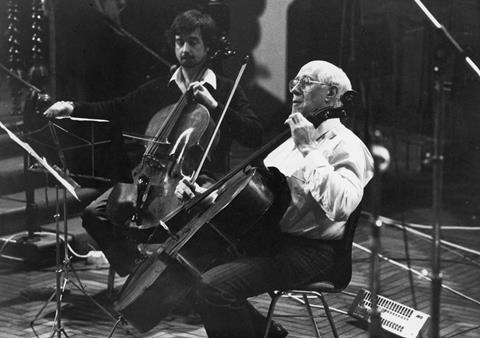
Rostropovich’s sound was my biggest inspiration. When I first heard his performance of the Saint-Saëns Concerto no.1, it lit a fire in me and I became unstoppable. I would try anything I heard him play. I have vivid memories from my time taking lessons with him. His magnetism was intense: he would stare into my eyes as I played. It was an interactive experience, and if he leaned forward or changed his expression, I knew what he wanted – it was as though I was being played via remote control! It’s why I always tell students to memorise their pieces for masterclasses, so they can look into their mentor’s eyes the whole time.
People often say that you must never copy your teacher. But I believe that being able to imitate helps build your vocabulary and adds colours to your palette. It sharpens your ear, not only to what you hear in others, but also to your own playing. Anyway, even if you try to imitate someone, you’ll still always end up sounding like yourself.
The arts can be a cruel profession. One may practise for twelve hours a day but the person practising for 30 minutes next door may well win the competition or simply be in the right place at the right time. Of course, there are universal qualities all chamber musicians should have: you have to be kind, make friends and be able to play chamber music, because that’s real communication between musicians. That spirit of collaboration is at the heart of what we try to foster at Music@Menlo and everywhere that we work.
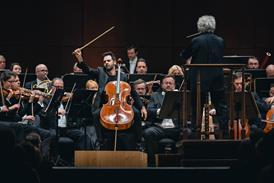
In my time with the Emerson Quartet we were all really ambitious about learning all the repertoire early on. We played all the Bartók quartets in one concert and performed the full Beethoven cycle within two years of my joining the ensemble. So I tell younger players to embrace it all as quickly as possible. The more Beethoven you play, the better you’ll play Brahms, and the more Bartók you play, the better you’ll play Shostakovich. And the more Haydn you play, the better you’ll play everything.
I also urge my colleagues never to question the quality, relevance or enduring value of great classical music. When it comes to my festivals, series such as Music@Menlo, or the Chamber Music Society of Lincoln Center, our aim is simply to commission, programme and perform new music at the highest level of artistic excellence. That’s how you build trust with your audience. And the only way to sustain that audience is through consistency and unwavering dedication.
INTERVIEW BY RITA FERNANDES
Read: Memories at Menlo with David Finckel and Wu Han
Read: Why I rotate between seven bows: cellist David Finckel
Discover more Featured Stories like this in The Strad Playing Hub.
Read more premium content for subscribers here











2 Readers' comments